


Introduction:
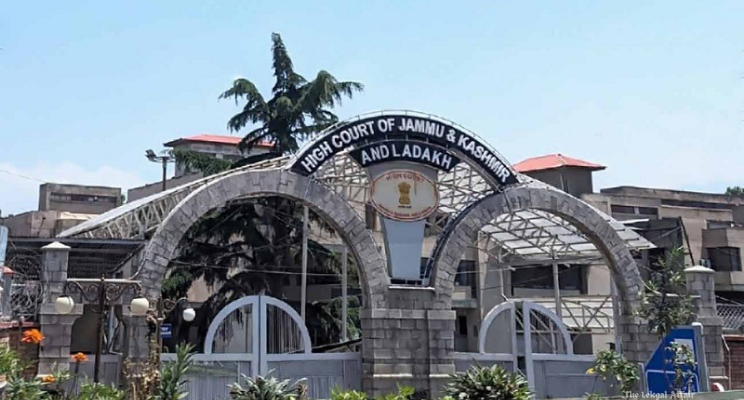
In UT of J&K vs Som Raj (2025), the Jammu, Kashmir & Ladakh High Court, speaking through a Division Bench of Chief Justice Arun Palli and Justice Rajnesh Oswal, delivered a strong and empathetic ruling reaffirming the welfare obligations of the State towards long-serving daily wage workers. The case arose from a challenge filed by the Union Territory of Jammu & Kashmir against an order directing the regularisation of a daily wager who had rendered uninterrupted service for more than three decades. The respondent, Som Raj, had been engaged as a daily wager in the Irrigation Department pursuant to an order dated October 5, 1991, and continued to work for over 34 years. Despite official records clearly establishing his engagement and length of service, the authorities denied him regularisation, compelling him to approach the Tribunal and subsequently defend his rights before the High Court. The Court was thus called upon to examine whether the State, after extracting labour for such an extensive period, could lawfully deny regularisation by raising technical and administrative objections, and whether such denial was compatible with the constitutional and welfare character of the State.
Arguments:
The Union Territory of J&K, as the petitioner, argued that the respondent was not entitled to regularisation and that the Tribunal had erred in directing the same. It was contended that the respondent’s engagement did not meet the necessary criteria for regularisation under the applicable rules and that granting him regular status would impose an undue financial and administrative burden on the State. The administration sought to rely on technical objections, questioning the legitimacy of the respondent’s claim and contending that mere long service as a daily wager could not automatically translate into a right to regularisation. It was further argued that compliance with the Tribunal’s directions would open the floodgates for similar claims, thereby affecting the functioning and financial stability of the department. The petitioners also attempted to dilute the evidentiary value of the records relied upon by the respondent, suggesting that continuity of service and eligibility were not conclusively established.
On the other hand, the respondent-employee firmly relied upon official records to demonstrate his long and uninterrupted engagement. He pointed out that the Aadhaar-based verification format expressly reflected his engagement pursuant to the order dated October 5, 1991, and that the Irrigation Department’s own list of Daily Wagers recorded his service period as 27 years and 7 months at a particular point in time, which by now had exceeded 34 years. The respondent argued that denial of regularisation after extracting labour for such an extended duration was arbitrary, unjust, and contrary to SRO 64 of 1994, which governed regularisation of daily wagers. He emphasised that he had approached the authorities and later the Court well before reaching the age of superannuation, yet the administration continued to raise frivolous objections and delay his rightful claim. It was further submitted that the plea of financial burden was an afterthought and could not override statutory obligations or the welfare responsibility of the State. The respondent thus urged the Court to uphold the Tribunal’s order and protect him from further injustice at the twilight of his service career.
Judgment:
After carefully considering the rival submissions, the Division Bench unequivocally dismissed the writ petition filed by the Union Territory, holding it to be devoid of merit. The Court placed significant reliance on official documentary evidence, noting that the respondent’s engagement was not in dispute. It observed that the Aadhaar-based verification format clearly showed his engagement pursuant to the order dated October 5, 1991, and that departmental records themselves reflected his long years of service. Taking a serious view of the matter, the Court held that after extracting work from the respondent for a period exceeding 34 years, denying him regularisation would not only violate SRO 64 of 1994 but would also be grossly iniquitous.
The Bench strongly rejected the stand of the administration, emphasising that the Union Territory of J&K, being a welfare State, could not be permitted to contend after three decades that the respondent was not entitled to regularisation. The Court categorically ruled that pleas of financial and administrative burden cannot absolve the State of its statutory and moral duties, particularly when it had fundamentally failed to discharge its clear obligations for decades. Addressing the prolonged delay, the Court recorded that the respondent was 49 years old when he approached the Court in 2019 and had now attained the age of 56 years, yet the authorities continued to erect unjustified hurdles. Finding no illegality or infirmity in the Tribunal’s decision, the High Court declined to interfere and further directed that the unpaid wages due to the respondent must also be released. Accordingly, the writ petition was dismissed, reinforcing the principle that long-serving daily wagers cannot be left in perpetual insecurity after devoting the prime of their lives to public service.