


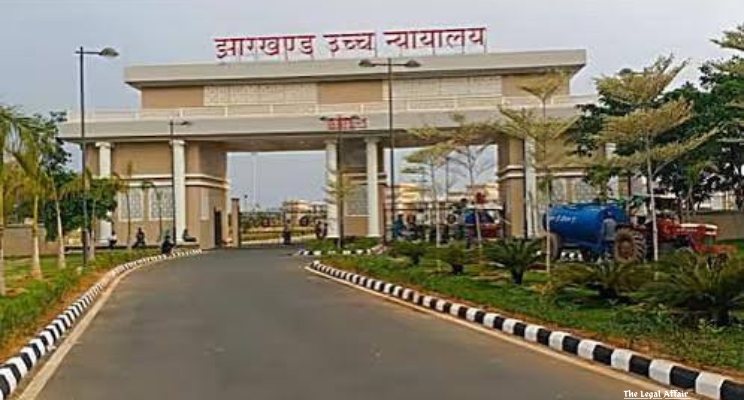
Introduction:
The Jharkhand High Court has reaffirmed that the statutory rights of persons with disabilities cannot be curtailed merely because recruitment rules or government notifications do not expressly provide for reasonable accommodation. Emphasising that the State has a positive legal obligation to ensure equal participation of persons with disabilities, the Court held that a candidate cannot be subjected to identical physical standards without considering the accommodation required by her disability.
A Single Judge Bench of Justice Deepak Roshan delivered the significant ruling while allowing a writ petition filed by Juthika Pal against the State of Jharkhand and other authorities. The Court directed the State authorities to appoint the petitioner to the post of Chowkidar under the Persons with Disabilities (PwD) category after finding that she had been denied reasonable accommodation during the physical running test conducted as part of the recruitment process.
The dispute arose from Advertisement No. 01 of 2025, issued by the authorities in Dumka district for recruitment to 328 posts of Chowkidar. Under the advertisement, 4% of the vacancies were reserved for persons with disabilities. The reservation was provided in accordance with the applicable State Government notification governing the recruitment process.
Juthika Pal, who suffers from a locomotor disability, applied for the advertised post under the PwD category. Having fulfilled the prescribed eligibility requirements, she participated in the written examination conducted on October 5, 2025. She successfully qualified in the written examination and was subsequently called to participate in the physical test scheduled between November 4 and 6, 2025.
However, despite belonging to the disability category, the petitioner was required to participate in the running test alongside candidates without disabilities. No additional time, relaxation or other form of reasonable accommodation was provided to account for her locomotor disability.
The prescribed qualifying time for the running test was 10 minutes. The petitioner completed the test in 10 minutes and 3 seconds, exceeding the stipulated time by merely three seconds. On that basis, she was declared unsuccessful in the physical test, and her name was consequently excluded from the provisional merit list.
The petitioner subsequently raised a grievance regarding the manner in which the physical examination had been conducted. She pointed out that the recruitment advertisement had reserved 13 posts for persons with disabilities, but only two candidates had been selected against those vacancies, leaving 11 reserved posts unfilled. She also submitted a representation before the concerned authorities seeking consideration of her candidature for appointment. However, no favourable decision was communicated to her, prompting her to approach the High Court.
The principal legal issue before the Court was whether the State could disqualify a candidate with a locomotor disability for failing to meet an ordinary physical-test requirement when it had not provided any reasonable accommodation, as mandated under the Rights of Persons with Disabilities Act, 2016.
The controversy required the Court to examine the relationship between recruitment rules framed by the State and the statutory obligations imposed by Parliament under the 2016 Act. In particular, the Court considered Section 2(y), which defines reasonable accommodation, and Section 20(1) and (2), which prohibit discrimination in government employment and impose obligations upon government establishments to provide reasonable accommodation and an appropriate working environment.
The judgment is significant because it clarifies that reasonable accommodation is not a discretionary benefit that government authorities may provide only when recruitment rules expressly permit it. Rather, it is a statutory obligation forming an essential part of substantive equality for persons with disabilities.
Arguments of the Parties:
Petitioner’s Arguments:
The petitioner, Juthika Pal, challenged her exclusion from the recruitment process on the ground that the authorities had failed to recognise and accommodate her locomotor disability while conducting the physical running test.
Represented by advocates Shubham Mishra, Kazi Asif Equbal and Gyandev Raj, the petitioner submitted that she belonged to the PwD category and possessed the requisite qualifications for consideration against the posts advertised under Advertisement No. 01 of 2025.
It was pointed out that the petitioner had successfully cleared the written examination and was thereafter called for the physical test. However, instead of providing her with an appropriate accommodation in view of her disability, the authorities required her to compete under the same physical conditions as candidates without disabilities.
The petitioner’s counsel emphasised that she had completed the running test in 10 minutes and 3 seconds, exceeding the prescribed limit by only three seconds. Her candidature was rejected solely because she could not complete the test within the ordinary time prescribed for the candidates.
According to the petitioner, such an approach was arbitrary and contrary to the statutory protections guaranteed under the Rights of Persons with Disabilities Act, 2016. The authorities could not mechanically apply identical physical requirements to a candidate with a locomotor disability without first considering whether appropriate modifications or adjustments were necessary to ensure equal participation.
In support of this contention, the petitioner’s counsel relied upon Section 2(y) of the 2016 Act, which defines reasonable accommodation as necessary and appropriate modifications and adjustments that do not impose a disproportionate or undue burden and are required to enable persons with disabilities to enjoy or exercise their rights equally with others.
It was argued that reasonable accommodation must be understood as a substantive legal entitlement rather than a concession dependent upon the discretion of recruiting authorities. Therefore, the absence of a specific provision granting additional time in the recruitment rules could not absolve the State of its statutory responsibility.
The petitioner’s counsel also relied upon Section 20(1) and Section 20(2) of the Act. Section 20(1) prohibits discrimination against persons with disabilities in matters relating to employment in government establishments, while Section 20(2) requires every government establishment to provide reasonable accommodation and an appropriate barrier-free and conducive environment.
The petitioner contended that the authorities had violated these statutory requirements by conducting the running test without making any adjustment for her disability. Her exclusion was therefore not merely a consequence of failing to satisfy a physical standard but resulted from the authorities’ failure to discharge their legal obligation.
To strengthen the argument, reliance was also placed on the Supreme Court’s decision in Vikash Kumar v. Union Public Service Commission, reported in (2021) 5 SCC 370. The petitioner submitted that the Supreme Court had recognised reasonable accommodation as an essential component of equality and had explained that the 2016 Act imposes affirmative obligations upon the government to ensure that persons with disabilities can exercise their rights on an equal basis with others.
The petitioner’s counsel further brought to the Court’s attention that 13 posts had been reserved for candidates belonging to the PwD category, whereas only two candidates had been selected, leaving 11 vacancies unfilled. It was submitted that the petitioner had already qualified in the written examination and should not be denied consideration merely because she exceeded the running-time requirement by three seconds without receiving the accommodation required by law.
The petitioner also pointed out that she had submitted a representation seeking appointment against the available reserved vacancies, but the authorities had not taken an appropriate decision on her request.
On these grounds, she sought appropriate directions from the High Court for consideration of her candidature and appointment to the post of Chowkidar under the disability category.
Respondents’ Arguments:
The State of Jharkhand opposed the petition through its counsel, A.K. Yadav, Senior Standing Counsel-I, and defended the decision taken by the recruiting authorities.
Relying upon the counter-affidavit, the State submitted that the recruitment process had been conducted in accordance with the applicable rules and the prescribed selection criteria. It was explained that the selection process involved assessment through the written examination, physical test and work experience, with marks allocated under the recruitment framework.
The respondents further submitted that candidates who completed the running test within eight minutes were entitled to 20 marks, while those completing it within 10 minutes were entitled to 10 marks. Candidates taking more than 10 minutes were not eligible to qualify in the running test.
Since the petitioner had taken 10 minutes and 3 seconds to complete the run, the State argued that she had failed to satisfy the prescribed physical-test requirement. Consequently, she could not be considered eligible for selection under the applicable criteria.
The respondents also relied upon the Chowkidar Appointment Rules, 2015, and the State Government’s resolution bearing Memo No. 2249 dated April 3, 2018. They contended that neither the recruitment rules nor the 2018 notification contained any provision granting exemption or relaxation of the running-time requirement to candidates belonging to the PwD category.
According to the State, the authorities had acted strictly in accordance with the applicable recruitment framework and could not independently introduce a relaxation that had not been contemplated under the governing rules or notification.
The respondents therefore maintained that the petitioner’s failure to complete the running test within the prescribed 10-minute period justified her exclusion from the selection process.
The central disagreement between the parties was thus whether the absence of an express relaxation provision in the recruitment framework could justify denying a person with a disability the reasonable accommodation guaranteed under a parliamentary enactment.
Court’s Judgment:
After considering the submissions advanced by both sides and examining the materials placed on record, the Jharkhand High Court allowed the writ petition and held that Juthika Pal was entitled to appointment to the post of Chowkidar under the PwD category.
Justice Deepak Roshan observed that the petitioner’s case had to be examined in the light of the statutory obligations imposed upon government establishments under the Rights of Persons with Disabilities Act, 2016. The Court found that the petitioner had successfully qualified in the written examination and had subsequently been directed to participate in the physical running test alongside candidates without disabilities.
It was also an undisputed position that the authorities had not provided her with any additional time, relaxation or other reasonable accommodation despite her belonging to the PwD category.
The Court considered this omission legally significant because the statutory framework does not merely prohibit discriminatory treatment in its formal sense. It also requires the State to take positive steps to ensure that persons with disabilities are placed in a position where they can effectively exercise their rights on an equal basis with others.
Statutory Meaning and Scope of Reasonable Accommodation Under Section 2(y):
The Court first examined Section 2(y) of the Rights of Persons with Disabilities Act, 2016, which defines the expression “reasonable accommodation”.
Under this provision, reasonable accommodation refers to necessary and appropriate modifications and adjustments, without imposing a disproportionate or undue burden in a particular case, to ensure that persons with disabilities can enjoy or exercise their rights equally with others.
The provision recognises that identical treatment does not necessarily produce equality when individuals face different barriers because of their disabilities.
A requirement that appears neutral when applied uniformly may place a person with a disability at a disadvantage if the authorities fail to consider the specific limitations arising from that disability. Reasonable accommodation addresses this difficulty by requiring appropriate adjustments so that persons with disabilities are not excluded merely because the system has been designed around the requirements of persons without disabilities.
The Court’s reasoning reflects this distinction between formal equality and substantive equality. Formal equality may require every candidate to follow the same conditions, whereas substantive equality requires the authorities to consider whether identical conditions create an unfair disadvantage for a candidate with a disability.
In the present case, the petitioner was required to complete the running test within the same time limit as other candidates, notwithstanding her locomotor disability. No adjustment was made to accommodate her circumstances.
The Court found that such an approach was inconsistent with the statutory definition of reasonable accommodation. The obligation to provide necessary modifications could not be ignored simply because the recruitment notification did not separately prescribe a relaxation.
Section 20 of the RPwD Act Prohibits Discrimination in Government Employment:
The Court next examined Section 20(1) and Section 20(2) of the 2016 Act.
Section 20(1) provides that no government establishment shall discriminate against any person with a disability in any matter relating to employment. Section 20(2) further requires every government establishment to provide reasonable accommodation and an appropriate barrier-free and conducive environment to employees with disabilities.
These provisions establish that the responsibility of government establishments extends beyond merely recognising the reservation provided for persons with disabilities. Authorities must also ensure that the conditions under which employment opportunities are assessed and provided do not unnecessarily disadvantage such persons.
The Court observed that the petitioner had been required to compete in the physical examination without any additional time or accommodation. This was contrary to the statutory requirements contained in Section 20.
The significance of the Court’s reasoning lies in the distinction between providing reserved vacancies and ensuring meaningful access to those vacancies. Reservation alone cannot achieve its intended purpose if the recruitment process does not accommodate the specific requirements of candidates with disabilities.
The authorities must therefore ensure that the selection procedure itself complies with the protections guaranteed under the Act.
Recruitment Rules Cannot Override Parliamentary Legislation:
One of the most important aspects of the judgment was the Court’s rejection of the State’s argument that the recruitment rules and the 2018 notification did not provide for additional time in the running test.
The respondents had maintained that the authorities were bound by the existing recruitment framework and could not grant a relaxation that was not expressly provided under the Chowkidar Appointment Rules, 2015, or the State Government’s notification dated April 3, 2018.
The Court found this contention legally unsustainable.
It observed:
“The contention of the respondents that since neither the appointment Rules; nor the notification of 2018 issued by the State of Jharkhand provides for such reasonable accommodation, the petitioner was not provided with any such accommodation; is not tenable in the eyes of law as no notification or rules can go beyond the specific statutory provision laid down in an Act enacted by the parliament.”
Through this observation, the Court reaffirmed the principle that subordinate legislation, executive instructions and administrative notifications must remain consistent with the parent legislation and cannot defeat statutory rights.
The Rights of Persons with Disabilities Act, 2016, is a parliamentary enactment imposing binding obligations upon government establishments. Recruitment rules and executive notifications governing a particular selection process cannot be interpreted or applied in a manner that nullifies those obligations.
Consequently, even if the applicable recruitment rules did not expressly prescribe additional time for candidates with disabilities, the State remained bound to consider and provide reasonable accommodation in accordance with the 2016 Act.
The absence of a specific relaxation clause could not be treated as permission to disregard a statutory obligation.
This aspect of the ruling is particularly relevant for public recruitment processes because it makes clear that administrative convenience or the absence of detailed procedural provisions cannot justify non-compliance with disability rights legislation.
Reliance on Supreme Court Judgment in Vikash Kumar v. Union Public Service Commission:
The High Court also placed reliance on the Supreme Court’s decision in Vikash Kumar v. Union Public Service Commission, reported in (2021) 5 SCC 370.
In that judgment, the Supreme Court explained the expanded understanding of reasonable accommodation under the Rights of Persons with Disabilities Act, 2016. It recognised that the legislation goes beyond providing a formal guarantee against discrimination and places affirmative responsibilities upon the government to protect the rights of persons with disabilities.
The Supreme Court had explained that Section 3 of the 2016 Act requires the government to take steps to utilise the capacities of persons with disabilities by providing an appropriate environment. Among these obligations is the responsibility to ensure reasonable accommodation.
The High Court relied upon paragraph 52 of the Supreme Court’s judgment, which emphasised that reasonable accommodation involves necessary and appropriate modifications and adjustments, provided they do not impose a disproportionate or undue burden.
The Supreme Court had further recognised equality, non-discrimination and dignity as the essential elements of the protective framework established under the 2016 Act.
Applying these principles, Justice Deepak Roshan held that reasonable accommodation creates a positive obligation upon the State to provide additional support to persons with disabilities so that they can participate fully and effectively in society.
The obligation is therefore not satisfied merely by refraining from treating persons with disabilities unfairly. The State must take affirmative measures wherever necessary to remove barriers that prevent their meaningful participation.
In the present case, the authorities had failed to discharge this responsibility by requiring the petitioner to complete the running test under ordinary conditions without considering her disability.
Failure to Provide Accommodation Rendered the Petitioner’s Exclusion Unsustainable:
Applying the statutory provisions and the principles laid down by the Supreme Court, the High Court concluded that the respondents had acted contrary to the requirements of the 2016 Act.
The Court took note of the fact that the petitioner had qualified in the written examination and had failed to complete the running test within the prescrbed time by only three seconds.
However, the Court’s decision was not based me