


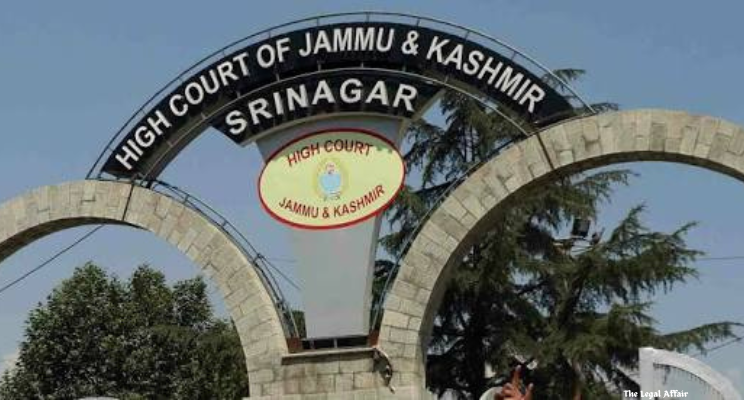
Introduction:
In a significant ruling concerning the interplay between civil court jurisdiction and the Jammu & Kashmir Agrarian Reforms Act, 1976, the High Court of Jammu & Kashmir and Ladakh has clarified that a civil suit seeking protection of possession through permanent prohibitory injunction remains maintainable before a civil court even when the land involved is agricultural in nature. The Court observed that after the omission of Section 19(3) of the Agrarian Reforms Act following the reorganization of the erstwhile State of Jammu & Kashmir, the statutory bar that previously restricted civil court jurisdiction in certain agrarian disputes no longer survives in the same form.
The judgment was delivered by Justice M. A. Chowdhary in Sohan Singh & Ors. v. Chuni Lal, reported as 2026 LiveLaw (JKL). The Court dismissed a civil revision petition filed by Sohan Singh and others challenging an order passed by the Civil Judge (Junior Division), Hiranagar, which had rejected their application under Order VII Rule 11 of the Code of Civil Procedure seeking rejection of the plaint.
The dispute arose from a suit instituted by Chuni Lal seeking a decree of permanent prohibitory injunction restraining the defendants from interfering with his peaceful possession over agricultural land situated at Village Bhaiya, Tehsil Hiranagar, District Kathua. According to the plaint, the respondent’s father had been cultivating the land even prior to 1971, and such possession was reflected in the revenue records. Following his father’s death, the respondent and his brother allegedly continued cultivating the land without interruption.
The respondent further asserted that he had already been declared owner in possession of the land through an order passed by the Sub-Divisional Magistrate, Hiranagar, under the provisions of the Jammu & Kashmir Agrarian Reforms Act, 1976. Despite this, the respondent alleged that the defendants attempted to interfere with his possession in September and November 2025 by trespassing onto the property, threatening dispossession, and installing cement poles, barbed wire fencing, and a tin shed in an attempt to assert control over the land.
Faced with the alleged threat of dispossession, the respondent approached the civil court seeking only protective relief in the form of a permanent prohibitory injunction. During the pendency of the suit, however, the defendants moved an application under Order VII Rule 11 CPC seeking rejection of the plaint on the ground that the dispute related to cultivating possession and tenancy rights, matters which according to them fell exclusively within the jurisdiction of revenue authorities under the Agrarian Reforms Act.
The trial court rejected the application, holding that the plaint disclosed a maintainable civil cause of action. Aggrieved by this order, the defendants approached the High Court through a civil revision petition. The High Court was therefore called upon to determine whether the respondent’s suit was barred by law and whether the civil court lacked jurisdiction in view of the provisions of the Agrarian Reforms Act.
The judgment assumes importance because it revisits the legal position governing jurisdictional bars under agrarian laws after the constitutional and statutory changes brought about by the reorganization of Jammu & Kashmir. It also reiterates the settled principles governing applications under Order VII Rule 11 CPC and distinguishes disputes involving possessory protection from those requiring adjudication of tenancy or agrarian rights.
Arguments of the Parties:
The petitioners strongly contended that the civil suit instituted by the respondent was barred by the provisions of the Jammu & Kashmir Agrarian Reforms Act, 1976. According to the petitioners, the dispute fundamentally related to cultivating possession and rights arising out of agricultural tenancy, matters which fall exclusively within the jurisdiction of revenue authorities constituted under the Agrarian Reforms Act.
The petitioners argued that the respondent had attempted to cleverly draft the plaint as a suit for injunction while the real controversy pertained to agricultural land and possessory rights governed by special agrarian legislation. They contended that once a statute creates special forums and confers exclusive jurisdiction upon revenue authorities for adjudication of agrarian disputes, ordinary civil courts are impliedly barred from entertaining such matters.
To support their contentions, the petitioners heavily relied upon the Full Bench decision in Jagtu & Ors. v. Badri & Ors., wherein the Court had held that disputes relating to cultivating possession and rights flowing from the Agrarian Reforms Act could not be adjudicated by civil courts. According to the petitioners, the principles laid down in the said judgment squarely applied to the present case because the respondent’s claim was rooted in alleged cultivating possession over agricultural land.
The petitioners further argued that permitting civil courts to entertain such suits would defeat the legislative scheme of the Agrarian Reforms Act, which intended to confer exclusive authority upon revenue forums possessing specialized knowledge of agricultural tenancy disputes.
It was also submitted that the plaint itself disclosed that the respondent’s claim arose from alleged rights recognized under the Agrarian Reforms Act. Therefore, according to the petitioners, the suit was clearly barred by law and the plaint ought to have been rejected under Order VII Rule 11 CPC at the threshold itself.
On the other hand, the respondent defended the maintainability of the civil suit and supported the order passed by the trial court. The respondent argued that the suit was not filed for declaration of tenancy rights or adjudication of any issue falling within the exclusive jurisdiction of revenue authorities. Instead, the respondent had approached the civil court only for protection of his existing possession against unlawful interference and threatened dispossession by the defendants.
The respondent emphasized that he had already been declared owner in possession by the competent authority under the Agrarian Reforms Act through an order passed by the Sub-Divisional Magistrate, Hiranagar. Consequently, no further adjudication regarding tenancy rights or agrarian status was being sought before the civil court.
The respondent contended that the relief sought in the suit was confined exclusively to permanent prohibitory injunction against acts of interference by the defendants. Such a remedy, according to the respondent, squarely falls within the ordinary jurisdiction of civil courts and cannot be barred merely because the property involved happens to be agricultural land.
The respondent further argued that the petitioners’ reliance upon the Full Bench judgment in Jagtu was misplaced because the legal position governing civil court jurisdiction had undergone substantial change after the omission of Section 19(3) of the Agrarian Reforms Act following the reorganization of Jammu & Kashmir.
The respondent also relied upon subsequent judicial pronouncements including Suresh & Ors. v. Som Nath & Anr. and Bagh Ali & Ors. v. Mushtaq Ahmed & Ors., wherein it had been recognized that civil suits seeking injunction for protection of possessory rights remain maintainable before civil courts.
It was additionally argued that while considering an application under Order VII Rule 11 CPC, the court is required to examine only the averments contained in the plaint and not the defence raised by the defendants. Since the plaint disclosed a valid civil cause of action for protection of possession and no statutory bar was apparent on the face of the pleadings, the application for rejection of plaint had rightly been dismissed.
Court’s Judgment:
After considering the rival submissions and examining the statutory framework governing the issue, the High Court dismissed the revision petition and upheld the order passed by the trial court refusing to reject the plaint under Order VII Rule 11 CPC.
Justice M. A. Chowdhary began by identifying the principal issue arising for consideration, namely whether the plaint disclosed a cause of action barred by law so as to warrant rejection under Order VII Rule 11 CPC. The Court reiterated the settled legal principle that while deciding an application under Order VII Rule 11, the court is required to confine itself exclusively to the averments contained in the plaint and determine whether any statutory bar is evident on the face of the pleadings.
The Court then examined the petitioners’ reliance upon the Full Bench decision in Jagtu & Ors. v. Badri & Ors. The High Court observed that the said judgment had been rendered in the context of Section 19(3)(e) of the Jammu & Kashmir Agrarian Reforms Act, 1976, a provision which no longer remains part of the statute after the reorganization of the erstwhile State of Jammu & Kashmir.
Justice Chowdhary emphasized that the omission of Section 19(3) from the statute had materially altered the legal position regarding jurisdictional objections in matters involving possessory rights over agricultural land. The Court observed:
“With the omission of sub-section (3) of Section 19 of the Agrarian Reforms Act from the statutes after the Re-organization of State of Jammu & Kashmir, the jurisdiction with the civil court with regard to possessory rights seeking injunction thereon cannot be stated to be ousted.”
This observation formed the central basis of the Court’s reasoning. The High Court clarified that after the omission of Section 19(3), civil court jurisdiction cannot automatically be excluded merely because the dispute concerns agricultural land or possessory claims connected with agrarian rights.
The Court then carefully analyzed the nature of the respondent’s suit. It noted that the respondent was not seeking declaration of tenancy rights, conferment of ownership, correction of revenue entries, or adjudication of issues specifically reserved for revenue authorities under the Agrarian Reforms Act. Instead, the respondent had approached the civil court solely for protection of his possession against alleged attempts at dispossession and interference by the defendants.
According to the Court, such a relief squarely falls within the ordinary jurisdiction of civil courts because injunction suits protecting possession are fundamentally civil in nature. The Court emphasized that where a person already claims established possession and merely seeks preventive relief against unlawful interference, the civil court remains competent to adjudicate the dispute.
The High Court also relied upon its earlier decision in Suresh & Ors. v. Som Nath & Anr., wherein it had been held that a suit seeking permanent prohibitory and mandatory injunction concerning possessory rights over land is cognizable by civil courts and is not barred by the Agrarian Reforms Act.
Further, the Court referred to Bagh Ali & Ors. v. Mushtaq Ahmed & Ors. while reiterating the limited scope of inquiry under Order VII Rule 11 CPC. Justice Chowdhary observed that at the stage of considering rejection of plaint, the court cannot enter into disputed questions of fact or examine the defence set up by the defendants. The inquiry is restricted to whether the plaint itself discloses a statutory bar.
Applying these principles, the High Court found that the respondent had specifically pleaded continuous possession over the land and had further asserted that he had already been declared owner in possession by the competent authority under the Agrarian Reforms Act. The respondent’s grievance was confined to alleged threats of dispossession by the defendants through acts such as fencing and installation of structures on the suit property.
The Court concluded that in such circumstances, the civil suit seeking injunction was clearly maintainable before the civil court and did not fall within the exclusive domain of revenue authorities.
Importantly, the judgment reflects the broader principle that exclusion of civil court jurisdiction cannot be lightly inferred unless the statute expressly or impliedly bars such jurisdiction. Since the respondent’s suit did not require adjudication of tenancy rights or matters exclusively assigned to revenue authorities, no such bar could be presumed.
The High Court therefore upheld the trial court’s order rejecting the application under Order VII Rule 11 CPC and dismissed the revision petition. The trial court was permitted to proceed with the civil suit in accordance with law.
The ruling is significant because it clarifies the post-reorganization legal position concerning civil court jurisdiction in Jammu & Kashmir and Ladakh. It reinforces that suits seeking protection of possession through injunction remain maintainable before civil courts even in cases involving agricultural land, provided the dispute does not require adjudication of issues exclusively reserved for revenue authorities under agrarian laws.