


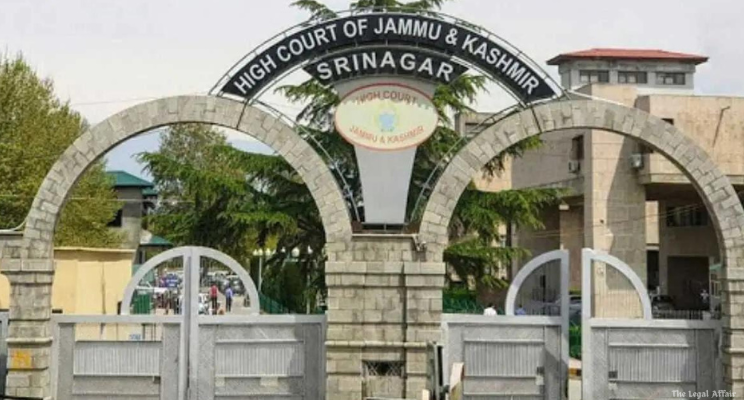
The Jammu and Kashmir Reservation Rules, 2005, were amended to grant “Pahari Speaking People” 4% reservation in the available positions in all classes, grades, and positions located inside the Union Territory. These amendments were recently upheld by the High Court of Jammu & Kashmir and Ladakh.
On the basis of a group of experts assembled by the government, single-judge Justice Sanjay Dhar dismissed a petition that contested a statutory decision issued by the government that enabled the amendment to be passed and grant Pahari speakers Scheduled Tribe status.
The Court stated that the petitioner was not a party who was affected by the case, and a third party who has no interest in the matter does not have locus standi to file a petition under Article 226 unless they file it as a Public Interest Litigation.
The court may consider the matter if a person without a personal agenda approaches the court in the event that the actual parties who are harmed are unable to do so due to ignorance, illiteracy, etc.
The Court dismissed the petition at the preliminary stage itself after agreeing with the government’s legal representatives Suraj Singh and Vishal Sharma that the petition is not maintainable in accordance with Article 226 of the Indian Constitution. The Supreme Court ruled in Jasbhai Motibhai v. Roshan Kumar, Haji Bashir Ahmed & Ors. that an applicant must ordinarily be a person who has a personal or individual right in the subject matter of the case in order to have locus standi to invoke the exceptional jurisdiction under Article 226.
In light of this, the Court rejected the plea while allowing the petitioners the freedom to bring a public interest petition about the complaints they outlined in the writ petition.