


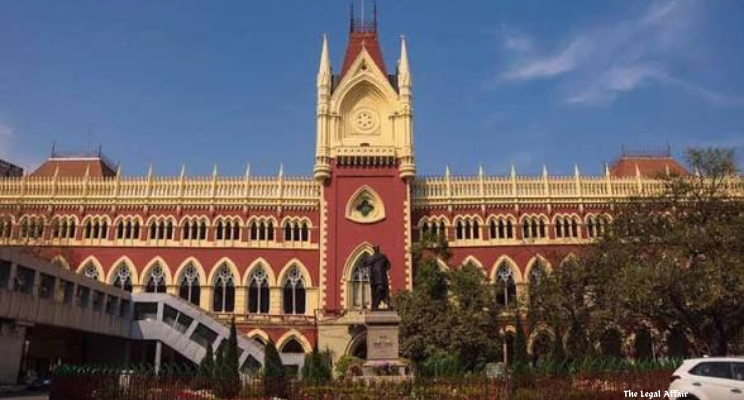
Introduction:
The Calcutta High Court has held that the indefinite suspension of temporary excise licences without disclosing valid and convincing reasons is arbitrary, unjust and unconscionable. The Court ruled that although the State Government possesses the statutory authority to suspend or cancel temporary liquor licences, such powers cannot be exercised in an unreasonable manner or continued indefinitely without explaining the justification for doing so, particularly after the circumstances that initially necessitated the suspension have ceased to exist.
A Division Bench comprising Justice Arijit Banerjee and Justice Apurba Sinha Ray delivered the judgment while deciding three connected appeals filed by liquor licensees against the State of West Bengal. The appeals, registered as MAT 812 of 2024, MAT 847 of 2022 and MAT 418 of 2023, arose from orders passed by Single Judges dismissing writ petitions challenging the suspension and subsequent discontinuation of temporary excise licences.
The case, titled Barun Malakar & Ors. v. State of West Bengal & Ors., concerned temporary liquor licences issued under the West Bengal Excise Rules, 2003. The appellants had obtained licences for operating liquor shops for a limited period of six months after the State introduced a new category of excise licences permitting the sale of different kinds of liquor.
However, shortly before the 2019 General Election, the Excise Commissioner issued an order dated March 2, 2019, directing the suspension of the operations of all such liquor shops until further orders. The suspension was justified by reference to the General Election and instructions issued by the Election Commission.
Although the election concluded on May 23, 2019, the appellants were not permitted to resume their businesses. Their licences remained suspended despite the absence of any allegation that they had violated the licence conditions or committed any default.
Subsequently, on August 22, 2019, the Excise Commissioner rescinded the earlier suspension order. However, instead of permitting the licensees to operate for the remaining portion of their original licence tenure, the authorities stated that continuation of the licences would be considered by the Excise Directorate after examining factors such as demand and supply, law and order, and other relevant circumstances.
While the matter remained under consideration, the State Government issued notifications dated December 27, 2019, omitting the relevant licensing categories under Rules 4(q) and 4(v) of the West Bengal Excise Rules, 2003.
The licensees challenged these developments, arguing that the State could not effectively deprive them of the benefits of licences already granted by suspending their businesses for an indefinite period and subsequently changing the regulatory framework.
The dispute raised important questions concerning the exercise of statutory discretion by public authorities, the doctrine of legitimate expectation, the requirement to record reasons for administrative decisions and the limits of the State’s power to suspend or discontinue licences.
The State, while defending its action, relied upon the settled legal position that the liquor trade is considered res extra commercium, meaning that it does not enjoy the same constitutional protection as ordinary commercial activities. It also argued that temporary licences granted for a maximum period of six months could not be revived after their expiry.
The Division Bench, however, found that the State had failed to provide any satisfactory explanation for continuing the suspension long after the General Election had concluded. It emphasised that the existence of statutory power does not permit public authorities to exercise it arbitrarily or without disclosing the reasons justifying their decisions.
Consequently, the Court directed the State Government to permit the appellants to resume their businesses from December 15, 2026, for the unexpired portion of their original six-month licence tenure, enabling them to clear the stocks accumulated in their respective shops. It also directed that the relevant notifications issued on December 27, 2019, would remain in abeyance insofar as the appellants were concerned until the balance licence period expired.
Arguments of the Parties:
The appellants challenged the suspension and subsequent discontinuation of their temporary excise licences, contending that the State authorities had acted arbitrarily by preventing them from conducting business even after the circumstances that initially prompted the suspension had ceased to exist.
Senior Advocate Aninda Kumar Mitra, appearing for the appellants in two of the appeals, submitted that the grant of temporary liquor licences required the licensees to make substantial financial investments. These investments included expenditure on establishing the necessary infrastructure, arranging logistics and purchasing stocks of liquor to operate the businesses in accordance with the applicable excise regulations.
It was argued that the appellants had undertaken these investments after obtaining valid licences from the competent authorities and paying the prescribed fees. They had a legitimate expectation that, provided they complied with the applicable rules and conditions, they would be permitted to operate their establishments for the stipulated six-month period.
The appellants relied upon the doctrine of legitimate expectation, contending that the State could not arbitrarily withdraw or defeat the benefits arising from licences that had already been granted. According to them, the authorities were required to act fairly and reasonably, particularly where the licensees had altered their financial and commercial positions in reliance upon the permissions granted by the State.
It was further submitted that the initial suspension order dated March 2, 2019, had been issued specifically in connection with the 2019 General Election and the instructions of the Election Commission.
The appellants pointed out that the General Election concluded on May 23, 2019. Therefore, even if the suspension was initially justified by the circumstances prevailing during the election period, there was no reasonable basis for continuing the restriction after those circumstances had disappeared.
They argued that the State had failed to disclose any independent reason for preventing them from reopening their establishments after the election. There was also no allegation that they had defaulted in complying with their licence conditions or committed any irregularity warranting suspension.
Another important submission concerned the authority of the Excise Commissioner to issue the suspension order.
The appellants contended that their temporary licences had been granted by the Collector of the concerned district, Nadia. However, the suspension order had been issued by the Excise Commissioner. Relying upon Section 42 of the Bengal Excise Act, 1909, they argued that the power to suspend or cancel a licence was vested in the authority that had granted it, subject to the conditions prescribed by the provision.
According to the appellants, the Excise Commissioner had not identified any statutory provision or rule authorising the exercise of such power in the circumstances of the case. They therefore questioned the legality of the suspension order itself.
The appellants also challenged the subsequent action of the State Government in omitting the relevant licensing categories through notifications dated December 27, 2019.
They maintained that regulatory changes introduced after the grant of their licences could not be used to deprive them of the benefits of permissions already issued for a specified period. In their submission, the State could not first grant a temporary licence, prevent its operation for an extended period and then rely upon subsequent amendments to defeat the licensees’ entitlement to conduct business during the remaining tenure.
The appellants accordingly sought restoration of their right to operate the shops for the unexpired portion of their original licence period.
The State Government opposed the appeals and defended the restrictions imposed upon the appellants.
The Advocate representing the State submitted that the liquor trade occupies a special position under constitutional law and is classified as res extra commercium. It was argued that no citizen possesses a fundamental right under Article 19(1)(g) of the Constitution to claim the grant, renewal or continuation of a licence to conduct the business of selling liquor.
The State relied upon the principle that the government has considerable regulatory control over intoxicating liquor and can determine the conditions under which such trade may be permitted.
It was further submitted that Section 37 of the Bengal Excise Act, 1909, provides for the grant of temporary licences for a period not exceeding six months. Since the licences issued to the appellants had already expired by the passage of time, the State argued that they could not subsequently be revived or extended.
According to the State, the appellants could not claim an enforceable right to continue operating their establishments merely because temporary licences had been granted earlier. Once the prescribed period expired, the licences ceased to have legal effect, and there was no question of restoring them.
The State also relied upon the regulatory changes introduced through the notifications dated December 27, 2019, which omitted the relevant licensing categories from the West Bengal Excise Rules, 2003.
On this basis, the State sought to justify its decision not to permit the appellants to resume their businesses and maintained that the authorities had acted within the framework of their regulatory powers.
The competing submissions therefore required the Court to balance the State’s extensive control over the liquor trade against the obligation of administrative authorities to exercise statutory powers fairly, reasonably and in accordance with law.
Court’s Judgment:
After examining the rival submissions, the statutory framework and the circumstances surrounding the suspension of the temporary licences, the Division Bench found merit in the appellants’ challenge.
The Court first examined the manner in which the original licences had been granted and subsequently suspended.
It noted that the temporary licences had been issued by the Collector of the district, Nadia, whereas the suspension order dated March 2, 2019, had been passed by the Excise Commissioner.
In this context, the Bench considered Section 42 of the Bengal Excise Act, 1909, which deals with the suspension and cancellation of excise licences.
The Court observed that Section 42 provides for the exercise of the power to suspend or cancel a licence by the authority that granted it, subject to the grounds and conditions specified under the provision.
However, the suspension order issued by the Excise Commissioner did not identify the particular statutory provision or rule under which the authority had exercised the power to suspend the licences.
The Court took note of this circumstance while examining the legality of the administrative action. The absence of a disclosed statutory basis raised concerns regarding the manner in which the suspension power had been exercised.
The Bench then turned to the principal issue concerning the continuation of the suspension after the General Election.
It noted that the suspension order had been issued on March 2, 2019, in connection with the 2019 General Election and the instructions of the Election Commission. The election process concluded on May 23, 2019.
Despite the conclusion of the election, the appellants were not permitted to resume their businesses. The Court found that the State had failed to disclose any convincing reason explaining why the suspension needed to continue for such a prolonged period.
The Bench observed that although the State possesses the authority to suspend or cancel temporary licences, the exercise of such power cannot remain unexplained when its consequences continue indefinitely.
In this regard, the Court made a significant observation:
“It is true that the State has the absolute right to cancel or suspend temporary licenses, but after granting a temporary license, if the State chooses to suspend it for an indefinite period, the State is under an obligation to disclose the reasons for such action.”
The observation clarifies an important distinction between the existence of statutory power and the manner in which that power is exercised.
The State’s authority to regulate liquor licences cannot be disputed merely because a licensee has invested money or obtained a temporary permission. However, the existence of regulatory authority does not give public officials an unrestricted discretion to suspend licences without explaining the reasons for their decisions.
Administrative action must satisfy the requirements of fairness and reasonableness. Even where a statute confers wide discretionary powers upon an authority, such powers must be exercised for relevant purposes and on the basis of legally sustainable considerations.
The Court considered it particularly significant that the appellants had not been accused of violating any licence condition or committing any default that could justify keeping their establishments closed.
The licensees had invested substantial amounts in setting up their shops and purchasing stocks of wine and foreign liquor. Their businesses had been brought to a standstill despite the absence of any allegation of misconduct or non-compliance on their part.
The Bench found that the authorities had failed to explain why the licensees should continue to suffer the consequences of an election-related restriction even after the election had concluded.
The Court strongly criticised the State’s approach, observing:
“The action on the part of the State authorities in this regard is unjust and unconscionable.”
The Bench also remarked that the appellants were businessmen and not criminals, and that their circumstances deserved consideration in accordance with the applicable statutory framework.
Another important aspect of the judgment concerned the reasoning adopted by an earlier Single Judge, who had justified the suspension by referring to the objective of protecting public health.
The Division Bench disagreed with this reasoning, observing that the orders issued by the State authorities did not disclose public health considerations as the basis for suspending the licences.
The Court emphasised that a judicial authority cannot introduce a justification that was never provided by the administrative authority itself.
In this regard, the judgment stated:
“Therefore, it has been very rightly argued from the side of the appellants that the Court cannot supplant reasons in favour of the State authorities.”
This observation reflects an established principle of administrative law that an administrative order must ordinarily stand or fall on the reasons recorded by the authority when the decision was made.
The principle was recognised by the Supreme Court in Mohinder Singh Gill v. Chief Election Commissioner, wherein it was held that the validity of an administrative order must be judged on the basis of the reasons contained in the order itself and cannot ordinarily be supplemented by fresh explanations subsequently introduced.
The Calcutta High Court applied this principle to reject the attempt to justify the prolonged suspension on public health grounds when no such justification appeared in the relevant orders.
The Court also considered the doctrine of legitimate expectation raised by the appellants.
The doctrine of legitimate expectation is an important component of administrative law and protects individuals against arbitrary departures from representations, established practices or assurances made by public authorities, subject to overriding public interest and statutory requirements.
In the present case, the appellants had obtained temporary licences after fulfilling the prescribed requirements and making substantial investments. They expected to operate their establishments for the period specified in the licences, provided they complied with the applicable conditions.
Although the doctrine does not create an absolute right to renewal or continuation of a licence, it requires public authorities to act fairly when their decisions defeat an expectation arising from their own earlier conduct.
The Court’s reasoning recognised that the State could not disregard the practical consequences of its prolonged suspension, particularly when the licensees had not committed any default.
The Bench also examined the State’s argument that the licences had expired by efflux of time and could therefore no longer be revived.
It noted that the original suspension had been rescinded by the Excise Commissioner on August 22, 2019. However, the licensees were not allowed to resume business for the remaining period of their licences.
Instead, the State had kept the question of continuation under consideration and subsequently introduced regulatory changes omitting the relevant licensing categories.
The Court was not persuaded by the argument that the State could rely upon the passage of time to defeat the appellants’ claims after its own action had prevented them from utilising the licence period.
The six-month tenure was the period for which the licences had originally been granted. The appellants had been deprived of the opportunity to conduct business for a substantial part of that period because of the suspension imposed by the authorities.
In these circumstances, the State could not simply contend that the licences had expired without considering the consequences of its own administrative action.
The Court therefore directed the State Government to permit the appellants to resume their respective businesses from December 15, 2026, for the balance period remaining under their original six-month temporary licences.
The direction was intended to enable the licensees to clear the stocks of liquor accumulated in their respective shops during the period when they had been prevented from operating.
The Bench also granted the appellants liberty to submit appropriate applications under Rule 9(1)-F of the West Bengal Excise Rules, 2003.
It directed the concerned State authorities to consider and dispose of such applications in accordance with law within three months from their filing.
Similarly, the Court directed the authorities to decide the pending representations submitted by the appellants, particularly those filed by Goutam Mondal and others, within three months.
Another significant direction concerned the notifications issued by the State Government on December 27, 2019.
The Court directed that Notification Nos. 2067-F.T. and 2068-F.T., which had introduced changes concerning the relevant licensing categories, would remain in abeyance until the balance period of the temporary licences expired.
Importantly, this protection was confined to the appellants involved in the three connected appeals. The Court did not suspend the operation of the notifications generally or invalidate the regulatory amendments for all licensees.
This limited direction ensured that the subsequent regulatory changes would not defeat the relief granted to the appellants in respect of the unexpired portion of their original licences.
The judgment also needs to be understood in the context of the constitutional position governing liquor trade.
The State correctly relied upon the established principle that the trade in intoxicating liquor is res extra cmmercium. In Khoday Distilleries Ltd. v. State of Karnataka, the Supreme Court recognise