


Introduction:
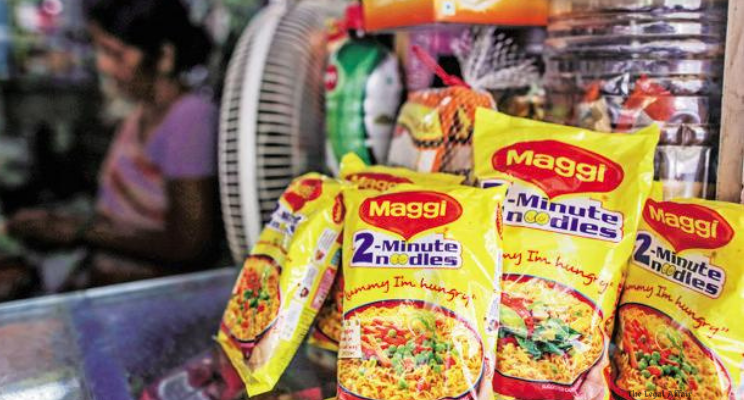
In a significant legal development, the Nagpur bench of the Bombay High Court recently quashed a criminal case against a prominent food manufacturing company accused of using substandard materials in the production of its popular instant noodles, thereby allegedly violating provisions of the Food Safety and Standards (FSS) Act. The company was also facing allegations of breaching regulations under the Food Safety Standards (Food Product Standards and Additives) Regulations, 2011, and the Food Safety Standards (Contaminants, Toxins, and Residues) Regulations, 2011.
Case Background:
The case originated on April 30, 2015, when a Food Inspector in Nagpur seized samples of instant noodles from a local stockist. These samples were initially analysed by the State Public Health Laboratory in Pune, which concluded that the product conformed to the safety standards mandated under the FSS Act and its associated regulations. Despite this, the Food Inspector forwarded the same samples to the Referral Food Laboratory in Ghaziabad, Uttar Pradesh, in November 2015 for further analysis. This laboratory conducted tests from December 1 to December 23, 2015.
Legal Proceedings:
The Referral Food Laboratory’s report indicated that the instant noodles did not meet the prescribed standards, leading to the initiation of criminal proceedings against the company and the stockist on April 4, 2016. The company challenged these proceedings, arguing that the Ghaziabad laboratory was neither accredited by the National Accreditation Board for Testing and Calibration Laboratories (NABL) nor recognised by the Food Safety and Standards Authority of India (FSSAI) under Section 43(1) of the FSS Act. They contended that any analysis conducted by such a laboratory lacked legal validity.
Court’s Analysis:
Presiding over the case, Justice Urmila Joshi-Phalke examined the procedural aspects of the sample analysis. The court noted that Section 43 of the FSS Act mandates that all food testing must be conducted in laboratories accredited by the NABL or recognised by the FSSAI. In this instance, the Ghaziabad laboratory did not meet these criteria. The court observed, “It is not in dispute that the Laboratories in which these food samples were tested were either not accredited by the NABL or not recognised by the Food Authority under Section 43(1) of the FSS Act.”
Furthermore, the court highlighted that the product in question was manufactured in March 2015 and had a shelf life of nine months, meaning it had expired by the time the Referral Food Laboratory conducted its analysis in December 2015. This raised concerns about the reliability of the test results.
Judgment:
Considering these factors, the court concluded that the analysis conducted by the unaccredited laboratory could not be relied upon to substantiate the criminal charges. Justice Joshi-Phalke stated, “The report of the Food Analyst, State Public Health Laboratory, Pune, shows the product conformed with the prescribed standards.” The court emphasised that the Food Inspector had not provided any justification for disregarding the initial analysis and relying on the subsequent report from an unaccredited laboratory.
Consequently, the court quashed the criminal complaint against the company and the stockist, effectively nullifying the proceedings initiated on April 4, 2016.
Conclusion:
This ruling underscores the critical importance of adhering to prescribed procedures and standards in food safety testing. It highlights that analyses must be conducted in accredited laboratories to ensure the validity and reliability of test results. The judgment serves as a reminder to regulatory authorities to follow due process meticulously, ensuring that enforcement actions are based on legally sound and scientifically valid evidence.