


Introduction:
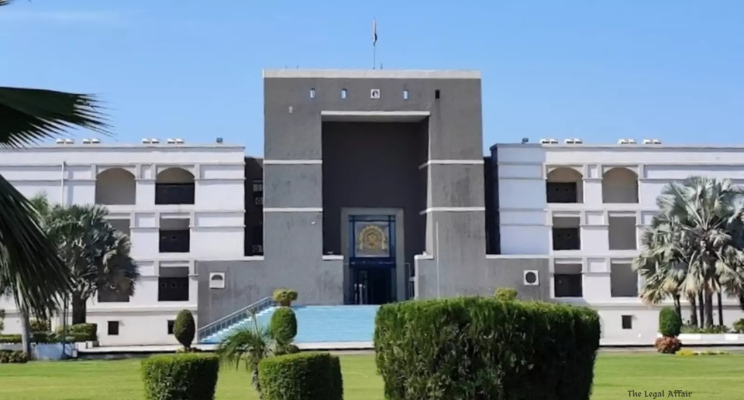
In a significant ruling, the Gujarat High Court overturned an Industrial Tribunal’s order that directed the Surat Municipal Corporation to pay overtime wages to fire brigade employees for the period between 2001 and 2017. The dispute arose when the Sudhrai Majdoor Union (Lal Vatva) representing the fire department employees claimed overtime wages for working beyond the standard 8-hour shift, alleging that the employees had worked 12-hour shifts without compensation. The Industrial Tribunal initially ruled in favor of the employees, directing the Corporation to pay overtime wages. However, the High Court ruled that there was no sufficient evidence to prove that employees had worked beyond their agreed-upon 12-hour shifts, and that the benefits provided to them compensated for the extended hours.
This case sheds light on critical labor issues, including the applicability of the Minimum Wages Act, 1948, and the interpretation of overtime regulations for employees receiving benefits beyond minimum wage.
Background:
The dispute between the Surat Municipal Corporation and its fire brigade employees dates back to 2001, when the Sudhrai Majdoor Union (Lal Vatva) claimed that the employees were forced to work 12-hour shifts without being compensated for the additional four hours. According to the Union, the employees were entitled to overtime wages under the Minimum Wages Act, 1948. The dispute was raised in 2003, with the Industrial Tribunal, Surat, eventually awarding the employees overtime wages on November 9, 2017, for the period from April 14, 2001, to March 30, 2017. The Corporation, however, challenged this ruling in the Gujarat High Court, leading to the appeal that was decided on October 10, 2024.
Arguments of the Appellant (Surat Municipal Corporation):
The Surat Municipal Corporation argued that the 12-hour shift arrangement was mutually agreed upon by both the Corporation and the employees through various settlements. The Corporation’s counsel, Mr. Trivedi, emphasized that the 12-hour shifts were introduced with the full consent of the Union and the employees. He highlighted that, in exchange for these extended hours, employees received various benefits, such as rent-free housing, free electricity, and special allowances. These benefits were provided as a form of compensation for working longer shifts, thereby offsetting any claims for overtime wages.
Further, Mr. Trivedi contended that there was no substantial evidence to support the employees’ claim that they had worked beyond the agreed-upon 12-hour shifts. He argued that the Industrial Tribunal had incorrectly presumed that the employees had worked overtime without presenting documentary evidence or records to substantiate the claim. The Corporation maintained that the employees were not working for more than 12 hours per day and that the benefits provided in return for the extended shifts nullified any claim for overtime.
Additionally, the Corporation argued that the provisions of the Minimum Wages Act, 1948, specifically Section 14 (which governs overtime wages), did not apply to its employees. The employees were already earning more than the minimum wage, and thus, the statutory protections under the Minimum Wages Act for overtime pay were inapplicable in this case. Mr. Trivedi also referenced judicial precedent to support the argument that employees receiving wages above the statutory minimum are not entitled to overtime wages under the Act.
Arguments of the Respondent (Sudhrai Majdoor Union):
On behalf of the Sudhrai Majdoor Union, Advocate Mr. P.C. Chaudhary contended that the fire brigade employees had been working 12-hour shifts since 2001, far exceeding the standard 8-hour workday, and were therefore entitled to overtime wages for the additional four hours worked each day. The Union argued that the employees’ right to overtime pay was protected under Section 14 of the Minimum Wages Act, 1948, which mandates that employees who work beyond the prescribed work hours should receive compensation at twice their regular pay.
Mr. Chaudhary defended the Industrial Tribunal’s 2017 award, asserting that it was based on established evidence, including testimonies and records from the fire department. He argued that the Tribunal had correctly ruled in favor of the employees, as they had been consistently working extra hours without adequate compensation. The Union maintained that despite the benefits provided by the Corporation, such as housing and allowances, the employees were still entitled to overtime pay for the additional hours worked, as the Minimum Wages Act applies to all employees regardless of benefits provided by the employer.
The Union refuted the Corporation’s claim that the employees were fully compensated through additional allowances, arguing that the law mandates direct payment for overtime worked, irrespective of other benefits.
Court’s Reasoning:
The Division Bench of Justice A.S. Supehia and Justice Gita Gopi overturned the Industrial Tribunal’s award, ruling in favor of the Surat Municipal Corporation. The High Court concluded that the employees were not entitled to overtime wages for several reasons, emphasizing the lack of sufficient evidence to substantiate the Union’s claims.
- Lack of Evidence:
The court found that there was no documentary evidence to support the assertion that the employees had worked beyond their 12-hour shifts. The Industrial Tribunal had erred in assuming that the employees worked overtime without concrete proof. The fire brigade employees’ testimonies, which were presented before the Tribunal, indicated that the employees did not consistently work beyond their scheduled shifts. One of the key witnesses admitted during cross-examination that they did not work continuously for 12 hours, and that in cases of emergencies, the shifts sometimes extended beyond the standard hours. However, this did not happen on a regular basis.
The court also highlighted the testimony of another employee, who confirmed that they only worked beyond eight hours “in case of emergencies.” The court concluded that these occasional instances did not justify the Union’s broad claim that employees were regularly working overtime without compensation.
- Mutually Agreed Shift and Benefits:
The court emphasized that the shift arrangement was implemented with the consent of the employees and their Union. The 12-hour shifts were part of a negotiated settlement, and in exchange for these extended hours, the employees were provided with significant benefits, such as rent-free housing, free electricity, and special allowances. These benefits, the court noted, compensated the employees for their longer working hours, and thus there was no justification for additional overtime pay.
- Inapplicability of the Minimum Wages Act:
The court cited the Supreme Court’s ruling in Municipal Council, Hatta vs. Bhagat Singh (1998), which held that Section 14 of the Minimum Wages Act, 1948, applies only to employees earning a minimum rate of wages as prescribed by the Act. Since the fire brigade employees were earning more than the statutory minimum wage, the court held that they were not entitled to the protections under Section 14 of the Act, including the right to overtime pay. The court reasoned that because the employees were already receiving wages and benefits well above the statutory minimum, they could not claim overtime wages under the provisions of the Act.
- Error in Tribunal’s Ruling:
The court found that the Industrial Tribunal had misinterpreted the law by extending the protections of the Minimum Wages Act to employees who were not covered under it. The court also criticized the Tribunal for assuming that the employees were entitled to overtime pay without considering the substantial benefits they were receiving in exchange for working longer shifts.
Based on these findings, the Gujarat High Court allowed the appeal, quashing the Industrial Tribunal’s award and ruling that the employees were not entitled to overtime wages for the period from 2001 to 2017.
Conclusion:
The Gujarat High Court’s decision to overturn the Industrial Tribunal’s award underscores the importance of clear evidence and established legal frameworks in labor disputes. The court found that the fire brigade employees had agreed to 12-hour shifts in exchange for benefits like rent-free housing and special allowances, and that there was no evidence to prove they had consistently worked beyond these shifts. Furthermore, the court ruled that the Minimum Wages Act, 1948, did not apply to the employees, as they were earning above the minimum wage. This ruling serves as an important precedent in cases involving claims for overtime wages and highlights the need for careful consideration of mutually agreed working conditions and the benefits provided by employers.