


Introduction:
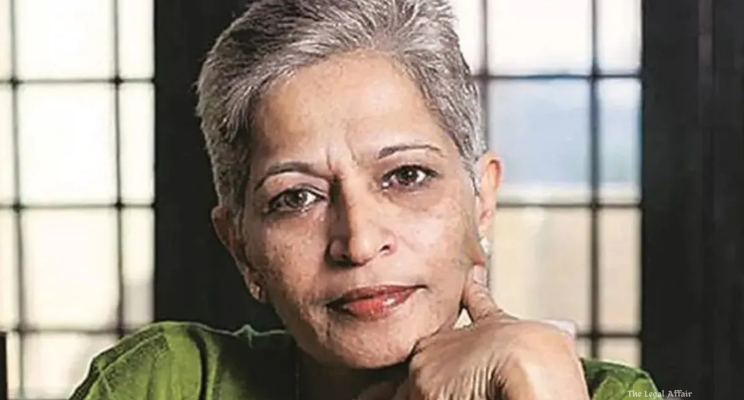
A Sessions Court in Bengaluru recently granted bail to eight individuals accused in the high-profile murder of journalist and activist Gauri Lankesh, who was brutally killed outside her home in September 2017. The accused—Amol Kale, Rajesh D. Bangera, Vasudev Suryawanshi, Rushikesh Devadekar, Parshuram Waghmore, Ganesh Miskin, Amith Ramachandra Baddi, and Manohar Dundeepa Yadave—were released on bail by the special court on October 9, 2024. However, the detailed bail order has not yet been made public.
The case involves a total of 18 accused, facing charges ranging from murder and conspiracy to violations under the Indian Arms Act and the Karnataka Control of Organized Crimes Act (KCOCA). The bail decision was primarily based on the significant delay in the trial, as noted by the defense counsels. Out of 527 charge-sheeted witnesses, only 140 have been examined so far, indicating that the trial may continue for an extended period without resolution.
In this article, we will explore the background of the case, the arguments presented by both the prosecution and defense, the court’s rationale for granting bail, and other recent developments in the trial.
Background:
The murder of Gauri Lankesh on September 5, 2017, shocked the nation and sparked widespread outrage, especially due to her outspoken journalism and criticism of right-wing extremism. Lankesh was shot dead in front of her residence in South Bengaluru by assailants who fled the scene. After an extensive investigation, the Special Investigation Team (SIT) arrested 18 individuals linked to right-wing organizations, charging them with her murder and conspiracy.
Multiple charge sheets have been filed in this case. The first charge sheet was submitted against Naveen Kumar on May 30, 2018, and a comprehensive 9,235-page supplementary charge sheet was filed on November 23, 2018, naming all 18 accused. Despite these filings, the trial has been significantly delayed, with only 140 of the 527 charge-sheeted witnesses examined so far.
Arguments of the Petitioners (Accused):
The counsels for the accused primarily argued on the grounds of trial delay. They highlighted that despite the case being registered in 2017, the trial process has progressed at a slow pace. With over 500 witnesses to be examined, only 140 witnesses had been called to date, and the trial had not moved toward a resolution in a reasonable timeframe. The defense lawyers asserted that the trial could continue for years, and keeping the accused in custody indefinitely without significant progress violated their fundamental rights under Article 21 of the Indian Constitution, which guarantees the right to personal liberty.
They further argued that the accused had been in custody for several years and deserved the opportunity for bail given the lack of immediate trial prospects. The defense contended that the delay in examining witnesses was not attributable to the accused, and they should not suffer prolonged detention due to procedural inefficiencies.
The defense also pointed out that several other accused had already been granted bail by higher courts. The Karnataka High Court had previously granted bail to Bharat Kurane, Srikanth Pangarkar, Sujith Kumar, and Sudhanva Gondhalekar on September 4, 2024, as well as to others at various points since 2023. In light of these precedents, the petitioners argued that they were entitled to similar treatment.
Arguments of the Prosecution:
The Special Public Prosecutor (SPP), S. Balan, vehemently opposed the bail applications. The prosecution argued that the accused were involved in a heinous crime that involved a premeditated conspiracy to murder a prominent journalist. The assassination of Gauri Lankesh, they argued, was not just a singular act of violence but part of a broader conspiracy with potential links to extremist organizations. The prosecution cautioned that releasing the accused on bail could have serious implications for the ongoing investigation and the security of witnesses, many of whom might face intimidation.
They emphasized that this was not an ordinary murder case, but one with far-reaching socio-political implications. The prosecution argued that granting bail would send a negative signal, particularly to those who might seek to undermine the judicial process.
Furthermore, the prosecution raised concerns about the absconding accused—notably Vikas Patel (Accused No. 15), alias Dada alias Nihal, who remains at large. The prosecution argued that releasing the other accused on bail could hinder efforts to apprehend Patel and other suspects still at large.
Additionally, the prosecution maintained that the accused, if released, might tamper with evidence or influence witnesses. They urged the court to consider the gravity of the charges and the organized nature of the crime under the Karnataka Control of Organized Crimes Act (KCOCA), which addresses criminal conspiracies and organized criminal activity. Given the severity of the case, the prosecution argued that bail should not be granted lightly.
Court’s Judgment:
The Sessions Court in Bengaluru, after considering the arguments from both sides, granted bail to the eight accused on October 9, 2024. While the detailed order is yet to be released, the court’s decision primarily rested on the delay in the trial process. The court seemed to agree with the defense’s argument that with only 140 witnesses examined out of a total of 527, the chances of completing the trial in the near future were slim. Therefore, continued detention of the accused without the prospect of a timely trial would be unjust.
The court took into account the fact that bail had already been granted to several other accused in the case, including the Karnataka High Court’s decisions in favor of Bharat Kurane, Srikanth Pangarkar, Sujith Kumar, and others. It also considered the petitioners’ right to personal liberty and noted the lack of substantial progress in the trial, leading to their prolonged detention.
However, the court did not dismiss the seriousness of the charges against the accused, which include murder under Section 302 of the Indian Penal Code, criminal conspiracy under Section 120B, and multiple sections under KCOCA. Despite the gravity of these allegations, the court granted bail due to the procedural delays in the case.
The prosecution’s concerns about witness security and potential interference by the accused were also taken into consideration, but the court noted that the prosecution had not provided sufficient evidence to prove that granting bail would directly endanger the trial process. Nonetheless, the court imposed strict conditions on the bail, including restrictions on the accused’s movements and interactions with potential witnesses, to prevent any tampering with evidence or intimidation of witnesses.
Conclusion:
The granting of bail to the eight accused in the Gauri Lankesh murder case marks another pivotal moment in the long-drawn legal battle surrounding one of India’s most high-profile killings. While the court acknowledged the gravity of the charges, its decision was based on the right to personal liberty and the significant delays in the trial process. With more than 500 witnesses and only 140 examined so far, the prolonged trial duration played a critical role in the court’s decision to grant bail.
This decision underscores the importance of expeditious trials, especially in cases of national significance. As the trial progresses, the focus will remain on ensuring justice for Gauri Lankesh while balancing the rights of the accused to a fair and timely legal process. The prosecution has expressed its intention to challenge the bail orders, and the legal battle is likely to continue in higher courts.