


Introduction:
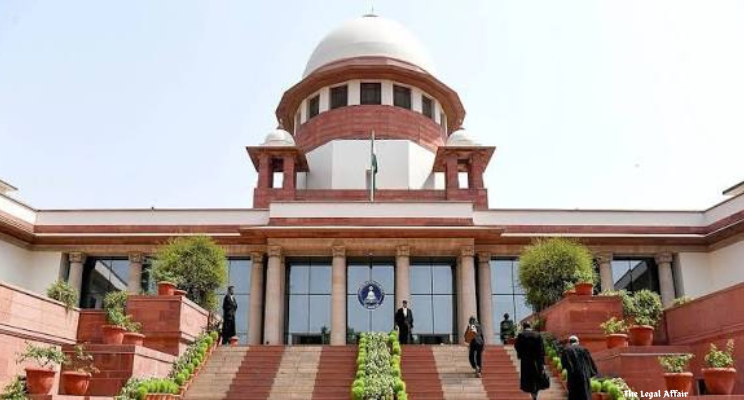
The case of R. Iyyappan & Ors. v. Union of India & Ors. came before the Supreme Court of India as a significant dispute concerning the rights of daily wage workers and the obligations of the State as a model employer under the Constitution. The matter was heard by a bench comprising Justice Vikram Nath and Justice Sandeep Mehta, who delivered a strong and principled judgment addressing the prolonged denial of regularisation to a group of workers engaged in an important national enterprise.
The appellants in this case were daily wage “gang labourers” who had been engaged between 1991 and 1997 at the Liquid Propulsion Systems Centre of the Indian Space Research Organisation in Mahendragiri. These workers were entrusted with essential yet often overlooked tasks such as loading, unloading, and transporting materials, all of which contributed indirectly to India’s space missions. Despite the seemingly peripheral nature of their duties, many of these workers had rendered continuous service for over two decades, forming an indispensable part of the operational framework supporting India’s scientific achievements.
The legal journey of the appellants began when they approached the Central Administrative Tribunal in 2010, seeking regularisation of their services. The Tribunal directed the Union Government to frame a scheme or ad hoc rules within six months, creating necessary posts for their permanent absorption. This direction was subsequently upheld by the Madras High Court in 2011 and later affirmed by the Supreme Court, thereby attaining finality.
However, instead of complying with these directions in their true spirit, the Union Government introduced the “Gang Labourers (Employment for Sporadic Types of Work) Scheme, 2012.” This scheme, rather than granting permanent status, merely provided for temporary engagement, effectively sidestepping the mandate of regularisation. Aggrieved by this development, the appellants once again approached the Tribunal, and upon failing there and before the High Court, ultimately brought the matter back before the Supreme Court.
The case thus raised crucial questions about the sanctity of judicial directions, the scope of compliance by State authorities, and the broader constitutional mandate of fairness and non-arbitrariness in public employment under Article 14.
Arguments of the Parties:
The appellants, representing the daily wage workers, argued that the Union Government had acted in clear violation of binding judicial directions that had already attained finality. They contended that the order passed by the Central Administrative Tribunal in 2010, which was upheld by both the Madras High Court and the Supreme Court, unequivocally required the creation of posts and the formulation of a scheme for their permanent absorption. According to the appellants, the 2012 scheme introduced by the Government was a deliberate attempt to dilute and circumvent these directions.
It was further submitted that the workers had rendered long years of continuous service, in some cases exceeding two decades, and had thereby acquired a legitimate expectation of regularisation. The appellants emphasized that their contributions, though indirect, were integral to the functioning of a premier national institution like ISRO. Denying them permanent status despite such prolonged service amounted to exploitation and violated the principles of fairness and dignity in public employment.
The appellants also argued that the High Court had erred in reopening the issue of regularisation on merits and relying on the precedent of State of Karnataka v. Umadevi (2006) to deny relief. They maintained that once the earlier directions had attained finality, the scope of subsequent proceedings was limited to examining compliance, and not to re-evaluating the merits of regularisation. By revisiting the issue, the High Court had effectively undermined the finality of judicial decisions.
On the other hand, the respondent, the Union of India, defended the 2012 scheme by contending that it was formulated in compliance with the Tribunal’s directions. The Government argued that the nature of the work performed by the appellants was sporadic and did not warrant the creation of permanent posts. It was submitted that the scheme provided a structured mechanism for engaging such workers as and when required, thereby balancing administrative flexibility with employment opportunities.
The Union also relied on the principles laid down in State of Karnataka v. Umadevi, which cautioned against regularisation of irregular or temporary appointments in violation of constitutional requirements of equality in public employment. It was argued that granting permanent status to the appellants without following due process of recruitment would be inconsistent with the constitutional scheme and could open the floodgates for similar claims.
Additionally, the respondents maintained that policy decisions regarding creation of posts and regularisation fall within the domain of the executive, and courts should exercise restraint in interfering with such matters. They contended that the 2012 scheme represented a reasonable and pragmatic solution, taking into account the operational needs of the organisation and the nature of the work involved.
Court’s Judgment:
The Supreme Court of India delivered a decisive judgment in favour of the appellants, strongly criticising the conduct of the Union Government and reaffirming the binding nature of judicial directions. The Court began by noting that the directions issued by the Central Administrative Tribunal in 2010 had attained finality after being upheld by the High Court and the Supreme Court. As such, the only question before the authorities was whether these directions had been faithfully implemented.
The Court held that the 2012 scheme fell far short of compliance with the Tribunal’s directions. Instead of creating posts and granting permanent status, the scheme merely provided for temporary engagement, thereby diluting the essence of the earlier आदेश. The bench observed that such an approach amounted to a clear attempt to circumvent judicial mandates, which cannot be permitted in a system governed by the rule of law.
In a strongly worded observation, the Court expressed its disapproval of the manner in which the Union Government had handled the case, noting that the appellants had been forced to endure a prolonged and arduous legal battle to secure what was rightfully theirs. The judgment underscored that once judicial directions attain finality, they must be implemented in both letter and spirit, and any attempt to undermine them would strike at the very foundation of the justice delivery system.
The Court also addressed the reliance placed by the High Court on State of Karnataka v. Umadevi. It held that the High Court had erred in reopening the issue of regularisation on merits, as the same had already been settled by earlier proceedings. The scope of the High Court’s inquiry was limited to examining compliance with the Tribunal’s directions, and it was wholly impermissible to revisit the question of regularisation at that stage.
A central theme of the judgment was the constitutional obligation of the State to act as a model employer. The Court emphasized that this obligation flows directly from Article 14 of the Constitution, which guarantees equality and prohibits arbitrariness in State action. It reiterated that fairness, non-discrimination, and reasoned decision-making are essential components of this guarantee, and must inform all actions of the State, particularly in matters of employment.
The Court poignantly highlighted the contributions of the appellants to India’s space programme, observing that the success of such national endeavours is not solely the result of scientific brilliance, but also of the collective efforts of numerous individuals performing essential support functions. The judgment recognised that workers engaged in tasks such as transportation and maintenance form an integral part of this ecosystem, and their contributions cannot be disregarded or undervalued.
In a powerful articulation of dignity in labour, the Court observed that denying these workers even the basic recognition of permanent service status, while continuing to benefit from their labour, undermines the principles of fairness and justice. It stressed that the State cannot afford to treat a segment of its workforce with indifference or arbitrariness, particularly when they have devoted years of service to a national cause.
Accordingly, the Court set aside the judgment of the Madras High Court and quashed the 2012 scheme to the extent that it was inconsistent with the Tribunal’s directions. It directed the Union Government to regularise the services of the appellants and grant them permanent status with effect from 9th September 2010, which had been fixed as the outer limit for compliance.
The Court further directed that this exercise be completed within a period of four weeks from the date of the order, thereby ensuring that the appellants receive timely relief after years of litigation. This directive not only provided immediate relief to the workers but also sent a strong message regarding the accountability of State authorities in implementing judicial decisions.
In conclusion, the judgment stands as a reaffirmation of the rule of law and the principle that justice delayed cannot be justice denied. It reinforces the idea that constitutional guarantees are not mere abstractions, but living principles that must guide the actions of the State in all spheres, including employment.