


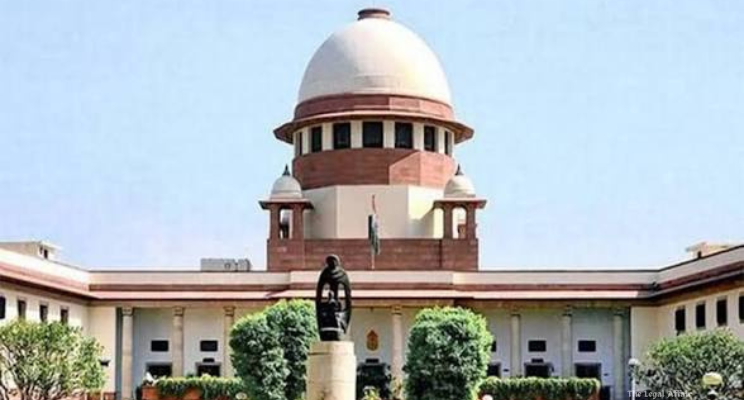
Introduction:
The present matter arose before the Supreme Court of India in a deeply sensitive and constitutionally significant context involving reproductive rights, bodily autonomy, and the limitations imposed by statutory law. The case involved a curative petition filed by the All India Institute of Medical Sciences against an earlier direction issued by a two-judge bench of the Court, which had permitted the termination of a 30-week pregnancy of a 15-year-old minor girl who had allegedly conceived as a result of rape. The bench hearing the curative petition comprised Chief Justice of India Surya Kant and Justice Joymalya Bagchi.
The case brought into sharp focus the limitations of the Medical Termination of Pregnancy Act, particularly its rigid upper time limits for termination of pregnancy, even in cases involving minor victims of sexual assault. Under the current legal framework, termination is generally permitted up to 20 weeks, extendable to 24 weeks for specific categories such as rape survivors and minors. However, beyond this threshold, termination is allowed only under exceptional circumstances, such as when it is necessary to save the life of the woman or in cases of severe foetal abnormalities.
The facts of the case reveal a tragic but not uncommon reality. A minor girl, aged 15, found herself pregnant and sought medical termination at an advanced stage of 30 weeks. By the time the pregnancy was discovered and legal recourse was pursued, the statutory limit had already lapsed. The initial direction by the Court to permit termination was challenged by AIIMS, which raised medical and statutory concerns, prompting the filing of a curative petition.
This case thus sits at the intersection of law, medicine, and constitutional morality. It raises fundamental questions about whether statutory limits should prevail over the rights of a minor rape survivor, and whether the law adequately addresses the lived realities of victims who often face delays in reporting and seeking help due to stigma, fear, and lack of awareness.
Arguments of the Parties:
The petitioner, All India Institute of Medical Sciences, approached the Court with a curative petition challenging the earlier direction permitting termination of the 30-week pregnancy. The institution’s arguments were rooted primarily in medical ethics, statutory compliance, and concerns regarding the risks associated with late-stage termination. It was contended that the pregnancy had significantly exceeded the statutory upper limit of 24 weeks as prescribed under the Medical Termination of Pregnancy Act, even after its 2021 amendment. The hospital emphasized that medical practitioners are bound by the statutory framework and cannot act beyond what the law permits.
The petitioner further argued that termination at such an advanced stage carries substantial risks to the life and health of the minor. Medical opinions often regard termination beyond viability as a complex and high-risk procedure, potentially endangering both physical and psychological well-being. AIIMS maintained that it could not be compelled to undertake a procedure that not only contravenes statutory provisions but also poses ethical and professional dilemmas for doctors.
Additionally, the petitioner highlighted that the statutory scheme is designed to strike a balance between the rights of the woman and the interests of the foetus, particularly as the pregnancy advances. It was argued that once the pregnancy crosses a certain threshold, the State has a legitimate interest in protecting potential life, and this balance should not be lightly disturbed.
On the other hand, the respondent side, represented by the State through Additional Solicitor General Aishwarya Bhati, acknowledged the statutory limitations but also addressed the broader humanitarian and constitutional considerations. While the ASG pointed out that the pregnancy had crossed the 24-week limit, she also placed the matter before the Court for appropriate directions, recognizing the exceptional nature of the case.
The arguments supporting the minor’s right to termination were grounded in constitutional principles, particularly the right to life and personal liberty under Article 21 of the Constitution. It was contended that forcing a minor rape survivor to carry an unwanted pregnancy to term would amount to a violation of her bodily autonomy, dignity, and mental health. The trauma of sexual assault, compounded by the burden of forced motherhood, would have long-lasting psychological consequences.
It was also argued that minors, especially those from vulnerable backgrounds, often do not realize or disclose pregnancy at an early stage. Social stigma, fear of reprisal, and lack of awareness about legal remedies contribute to delays in seeking medical assistance. Therefore, rigid adherence to statutory time limits fails to account for the realities faced by such victims.
Further, reliance was placed on the Court’s inherent powers under Article 142 of the Constitution, which enables it to pass orders necessary to do complete justice in any cause or matter. It was argued that these constitutional powers allow the Court to transcend statutory limitations in exceptional cases, particularly where fundamental rights are at stake.
The respondent’s position thus emphasized that the ultimate decision must rest with the minor girl, whose consent and best interests should be paramount. The role of medical institutions, it was argued, is to provide expert advice, not to impose decisions that override the autonomy of the patient.
Court’s Judgment:
The Supreme Court of India delivered a significant and thought-provoking oral judgment, reflecting a progressive and rights-oriented approach to the issue. At the outset, the Court made it clear that statutory limitations under the Medical Termination of Pregnancy Act are binding on medical practitioners but do not constrain the constitutional powers of the Court.
Invoking its authority under Article 142, the Court emphasized that it is empowered to ensure complete justice, particularly in cases involving grave violations of fundamental rights. The bench categorically stated that the statutory time limits cannot be used to deny relief in exceptional circumstances, especially when the case involves a minor rape survivor.
One of the most striking aspects of the Court’s observations was its call for legislative reform. Chief Justice Surya Kant remarked that the law must be amended to remove the upper time limit for termination of pregnancies arising out of rape of minor girls. The Court recognized that the existing framework does not adequately address the challenges faced by such victims, who often discover their pregnancies late due to a variety of socio-economic and psychological factors.
The Court observed that by the time a minor becomes aware of her pregnancy and musters the courage to seek legal recourse, the statutory window may have already closed. In such situations, denying termination would effectively punish the victim for circumstances beyond her control. The bench noted that many victims are reluctant to disclose sexual abuse due to fear, stigma, and pressure, and the law must be sensitive to these realities.
Another crucial aspect of the judgment was the Court’s reaffirmation of the principle of bodily autonomy. It held that the decision to continue or terminate a pregnancy ultimately rests with the woman, or in this case, the minor girl. The Court rejected the notion that a medical institution like AIIMS could override this decision, stating unequivocally that the hospital cannot impose its own views on the patient.
The Court also addressed the argument regarding medical risks, acknowledging that while such concerns are valid, they must be balanced against the rights and wishes of the patient. It emphasized that medical opinions should guide the process but cannot become instruments of coercion.
In dismissing the curative petition filed by AIIMS, the Court effectively upheld the earlier direction permitting termination. It reinforced the idea that constitutional courts must act as guardians of fundamental rights, stepping in where statutory law falls short.
The judgment also touched upon the need for expeditious trials in cases of child rape. The Court observed that delays in the criminal justice process further aggravate the suffering of victims and contribute to situations like the present one. It urged that mechanisms be put in place to ensure that such cases are dealt with swiftly and sensitively.
Importantly, the Court referred to its earlier observations in the case of A (Mother of X) v. State of Maharashtra, where it had expressed concerns about the limitations of the MTP Act in cases involving minor victims of rape and incest. In that case as well, the Court had highlighted the inconsistency in allowing termination beyond 24 weeks for foetal abnormalities while denying the same relief to rape survivors.
The present judgment builds on that reasoning and pushes the discourse further by explicitly calling for legislative change. It signals a shift towards a more humane and victim-centric approach, recognizing that the law must evolve to meet the needs of those it seeks to protect.
In conclusion, the Court’s decision represents a significant step towards strengthening reproductive rights and ensuring justice for vulnerable victims. It underscores the importance of constitutional values over rigid statutory interpretation and calls upon the legislature to revisit and reform existing laws in light of contemporary realities.