


Introduction:
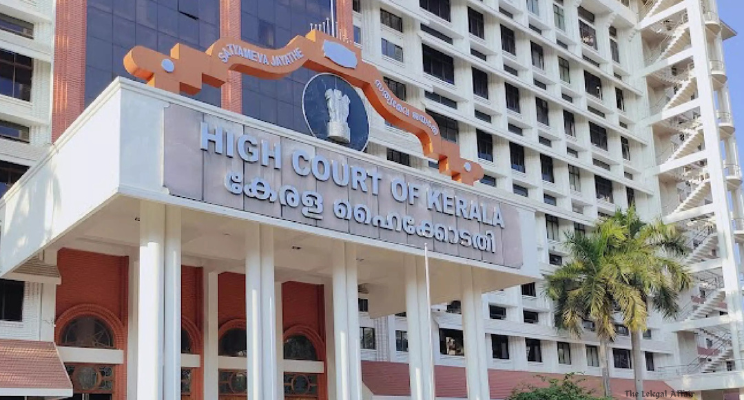
In Appukuttan v. State of Kerala (2026 LiveLaw (Ker) 127), the Kerala High Court delivered a significant judgment clarifying an important aspect of evidentiary law concerning the testimony of persons with intellectual disabilities. Justice A. Badharudeen held that the mere failure of an investigating officer to identify or record the intellectual disability of a victim during the course of investigation does not vitiate the prosecution case. The Court emphasized that the determining factor is whether the witness is competent to testify, meaning that the witness is capable of understanding questions and providing rational and coherent answers.
The judgment was delivered while hearing a criminal appeal challenging the conviction of the appellant for the offence of rape under Section 376 of the Indian Penal Code (IPC). The appellant argued that the victim was mentally challenged and that the investigating officer failed to record this fact or conduct a medical assessment of her mental condition when recording her statement. According to the appellant, this omission undermined the credibility of the prosecution case and rendered the conviction unsustainable.
However, after examining the testimony of the victim, the supporting medical evidence, and the legal provisions governing witness competency, the High Court concluded that the prosecution had successfully proved the offence beyond reasonable doubt. The Court affirmed the conviction and sentence imposed by the Sessions Court, reiterating that intellectual disability does not automatically render a person incapable of giving valid testimony.
The ruling reinforces the principle that courts must evaluate a witness’s competence based on their ability to understand and respond to questions rather than on assumptions regarding their physical or mental condition.
Background of the Case:
The case arose from allegations of repeated sexual assault committed against a minor girl who was partially physically handicapped and had certain intellectual limitations. According to the prosecution, the accused along with another man repeatedly sexually assaulted the victim over a period of approximately three months prior to August 20, 2011.
The victim was a vulnerable minor who faced both physical and mental challenges. The prosecution alleged that the accused exploited her vulnerability and subjected her to repeated acts of sexual assault.
Following the disclosure of the incidents, a criminal case was registered and an investigation was initiated. Statements of witnesses were recorded and the victim was subjected to medical examination.
The investigation culminated in the filing of charges against two accused persons for committing rape under Section 376 of the Indian Penal Code.
However, during the course of the trial before the Sessions Court, the first accused died. Consequently, the proceedings continued only against the second accused, who later became the appellant before the High Court.
Trial Before the Sessions Court:
The Sessions Court conducted a detailed trial and examined several witnesses, including the victim, medical professionals, and other supporting witnesses.
The victim appeared before the court and provided a detailed account of the incidents of sexual assault. She narrated how the accused had repeatedly taken advantage of her vulnerability and committed acts of sexual violence.
The medical evidence presented during the trial revealed signs of vaginal penetration, which corroborated the victim’s testimony.
The Sessions Court carefully evaluated the evidence on record. It found that the testimony of the victim was consistent and credible. The court also noted that her testimony was supported by medical findings and other circumstantial evidence.
Based on the overall evaluation of the evidence, the Sessions Court concluded that the prosecution had established the guilt of the accused beyond reasonable doubt.
Accordingly, the court convicted the appellant for the offence of rape under Section 376 of the IPC and sentenced him to seven years of rigorous imprisonment along with a fine of ₹50,000.
Appeal Before the High Court:
Aggrieved by the judgment of the Sessions Court, the appellant approached the Kerala High Court by filing a criminal appeal.
The appellant challenged the conviction primarily on the ground that the victim was mentally challenged and that this fact had not been properly examined during the investigation.
The appellant argued that the investigating officer failed to identify the victim’s intellectual disability and did not obtain a medical evaluation regarding her mental fitness when recording her statement.
According to the appellant, this lapse was significant and undermined the reliability of the prosecution case.
It was contended that the conviction was based primarily on the testimony of the victim, and therefore any doubt regarding her mental competence should have been carefully examined during the investigation stage.
Arguments on Behalf of the Appellant:
Counsel for the appellant, Mr. V. A. Johnson, argued that the victim was mentally challenged and that the investigating officer had failed to record this fact during the investigation.
The defence submitted that when a witness suffers from intellectual disability, the investigating officer must conduct a proper assessment of the witness’s mental capacity.
According to the defence, the investigating officer should have arranged for a medical examination or obtained an expert opinion regarding the mental condition of the victim before recording her statement.
Failure to do so, the defence argued, created serious doubts about the reliability of the victim’s testimony.
The appellant further argued that the prosecution had relied heavily on the victim’s statement without establishing that she possessed the mental capacity required to provide legally admissible testimony.
It was also contended that the absence of medical evidence regarding her mental fitness weakened the prosecution case and made the conviction unsafe.
Therefore, the defence urged the High Court to set aside the conviction and acquit the appellant.
Arguments on Behalf of the Prosecution:
The prosecution strongly opposed the appeal and defended the judgment of the Sessions Court.
Counsel for the State, including Special Government Pleader Ambika Devi S. and advocate Vipin Narayanan, argued that the law does not automatically disqualify persons with intellectual disabilities from giving evidence.
Instead, the relevant legal principle is whether the witness is capable of understanding questions and providing rational answers.
The prosecution pointed out that during the trial the victim had narrated the incidents clearly and consistently. She responded coherently during both examination-in-chief and cross-examination.
The prosecution also emphasized that the trial judge had the opportunity to observe the demeanour of the witness and assess her credibility.
Further, the medical evidence presented during trial confirmed the occurrence of sexual assault.
Therefore, the prosecution argued that the conviction was well-founded and did not warrant interference by the High Court.
Legal Framework Considered by the Court:
While deciding the appeal, the High Court examined the legal provisions governing the competency of witnesses.
The Court referred to Section 118 of the Indian Evidence Act, which states that all persons are competent to testify unless they are incapable of understanding the questions put to them or of giving rational answers.
Such incapacity may arise due to tender age, extreme old age, mental illness, or other physical or mental infirmities.
The Court also referred to Section 124 of the Bharatiya Sakshya Adhiniyam, 2023, which contains a similar provision regarding the competency of witnesses.
Both provisions reflect the inclusive approach of the law, which does not automatically exclude persons with mental disabilities from giving evidence.
Instead, the law requires courts to evaluate whether the witness can understand the questions and provide rational responses.
Reliance on Supreme Court Precedent:
The High Court relied on the judgment of the Supreme Court in Ramesh P. v. State represented by Inspector of Police (AIR 2019 SC 3559).
In that case, the Supreme Court clarified that judges may conduct a preliminary examination known as a voir dire to determine the competency of a witness.
During such examination, the judge asks simple questions to assess whether the witness understands the nature of the proceedings and is capable of giving rational answers.
If the witness demonstrates such ability, their testimony becomes legally admissible and may be relied upon by the court.
The High Court noted that this principle applies equally to witnesses with intellectual disabilities.
Observations of the Court:
After examining the testimony of the victim, the High Court observed that she had consistently narrated the incidents of sexual assault.
During both examination-in-chief and cross-examination, she answered questions clearly and coherently.
Justice Badharudeen observed that a person of unsound mind is not automatically incompetent to testify unless their mental condition prevents them from understanding questions or providing rational answers.
The Court noted that although the victim had certain intellectual limitations, she was capable of understanding the questions posed to her.
The Court also clarified that the victim could not be classified as a “lunatic” or a person entirely incapable of understanding events.
Instead, she was a partially handicapped girl who possessed the ability to narrate her experiences.
Effect of Investigating Officer’s Failure:
The Court then addressed the central argument raised by the appellant regarding the investigating officer’s failure to recognise the intellectual disability of the victim.
Justice Badharudeen rejected this contention.
The Court observed that the investigating officer’s failure to notice the intellectual disability actually indicated that the victim had answered questions normally when her statement was recorded.
If the victim had shown obvious signs of inability to understand questions, the investigating officer would likely have recognised the issue.
Therefore, the Court concluded that this omission did not undermine the credibility of the prosecution case.
Assessment of Evidence:
The High Court carefully reviewed the entire evidence on record.
The Court noted that the victim’s testimony was clear, consistent, and credible.
The medical evidence confirmed signs of vaginal penetration, which supported the prosecution case.
Additionally, other witnesses provided supporting testimony that strengthened the prosecution case.
After evaluating all the evidence, the Court concluded that the prosecution had proved the offence beyond reasonable doubt.
Court’s Judgment:
The Kerala High Court ultimately dismissed the criminal appeal.
The Court upheld the conviction and sentence imposed by the Sessions Court.
The appellant was therefore required to undergo seven years of rigorous imprisonment and pay the fine of ₹50,000 as ordered by the trial court.
The judgment reaffirmed the legal principle that intellectual disability does not automatically disqualify a person from giving evidence.
The decisive factor remains the witness’s ability to understand questions and respond rationally.