


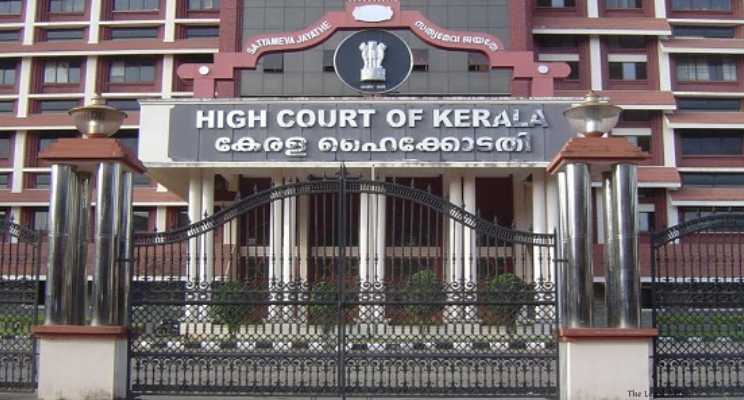
Introduction:
The Kerala High Court in M/s Grid Engineers and Contractors and Another v. Union Bank of India and Another (2026 LiveLaw (Ker) 128) delivered an important ruling clarifying the scope of intra-court appeals under Section 5 of the Kerala High Court Act, 1958. The Division Bench comprising Chief Justice Soumen Sen and Justice Syam Kumar V.M. held that an intra-court appeal is maintainable even against an ex parte ad interim order when such order affects the right of a party to pursue a statutory remedy.
The decision arose in the context of proceedings initiated under the Securitisation and Reconstruction of Financial Assets and Enforcement of Security Interest Act, 2002 (SARFAESI Act). The controversy revolved around whether a bank could challenge an interim order passed by a Single Judge staying SARFAESI proceedings through a writ appeal. The matter gained complexity when the Single Judge questioned the maintainability of the writ appeal itself, leading to a reference before a Division Bench to settle the legal issue.
The High Court ultimately clarified the law by holding that intra-court appeals are maintainable in circumstances where interim judicial orders have the effect of prejudicially impacting a party’s statutory rights. The Court emphasised that procedural technicalities should not defeat substantive justice and that appellate remedies must remain available where rights are adversely affected.
Background of the Case:
The dispute began when the petitioners, M/s Grid Engineers and Contractors and another, approached the Kerala High Court by filing a writ petition before a Single Judge. They challenged an order passed by a Magistrate Court under Section 14 of the SARFAESI Act.
Section 14 of the SARFAESI Act empowers secured creditors, such as banks and financial institutions, to approach the jurisdictional Magistrate for assistance in taking possession of secured assets when borrowers default in repayment of loans. The provision acts as a mechanism enabling creditors to enforce security interests without prolonged litigation.
The petitioners contended before the Single Judge that the Magistrate’s order granting possession of the secured asset was passed without jurisdiction. According to them, the procedure adopted was illegal and contrary to the statutory requirements of the SARFAESI Act.
When the writ petition came up for admission, the Single Judge granted an interim order staying the SARFAESI proceedings and directed the bank to file a counter affidavit responding to the allegations made by the petitioners.
This interim stay effectively halted the enforcement process initiated by the bank under the SARFAESI Act.
Challenge by the Bank:
Aggrieved by the interim stay order, the respondent bank filed a writ appeal before the Division Bench. The bank contended that the writ petition itself was not maintainable because the SARFAESI Act provides an effective alternative statutory remedy.
Under the SARFAESI Act, any person aggrieved by measures taken by a secured creditor can approach the Debt Recovery Tribunal (DRT). The bank argued that this statutory remedy must ordinarily be exhausted before invoking the extraordinary jurisdiction of the High Court under Article 226 of the Constitution.
The bank also pointed out that the petitioners had earlier filed another writ petition before the High Court relating to the same dispute. According to the bank, the present writ petition was filed without complying with the directions issued in the earlier judgment.
Thus, the bank argued that the petitioners were attempting to bypass the statutory remedy available under the SARFAESI Act and misuse the writ jurisdiction of the High Court.
First Division Bench Judgment:
The Division Bench examined the challenge raised by the bank and held that the interim order passed by the Single Judge was unsustainable.
The Court noted that the interim order lacked adequate reasoning and did not consider the well-established legal principle that writ jurisdiction should not ordinarily be exercised when an effective alternative remedy exists.
In support of its conclusion, the Division Bench relied on precedents of the Supreme Court, including LIC Housing Finance Ltd. v. Nagson and Company and United Bank of India v. Satyawati Tondon (2010) 8 SCC 110.
In the Satyawati Tondon case, the Supreme Court had strongly discouraged High Courts from interfering in SARFAESI proceedings under Article 226 when the aggrieved party has a statutory remedy before the Debt Recovery Tribunal.
Applying these principles, the Division Bench set aside the interim order of the Single Judge.
However, the Court clarified that its decision would not prevent the Single Judge from reconsidering the issue of interim relief after examining all legal and factual aspects, including the question of maintainability.
Subsequent Proceedings Before the Single Judge:
Following the Division Bench judgment, the writ petition again came up before the Single Judge for consideration.
At this stage, the Single Judge passed another interim order holding that the writ petition was maintainable.
The order effectively reopened the issue which had earlier been examined by the Division Bench.
The bank once again challenged this order by filing another writ appeal before the Division Bench.
Second Division Bench Judgment
While hearing the second writ appeal, the Division Bench observed that the order passed by the Single Judge did not properly examine the issue of maintainability.
The Court found that the Single Judge had failed to consider the judgments relied upon by the bank and had not analysed the legal position in the correct perspective.
Consequently, the Division Bench set aside the order passed by the Single Judge.
Reference Made by the Single Judge:
After the second Division Bench judgment, the matter returned to the Single Judge.
Instead of proceeding to decide the writ petition on merits, the Single Judge made a reference questioning whether the Division Bench could entertain a writ appeal against an interlocutory order.
The Single Judge relied on the Supreme Court judgment in M/s. Godrej Sara Lee Ltd. v. Excise and Taxation Officer-cum-Assessing Authority to justify the exercise of jurisdiction under Article 226.
In the reference order, the Single Judge raised doubts about the maintainability of writ appeals against interim orders, observing that such orders are interlocutory in nature and therefore may not be appealable under Section 5 of the Kerala High Court Act, 1958.
Issues Before the Division Bench:
The reference placed an important legal question before the Division Bench:
Whether an intra-court appeal under Section 5 of the Kerala High Court Act is maintainable against an ex parte ad interim order or other interlocutory orders passed by a Single Judge.
The Court had to determine the scope of appellate jurisdiction under the Act and decide whether such appeals could be entertained when the impugned order affects a party’s statutory rights.
Arguments of the Petitioners:
The petitioners argued that the writ petition challenging the Magistrate’s order under the SARFAESI Act was maintainable.
They contended that the order passed under Section 14 of the SARFAESI Act was without jurisdiction and therefore could be challenged directly before the High Court under Article 226.
According to them, the availability of an alternative remedy does not completely bar the exercise of writ jurisdiction, particularly when the impugned action is illegal or without authority of law.
The petitioners also relied on Supreme Court judgments recognising exceptions to the rule of alternative remedy.
They argued that when fundamental legal defects exist in the decision-making process, the High Court is justified in exercising its constitutional powers.
Further, they contended that interim orders passed by the High Court should not ordinarily be subjected to appellate scrutiny because doing so could lead to unnecessary delays in the adjudication of writ petitions.
According to them, Section 5 of the Kerala High Court Act should not be interpreted to allow appeals against every interlocutory order passed by a Single Judge.
Arguments of the Bank:
The respondent bank strongly opposed the maintainability of the writ petition as well as the interpretation suggested by the petitioners.
The bank argued that the SARFAESI Act provides a complete statutory framework for resolving disputes between borrowers and secured creditors.
Under this framework, aggrieved parties can approach the Debt Recovery Tribunal, which has specialised jurisdiction to examine such matters.
The bank submitted that allowing borrowers to bypass the statutory remedy and directly approach the High Court would defeat the purpose of the SARFAESI Act, which was enacted to ensure speedy recovery of debts.
On the question of maintainability of writ appeals, the bank argued that Section 5 of the Kerala High Court Act permits intra-court appeals against judgments and orders of Single Judges.
The bank contended that when an interim order has the effect of preventing the enforcement of statutory rights or remedies, such order cannot be treated as a purely procedural or interlocutory direction.
Instead, it substantially affects the rights of the parties and therefore must be open to appellate scrutiny.
The bank further argued that denying the right to challenge such orders would lead to injustice, particularly in cases where interim relief is granted without adequate reasoning.
Court’s Analysis:
The Division Bench carefully examined the statutory provisions and the relevant judicial precedents.
The Court noted that Section 5 of the Kerala High Court Act provides a right of appeal against judgments and orders passed by a Single Judge.
While interlocutory orders may not always be appealable, the nature and effect of the order must be considered to determine whether an appeal is maintainable.
The Court emphasised that if an order significantly affects the rights of a party or interferes with a statutory remedy, it cannot be treated as a mere procedural direction.
Such orders may have serious legal consequences and therefore must be open to challenge through intra-court appeals.
Observations of the Court:
The Court observed that ex parte interim orders, particularly those staying statutory proceedings, can have a substantial impact on the rights of parties.
In the present case, the interim order passed by the Single Judge had the effect of halting proceedings initiated under the SARFAESI Act.
The Court held that such orders cannot be insulated from appellate review merely by describing them as interlocutory.
Clarifying the legal position, the Division Bench held that an intra-court appeal under Section 5 of the Kerala High Court Act is maintainable against:
• Ex parte ad interim orders
• Orders that significantly affect the rights of parties
• Orders that interfere with statutory remedies
The Court categorically stated that appellate jurisdiction cannot be denied in situations where judicial orders cause serious prejudice to a party.
Criticism of the Reference Order:
The Division Bench also made strong observations regarding the approach adopted by the Single Judge while making the reference.
The Court remarked that instead of deciding the writ petition on merits, the Single Judge appeared to question the correctness of the Division Bench judgment.
The Bench noted that a Single Judge cannot assume appellate jurisdiction over a judgment delivered by a Division Bench.
Such an approach, according to the Court, undermines the hierarchical judicial structure and the principle of judicial discipline.
The Court emphasised that judgments of a Division Bench are binding on Single Judges of the same High Court.
Therefore, it was not open to the Single Judge to question the propriety of the earlier Division Bench decision.
Final Decision of the Court:
After analysing the legal issues, the Division Bench answered the reference by holding that intra-court appeals under Section 5 of the Kerala High Court Act are maintainable against ex parte ad interim orders and other orders that affect the right of a party to pursue statutory remedies.
The Court clarified that the availability of appellate remedies ensures fairness and accountability in judicial proceedings.
It also reaffirmed that High Courts must exercise writ jurisdiction with caution in matters arising under specialised statutes such as the SARFAESI Act.