


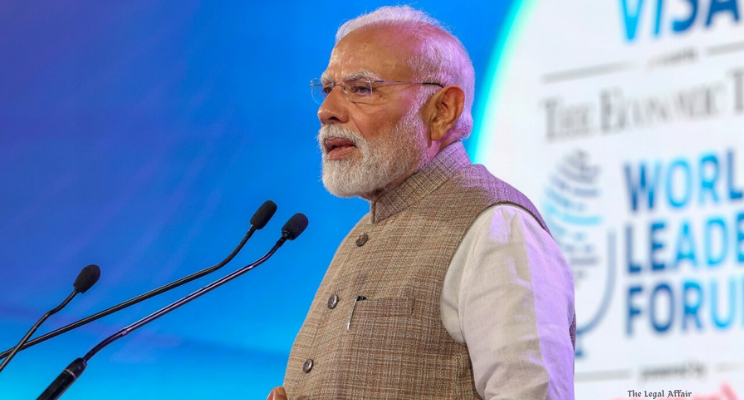
Introduction:
In the matter titled University of Delhi v. Neeraj and other connected matters, the Delhi High Court was tasked with deciding whether information regarding the educational records of students, including Prime Minister Narendra Modi’s 1978 Bachelor of Arts degree, could be disclosed under the Right to Information Act, 2005. The controversy arose after RTI activist Neeraj Kumar filed an application seeking results of all students who appeared in the BA examinations conducted by the University of Delhi in 1978, including roll numbers, names, marks, and pass/fail status. The Central Information Commission (CIC), in its 2016 order, had directed the University to disclose the information, reasoning that degree-related details were public documents and should be available for inspection. The University of Delhi challenged this order before the High Court in 2017, arguing that the records constituted third-party information and were protected from disclosure under the RTI Act. The matter thus raised larger questions concerning the scope of transparency under RTI, the limits of public curiosity, the balance between privacy and accountability, and the fiduciary obligations of educational institutions. Justice Sachin Datta of the Delhi High Court has now set aside the CIC’s order, thereby tilting the balance in favor of privacy and institutional confidentiality, while leaving unanswered the wider public debate on whether elected leaders’ educational qualifications should be subject to public scrutiny.
Arguments of the University of Delhi:
The University of Delhi, represented by Solicitor General of India Tushar Mehta, strongly opposed the CIC’s directive to disclose records of all students from 1978. At the core of the University’s argument was the claim that student records were “third-party information” as defined under Section 8(1)(j) of the RTI Act. The provision exempts disclosure of personal information which has no relationship to public interest, or which would cause unwarranted invasion of privacy unless the larger public interest justifies disclosure. The University contended that students, whether past or present, were entitled to confidentiality concerning their academic performance, and the institution had a fiduciary responsibility to safeguard such records. Fiduciary capacity, in this context, meant that students placed their personal data in trust with the University, and the University was bound to protect that trust by not disclosing the information to outsiders without consent. Tushar Mehta further submitted that there was indeed a record of a Bachelor of Arts degree awarded in 1978 and that the University had no objection in showing it to the Court. However, he emphasized that the document could not be made subject to “public scrutiny by strangers,” as doing so would violate the privacy rights of all students concerned. Mehta also argued that the RTI framework was not designed to satisfy “mere curiosity” or political interests. He reminded the Court that the RTI mechanism was a tool to promote transparency in governance and functioning of public authorities, not an instrument to intrude into the private educational histories of individuals. The Solicitor General’s argument essentially boiled down to three prongs: the information was third-party and exempt from disclosure, it was held in fiduciary capacity, and the application was based on curiosity rather than demonstrable public interest.
Arguments of the RTI Applicant:
On the other hand, the RTI applicant, Neeraj Kumar, represented by Senior Advocate Sanjay Hegde, insisted that the information sought was not private in nature but was part of the public domain. Hegde submitted that universities across India routinely publish results of examinations on notice boards, in newspapers, and now on official websites. Such publication of results was historically the norm, and therefore, disclosure of the 1978 BA results could not be treated as an invasion of privacy. He argued that educational qualifications, particularly those of public figures, cannot be shielded under the garb of privacy because they directly impact the integrity of governance and the faith of citizens in their leaders. Hegde further countered the University’s fiduciary capacity claim, stating that the University was not akin to a trustee holding personal secrets but a public body maintaining official registers, which by their very nature were public documents. According to him, such registers should be accessible for inspection under the RTI Act. He stressed that the CIC had rightly observed that matters relating to education were within the public domain. Moreover, the applicant questioned why the University was reluctant to disclose information that would ordinarily be displayed on a notice board. He alleged that the resistance suggested a lack of transparency, particularly when it came to prominent individuals. In his view, when an RTI applicant requests information already accessible or meant to be accessible to the public at large, the exemption under Section 8(1)(j) cannot apply. Hegde also invoked the larger democratic principle of accountability, arguing that in a democracy, citizens have the right to know the qualifications of their leaders, and institutions cannot hide behind procedural excuses to withhold information of public importance.
Observations of the Central Information Commission:
The CIC, in its 2016 order, had adopted a broad interpretation of transparency obligations under the RTI Act. It concluded that educational records of students, whether past or present, fell within the public domain. The Commission reasoned that every University was a public body, and its registers containing degree-related information were public documents. It noted that examination results had historically been published, and hence, disclosure could not be construed as breaching privacy. The CIC’s directive allowed the RTI applicant to inspect the records of students who had passed the BA program in 1978. The Commission’s reasoning underscored the view that the RTI Act was meant to advance openness in public institutions, and since academic qualifications influence eligibility for jobs and public office, hiding such information undermines accountability. The CIC order therefore tilted heavily toward transparency, without giving much weight to the countervailing concerns of privacy and fiduciary obligations.
Proceedings Before the High Court:
When the matter came before the Delhi High Court in 2017, the University obtained a stay of the CIC’s order at the very first hearing on January 24. The Court was informed that while the University could provide aggregate data such as the total number of students who appeared, passed, or failed in the examination, disclosure of names, roll numbers, and marks would intrude upon personal information of third parties. This raised a critical question: should transparency in governance extend to revealing the personal academic details of individuals, or should there be a protective sphere of privacy, even in public records? During arguments, the Solicitor General reiterated that he had no objection to showing Prime Minister Narendra Modi’s degree to the Court itself but resisted making it available for general public scrutiny. He emphasized the principle that RTI was not meant to cater to curiosity or political rivalries. On the other hand, Senior Advocate Sanjay Hegde stood firm on his position that degrees and examination results were not private and had always been treated as public information by universities. He argued that privacy considerations could not override the citizen’s right to know, especially where the qualifications of a national leader were in question.
Judgment of the Delhi High Court:
Justice Sachin Datta of the Delhi High Court ultimately set aside the CIC’s order directing disclosure of the 1978 BA results, including the Prime Minister’s degree. The Court’s judgment underscored the principle that the RTI Act’s transparency mandate cannot override the privacy rights of individuals unless larger public interest is demonstrated. The Court held that disclosure of names, roll numbers, marks, and results of students constituted personal information of third parties and was therefore exempted under Section 8(1)(j) of the RTI Act. The Court accepted the University’s contention that it held such information in fiduciary capacity, which imposed an obligation not to share it with outsiders without consent. Justice Datta’s ruling aligned with the Solicitor General’s submission that RTI was not a tool to satisfy curiosity but to secure accountability in governance. While the Court did not dispute that the University maintained a record of the 1978 BA program and a degree in Prime Minister Modi’s name, it clarified that this information could not be subjected to public inspection in the manner sought by the applicant. The Court thereby reinforced a privacy-protective interpretation of the RTI Act. It rejected the CIC’s expansive view that all degree-related information was inherently public. Instead, it insisted that each case must be examined under the statutory framework of exemptions, and in this instance, the balance weighed against disclosure. Importantly, the Court’s decision does not negate the existence of Prime Minister Modi’s degree, as the Solicitor General explicitly stated that such a record exists. However, it places a firm boundary against public access to the academic records of any student without specific justification rooted in public interest.
Broader Implications of the Judgment:
The judgment carries significant implications for the interplay between transparency, privacy, and accountability in Indian democracy. First, it narrows the scope of information that can be accessed under RTI by treating student records as private, even when maintained by public universities. This sets a precedent that individual academic details cannot be disclosed unless public interest clearly outweighs privacy concerns. Second, the judgment reflects judicial recognition of privacy rights, in line with the Supreme Court’s landmark decision in Justice K.S. Puttaswamy v. Union of India (2017), which declared the right to privacy as a fundamental right under Article 21 of the Constitution. The Delhi High Court’s reasoning resonates with this jurisprudence, indicating that privacy shields extend even to information held by public institutions. Third, the case demonstrates the challenges of balancing political accountability with personal privacy. While citizens expect transparency regarding the qualifications of their leaders, the Court has indicated that such expectations cannot justify unrestricted access to personal records. Political debates regarding the educational qualifications of leaders must therefore be addressed through other mechanisms, such as disclosures in election affidavits, rather than through RTI applications seeking old university records. Fourth, the decision limits the CIC’s expansive interpretation of what constitutes public domain information. By setting aside the CIC’s order, the Court has clarified that not all registers maintained by universities automatically qualify as public documents open for scrutiny. Finally, the ruling has ignited broader debates on whether elected officials should voluntarily disclose their academic records to uphold transparency. While the Court has protected the privacy of all students, including Prime Minister Modi, the political question of disclosure remains alive in the public sphere.