


Introduction:
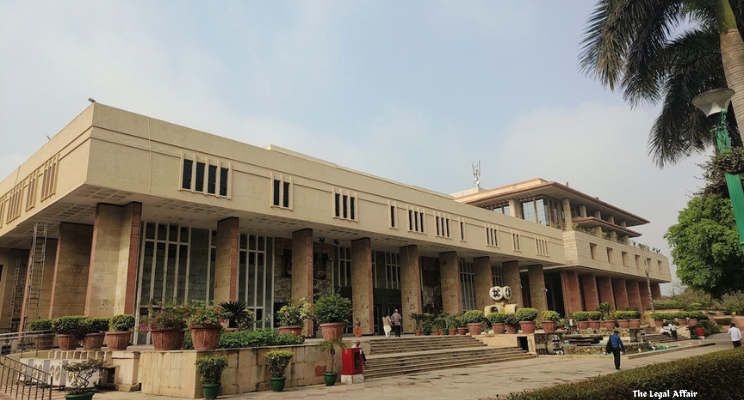
In a recent judgment, the Delhi High Court quashed criminal proceedings against an Afghan national accused of serious offences, including rape and forgery, after the complainant, a US citizen, expressed her desire to withdraw the case following an amicable settlement between the parties. The accused, Hameedullah Akbar @ Faheem Modh Zai, had been charged under various sections of the Indian Penal Code (IPC) and other acts, including forgery, impersonation, and cyber offences. The complainant had alleged that the accused developed a relationship with her under pretences, including a false promise of marriage, and had fraudulently extracted significant sums of money from her. However, she later submitted before the Court that the matter had been resolved and she no longer wished to pursue the case, leading the Court to quash the proceedings.
Justice Vikas Mahajan of the Delhi High Court heard the case, in which the accused had petitioned to quash the FIR and the ongoing criminal trial against him. The Court noted that the complainant, who had appeared via video conferencing from the US, clearly stated that she had settled all disputes with the accused and had no objection to the quashing of the case. Taking into account the long duration of the accused’s pre-trial detention, the Court remarked that continuing the case would be both “oppressive and unwarranted,” especially given the slim chances of conviction in light of the complainant’s withdrawal of support for the prosecution’s case.
Arguments of Both Sides:
Petitioner’s Arguments:
The petitioner, an Afghan national, had been incarcerated since 2017 on charges that included rape (Section 376 IPC), forgery of a valuable security (Section 467 IPC), cheating (Section 420 IPC), and cyber offences under the Information Technology (IT) Act. He was accused by the complainant, a US national, of engaging in a relationship under pretences and exploiting their bond to extract large sums of money, approximately USD 90,000, from her. According to the complainant, the petitioner had promised to marry her but had no intention of doing so. She further alleged that the petitioner used forged documents, including a fake adoption deed, to support his fraudulent claims, and even illegally obtained an Indian Election ID and PAN card.
The petitioner’s legal team, in their plea to quash the FIR, argued that the disputes between the petitioner and the complainant had been resolved amicably. They presented an affidavit from the complainant in which she confirmed the settlement and her desire to withdraw the charges. The petitioner’s counsel emphasized that further proceedings in the case would be futile, as the complainant had stated she no longer supported the prosecution’s case.
The petitioner also raised the issue of his prolonged pre-trial incarceration, noting that he had been in custody for more than six years, much longer than the potential sentence for most of the charges against him, except for the rape and forgery of valuable security charges. His counsel argued that the right to a speedy trial, guaranteed under Article 21 of the Indian Constitution, had been violated as the trial had not progressed since 2019 due to a stay obtained by the State. Moreover, no witnesses had been examined so far, and with the complainant unwilling to testify, the case had little chance of resulting in a conviction. Therefore, they requested the quashing of the FIR and the associated proceedings, including those against a co-accused who had allegedly attested to the forged adoption deed.
State’s Arguments:
The State, representing the Government of the National Capital Territory (NCT) of Delhi, opposed the quashing of the FIR, citing the seriousness of the allegations, particularly the charge of rape under Section 376 of the IPC, which is non-compoundable under Section 320 of the Criminal Procedure Code (CrPC). The State argued that even though the complainant had settled with the petitioner, the nature of the charges required a full trial to determine the accused’s guilt or innocence.
The prosecution further argued that the offences related to forgery, impersonation, and cybercrime (under Sections 66D and 66E of the IT Act) were serious and had implications beyond the personal dispute between the complainant and the accused. These offences, they contended, affected the integrity of official documents and the security of the public. As such, they asserted that these charges should be adjudicated through a proper trial, regardless of the complainant’s current stance.
Additionally, the prosecution highlighted that the complainant’s affidavit should not automatically result in quashing the case, as the Court had the discretion to consider the broader public interest and the nature of the charges. They maintained that quashing a case involving serious crimes could set a harmful precedent, potentially encouraging settlements in cases where prosecution is necessary to maintain law and order.
Court’s Judgment:
After hearing the arguments from both sides, the Delhi High Court decided to quash the FIR and ongoing criminal proceedings against the accused. Justice Vikas Mahajan noted that while certain offences, such as rape and forgery, are non-compoundable under Section 320 of the CrPC, the High Court still holds the inherent power under Section 482 CrPC to quash criminal proceedings in the interest of justice. The Court referred to the Supreme Court’s ruling in Shiji alias Pappu v. Radhika & Anr. (2011), where it was held that even non-compoundable offences could be quashed by the High Court if the prospects of conviction were bleak and continuing the trial would be an exercise in futility.
In this case, the Court observed that the complainant had clearly stated her intention to withdraw from the case. She had appeared before the Court via video conferencing and confirmed that she had amicably resolved all disputes with the petitioner. The Court further noted that the complainant was a mature, educated individual, and there was no indication that her decision to settle was anything but voluntary. Given that the prosecution’s case rested heavily on the complainant’s testimony, the Court found that the chances of conviction were indeed bleak.
Justice Mahajan also considered the petitioner’s prolonged incarceration, noting that the petitioner had been in jail since 2017, awaiting trial. He had already served a period of detention that exceeded the likely sentence for many of the offences charged, except for Sections 376 and 467 IPC. The Court highlighted the constitutional right to a speedy trial and remarked that the petitioner’s long detention without significant progress in the trial was unjust. The State obtained a stay on the proceedings in 2019, and since then, no witnesses have been examined. The Court expressed concern that the trial, with around 55 witnesses, would take a long time to conclude, further extending the petitioner’s detention without a clear prospect of conviction.
In light of these factors, the Court concluded that continuing the criminal proceedings would be oppressive and unwarranted. It quashed the FIR against the petitioner, stating that the continuation of the case would serve no purpose, as the primary complainant had withdrawn her support for the prosecution and wished to move on with her life in the United States.
Moreover, the Court exercised its inherent powers under Section 482 CrPC to also quash the FIR against the co-accused, who had not filed a separate petition. The Court observed that the role of the co-accused was closely linked to that of the petitioner, and since the charges against the petitioner were being quashed, it would be unjust to continue proceedings against the co-accused. The Court noted that the co-accused’s involvement was primarily based on his role as a witness in the forged adoption deed, a secondary and subordinate role compared to the petitioner’s alleged actions. Therefore, in the interest of “real and substantial justice,” the Court quashed the FIR against both the petitioner and the co-accused.
The judgment emphasized that the judicial system must be careful not to prolong legal battles unnecessarily, particularly when the key witness, in this case, the complainant, no longer wishes to participate in the prosecution. The Court reiterated that while the nature of the charges was serious, the withdrawal of the complainant’s support made it clear that a conviction was unlikely, and continuing the trial would merely lead to an extended legal ordeal with no meaningful outcome.
Conclusion:
The Delhi High Court’s decision to quash the criminal proceedings against the Afghan national and his co-accused highlights the delicate balance between upholding justice and preventing the unnecessary prolongation of trials when key complainants no longer wish to pursue the case. In this instance, the complainant, a US citizen, withdrew her accusations, having settled the dispute amicably. The Court acknowledged that continuing the case, particularly after the petitioner had already been incarcerated for a significant period, would not serve the interests of justice. This judgment serves as a reminder of the judiciary’s responsibility to ensure speedy trials and avoid the oppression of individuals through prolonged legal proceedings when the circumstances do not warrant it. While some offences are non-compoundable under Indian law, the Court’s inherent powers under Section 482 CrPC provide flexibility to deliver justice in cases where the chances of conviction are slim, and further prosecutionwould be an exercise in futility.