


Introduction:
The Delhi High Court, in a significant development in the 2020 North-East Delhi riots larger conspiracy case, granted bail to one of the accused persons charged under the Unlawful Activities (Prevention) Act, 1967 (UAPA), and various provisions of the Indian Penal Code. The order was passed by a Division Bench comprising Justice Prathiba M. Singh and Justice Madhu Jain in the matter titled Saleem Malik v. State. While the Court granted relief to the accused after hearing extensive submissions from both sides, the detailed reasons for the order are yet to be released.
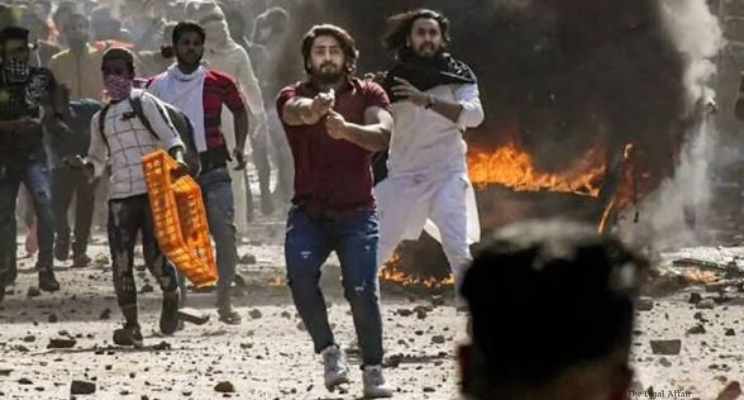
The case forms part of the broader investigation into the communal violence that erupted in North-East Delhi during the last week of February 2020, resulting in large-scale destruction of property, injuries, and loss of lives. The Delhi Police, through its Special Cell, alleged that the riots were not spontaneous incidents but part of a premeditated conspiracy allegedly orchestrated by several activists, political workers, and individuals accused of mobilising protests and unrest during the period surrounding demonstrations against the Citizenship Amendment Act (CAA).
The prosecution has invoked serious charges under the UAPA, alleging that the accused persons participated in a coordinated conspiracy aimed at destabilising public order and inciting communal violence. Apart from UAPA offences, the accused also face charges under various provisions of the Indian Penal Code relating to criminal conspiracy, rioting, unlawful assembly, murder, sedition-related allegations, and destruction of public property.
The list of accused persons in the larger conspiracy case includes several individuals such as Tahir Hussain, Umar Khalid, Khalid Saifi, Ishrat Jahan, Meeran Haider, Gulfisha Fatima, Shifa-Ur-Rehman, Asif Iqbal Tanha, Safoora Zargar, Sharjeel Imam, Natasha Narwal, Devangana Kalita, and others. The prosecution has alleged that these accused played different roles in planning or facilitating the disturbances that occurred in February 2020.
The accused seeking bail before the Delhi High Court had challenged the trial court order dated 29 January, whereby bail had been denied by the Special Court dealing with UAPA cases. The trial court had earlier concluded that the allegations and material collected during investigation disclosed prima facie involvement sufficient to attract the statutory restrictions on grant of bail under Section 43D(5) of the UAPA.
Following issuance of notice in the appeal in February, the matter came up before the Division Bench of the Delhi High Court, which heard detailed arguments from counsel appearing for the accused as well as the prosecution representing the Delhi Police. Ultimately, the Court granted bail to the accused while also listing the bail plea of co-accused Athar Khan for hearing on a subsequent date.
The order assumes importance because bail jurisprudence under the UAPA is considerably restrictive. Section 43D(5) of the Act imposes stringent limitations upon grant of bail where the Court is of the opinion that accusations against the accused are prima facie true. Consequently, courts dealing with UAPA matters are required to carefully balance concerns relating to national security and public order with constitutional protections of personal liberty guaranteed under Article 21 of the Constitution.
The present order also continues a broader judicial conversation regarding prolonged incarceration of undertrial prisoners in complex conspiracy cases involving anti-terror legislation. Several accused persons in the North-East Delhi riots conspiracy case have spent substantial periods in custody while trial proceedings remain pending. Over time, constitutional courts have repeatedly been called upon to examine whether continued detention pending trial can be justified solely on the basis of gravity of allegations when the trial itself is likely to take considerable time.
Against this backdrop, the Delhi High Court’s decision to grant bail marks another significant development in one of the most closely watched criminal prosecutions arising out of the 2020 communal violence in the national capital.
Arguments of the Parties:
Counsel appearing on behalf of the accused argued before the Delhi High Court that the continued incarceration of the appellant was unjustified in the facts and circumstances of the case. It was submitted that the prosecution had failed to establish any direct or specific overt act connecting the accused with the alleged larger conspiracy behind the North-East Delhi riots. According to the defense, the allegations were largely based upon disclosure statements, selective witness testimonies, and broad assertions of association without concrete evidence demonstrating involvement in terrorist or unlawful activities within the meaning of the UAPA.
The accused contended that the trial court had erred in adopting an excessively broad interpretation of the allegations while rejecting bail under Section 43D(5) of the UAPA. It was argued that the statutory embargo on bail under the UAPA does not completely extinguish judicial discretion and that constitutional courts remain duty-bound to examine whether the accusations are genuinely prima facie true on the basis of admissible and credible material.
The defense further emphasized that mere participation in protests, political meetings, or communication with co-accused persons cannot automatically amount to involvement in a terrorist conspiracy. According to the accused, the prosecution had attempted to criminalise dissent and ordinary social interaction by presenting routine communication and protest activities as evidence of conspiracy.
Another major argument raised by the defense related to prolonged incarceration and delay in conclusion of trial. Counsel submitted that the accused had already remained in custody for a substantial period while the trial itself was likely to take several years due to the large number of accused persons, witnesses, documents, and electronic records involved in the prosecution. It was argued that indefinite detention pending trial would effectively convert the presumption of innocence into punishment before conviction.
The accused also relied upon constitutional protections under Article 21, particularly the right to personal liberty and speedy trial. It was argued that even in cases involving serious allegations under special statutes, prolonged pre-trial incarceration without likelihood of early conclusion of proceedings violates fundamental constitutional principles.
Counsel appearing for the accused further submitted that the prosecution evidence did not disclose direct participation in acts of violence, rioting, or destruction of property. According to the defense, the allegations against the accused were generalized and lacked specific attribution of criminal conduct sufficient to justify continued detention under stringent anti-terror legislation.
The accused also contended that he was not a flight risk and had cooperated with investigation. It was submitted that appropriate bail conditions could adequately safeguard the interests of prosecution without requiring continued incarceration. The defense argued that denial of bail merely on account of seriousness of allegations would undermine settled principles of criminal jurisprudence recognizing bail as the rule and jail as the exception.
On the other hand, the Delhi Police strongly opposed the grant of bail and defended the trial court’s decision rejecting relief. The prosecution argued that the larger conspiracy case involved offences of exceptional gravity affecting communal harmony, public order, and national security. According to the State, the riots were not spontaneous incidents but the result of systematic planning and coordinated execution involving multiple accused persons acting in concert.
The prosecution contended that the material collected during investigation clearly established prima facie involvement of the accused in the conspiracy. It was argued that the evidence included witness statements, electronic communications, call detail records, and other material demonstrating coordination among accused persons prior to the outbreak of violence.
The Delhi Police further emphasized the stringent limitations imposed by Section 43D(5) of the UAPA. According to the prosecution, once the Court arrives at a prima facie satisfaction regarding the truthfulness of accusations, grant of bail becomes impermissible under the statutory framework. The prosecution relied upon Supreme Court precedents emphasizing that courts dealing with UAPA matters must avoid detailed appreciation of evidence at the stage of bail.
The State also argued that the seriousness of allegations and the larger impact of the riots upon society required a cautious approach while considering bail. According to the prosecution, the communal violence had resulted in deaths, injuries, destruction of public and private property, and widespread fear among citizens. Therefore, the prosecution contended that release of accused persons involved in the alleged conspiracy could adversely affect public confidence in administration of justice.
The prosecution additionally raised concerns regarding possible influence upon witnesses and tampering with evidence if the accused were released on bail. Given the complexity of the case and the large number of witnesses involved, the State argued that continued custody remained necessary in the interests of fair trial.
The Delhi Police also sought to distinguish the present case from earlier bail orders granted to certain co-accused persons in related matters. It was argued that each bail application must be considered independently on the basis of specific allegations and evidence against the individual accused.
Thus, the Delhi High Court was called upon to balance the restrictive statutory framework governing UAPA offences with constitutional principles relating to liberty, fairness, and prolonged incarceration.
Court’s Judgment:
The Delhi High Court, after hearing submissions advanced by counsel for the accused as well as the prosecution representing the Delhi Police, granted bail to the accused in the larger conspiracy case arising out of the 2020 North-East Delhi riots. The order was passed by the Division Bench comprising Justice Prathiba M. Singh and Justice Madhu Jain.
Although the detailed judgment containing reasons is awaited, the order itself marks an important development in the ongoing litigation relating to the riots conspiracy prosecution under the UAPA. The grant of bail indicates that the Court found sufficient grounds to extend the benefit of liberty to the accused despite the stringent statutory framework governing offences under anti-terror legislation.
The case had reached the High Court through an appeal challenging the trial court order dated 29 January, whereby bail had earlier been denied. The trial court had refused relief after concluding that the allegations and material placed on record by the prosecution disclosed prima facie involvement attracting the embargo contained in Section 43D(5) of the UAPA.
Under the UAPA, courts are ordinarily restrained from granting bail where accusations appear prima facie true. The provision significantly narrows the scope of judicial discretion and requires courts to adopt a more restrictive approach than in ordinary criminal cases. Consequently, bail orders in UAPA matters often acquire considerable legal significance because they involve judicial assessment of both individual liberty and broader concerns relating to public order and national security.
While the detailed reasoning of the Delhi High Court remains awaited, the order suggests that the Bench was persuaded that continued incarceration pending trial was not warranted in the present circumstances. Constitutional courts in recent years have increasingly emphasized that prolonged pre-trial detention cannot become a substitute for punishment and that undertrial prisoners retain the protection of Article 21 even in cases involving grave allegations.
The order also reflects the evolving judicial approach toward prolonged custody in complex conspiracy prosecutions where trials are likely to take several years. The larger conspiracy case concerning the 2020 North-East Delhi riots involves numerous accused persons, extensive documentary material, electronic evidence, and a large list of witnesses. In such circumstances, courts have repeatedly acknowledged the practical reality that final conclusion of trial may not occur within a reasonable period.
The Supreme Court and various High Courts have, in earlier decisions, observed that constitutional guarantees of personal liberty and speedy trial remain applicable even under special statutes like the UAPA. While statutory restrictions undoubtedly impose a higher threshold for bail, courts are also required to prevent indefinite incarceration without conclusion of trial.
The present order therefore fits within a broader judicial discourse concerning balancing of liberty and security in anti-terror prosecutions. It demonstrates that courts continue to exercise constitutional oversight over prolonged detention, particularly where the trial process itself is likely to be protracted.
Another notable aspect of the proceedings was the Court’s decision to list the bail plea of co-accused Athar Khan for hearing shortly thereafter. This indicates that the High Court is continuing to examine bail claims of other accused persons connected with the larger conspiracy case.
The order granting bail does not amount to adjudication upon guilt or innocence. Bail proceedings are confined to assessing whether continued detention is necessary pending trial. The prosecution case against the accused will continue to be examined during trial proceedings in accordance with law.
The larger conspiracy case itself remains one of the most legally and politically significant prosecutions arising out of the 2020 North-East Delhi riots. The Delhi Police has consistently maintained that the violence resulted from coordinated planning involving multiple actors, while several accused persons and civil rights groups have alleged misuse of anti-terror legislation and over-criminalisation of protest activities.
The Delhi High Court’s order granting bail therefore carries significance not merely for the individual accused but also for the continuing debate surrounding the application of the UAPA in conspiracy prosecutions linked to political protests and communal violence.
The detailed judgment, once released, is expected to provide further clarity regarding the Bench’s interpretation of the evidentiary threshold under Section 43D(5) UAPA, the relevance of prolonged incarceration, and the balance between national security concerns and constitutional protections of liberty.
For now, the order reinforces the principle that even within the framework of stringent anti-terror legislation, constitutional courts retain the responsibility of ensuring that deprivation of liberty remains just, fair, and proportionate pending conclusion of criminal proceedings.