


Introduction:
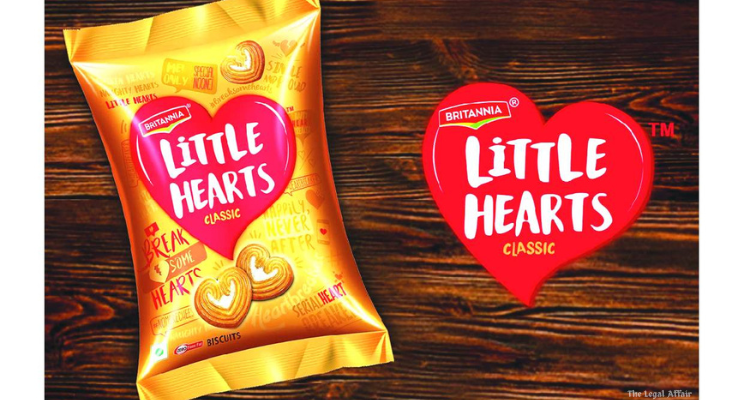
In Britannia Industries Limited v. Shri Swastik Organics & Others, decided on 23 December 2025 in CS (COMM) No. 1393 of 2025, the Delhi High Court delivered a strong and clear message against blatant trademark and product design infringement in the fast-moving consumer goods sector. Justice Manmeet Pritam Singh Arora granted an ad-interim injunction restraining the defendants from manufacturing, selling, advertising, or marketing biscuits under the name “Little Hearts” or using an identical heart-shaped biscuit design, finding the adoption to be a deliberate and dishonest attempt to ride on the goodwill of a well-known product. The case arose when Britannia Industries Limited, one of India’s most trusted and longstanding food brands, discovered in December 2025 that biscuits bearing the identical name “Little Hearts” and the same heart-shaped design were being sold online, particularly on Amazon. The plaintiff approached the Court asserting long-standing statutory and common law rights over the mark “Little Hearts” and the distinctive three-dimensional shape of the biscuit, contending that the defendants’ conduct amounted to trademark infringement, passing off, and copyright infringement. The Court, after examining the rival products, the online listings, and the surrounding circumstances, found the case to be one of “triple identity” involving identical marks, identical goods, and identical trade channels, and granted immediate protection to prevent consumer deception and irreparable harm to the plaintiff’s goodwill.
Arguments on Behalf of the Plaintiff:
Britannia Industries Limited argued that it is the undisputed originator and proprietor of the “Little Hearts” brand, having adopted the mark as early as 1988 and launched its iconic sugar-coated, heart-shaped biscuits in 1993. It submitted that over the decades, “Little Hearts” has become a household name in India, particularly among children and families, and enjoys immense goodwill and reputation. The plaintiff placed on record its trademark registrations covering the “Little Hearts” word mark as well as the three-dimensional configuration of the heart-shaped biscuit, asserting statutory protection under the Trade Marks Act, 1999. Britannia also produced sales figures, marketing material, and promotional data to demonstrate the extensive commercial success and consumer recognition associated with the product. According to the plaintiff, in December 2025 it came across listings on Amazon offering biscuits under the identical name “Little Hearts” with the same heart-shaped design. Upon purchasing the product, Britannia discovered that Shri Swastik Organics and its associates were jointly involved in manufacturing and selling the infringing biscuits. The plaintiff highlighted that the infringement went beyond mere imitation, as the online descriptions explicitly referred to “Britannia Little Hearts” and even described the packaging as a “trademark gold and red pack,” thereby falsely suggesting an association with or origin from Britannia. It was further contended that the listings displayed images of Britannia’s original product, over which the company claims copyright, amounting to clear copyright infringement. Britannia argued that the defendants’ conduct was a textbook case of dishonest adoption intended to confuse consumers and divert business by passing off inferior goods as those of the plaintiff. Emphasizing the doctrine of initial interest confusion and the principle of imperfect recollection of an average consumer, the plaintiff submitted that consumers encountering the impugned products were likely to believe that they originated from or were connected with Britannia. It was argued that if interim relief were denied, the plaintiff would suffer irreparable injury to its brand equity and consumer trust, which could not be compensated by damages.
Arguments on Behalf of the Defendants:
While the order primarily records the Court’s prima facie assessment at the ad-interim stage, the defendants’ position, as discernible from the circumstances, revolved around their attempt to market biscuits under the same name and shape without acknowledging Britannia’s prior rights. The defendants, through their conduct on online platforms, appeared to suggest equivalence or association with Britannia’s product by using identical nomenclature, shape, and visual representation. There was no material placed before the Court to show independent adoption, honest concurrent use, or any justification for choosing the exact same mark and product configuration. The absence of any distinguishing features, coupled with references to Britannia in the product descriptions themselves, significantly weakened any conceivable defence. The defendants did not demonstrate any prior use, registration, or goodwill of their own in relation to the mark “Little Hearts,” nor did they provide any explanation for adopting a heart-shaped biscuit identical to the plaintiff’s registered three-dimensional trademark.
Court’s Judgment:
The Delhi High Court, after a detailed comparison of the rival products and consideration of the plaintiff’s submissions, granted an ad-interim injunction in favour of Britannia Industries Limited. Justice Manmeet Pritam Singh Arora observed that the defendants’ biscuits were “virtually identical” to Britannia’s “Little Hearts” biscuits in every material aspect. The Court noted that not only was the name “Little Hearts” identical, but the shape of the biscuit, the nature of the product, and the trade channels through which the goods were sold were also the same. The Court emphasized that the case involved “triple identity,” namely identical marks, identical products, and identical trade channels targeting the same class of consumers. In such circumstances, the likelihood of consumer confusion was not merely speculative but inevitable. The Court held that an average consumer, possessing imperfect recollection, would almost certainly assume that the defendants’ products were associated with or originated from Britannia. The Court was particularly critical of the defendants’ conduct in using online listings that expressly referred to “Britannia Little Hearts” and displayed images of Britannia’s original product, describing such conduct as a clear and deliberate act of dishonesty. On the issue of prima facie case, the Court found that Britannia had established strong statutory rights through trademark registrations and demonstrated extensive goodwill and reputation built over decades. The Court further held that denial of interim relief would result in irreparable harm to the plaintiff’s brand, as damage to goodwill and consumer trust cannot be easily quantified or remedied through monetary compensation. The balance of convenience, the Court observed, was overwhelmingly in favour of Britannia, which had been using the mark honestly and continuously for decades, as opposed to the defendants who had recently adopted an identical mark without justification. Accordingly, the Court restrained Shri Swastik Organics and its associates from manufacturing, selling, advertising, or dealing in biscuits under the mark “Little Hearts” or using an identical or deceptively similar heart-shaped design, and from using any images over which Britannia holds copyright. The Court also directed Amazon to take down all infringing listings from its platform. The injunction was ordered to remain in force until further orders, with the matter listed for further hearing on 21 May 2026.