


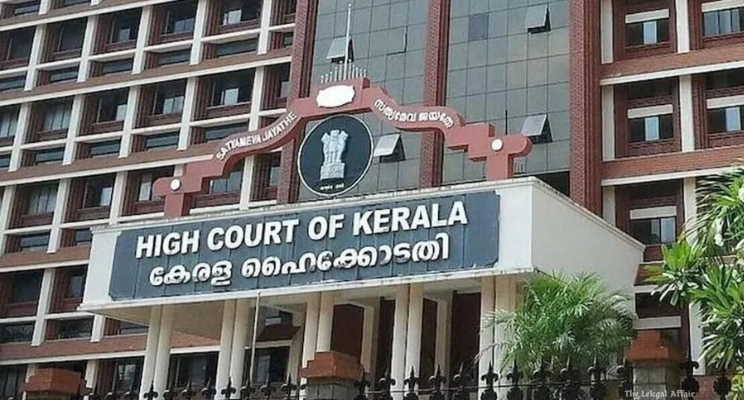
Introduction:
In Swami Saranam Enterprises & Anr. v. State of Kerala & Ors. (2026 LiveLaw (Ker) 197), the Kerala High Court delivered a landmark judgment at the intersection of environmental law, statutory interpretation, and ecological protection. The case revolved around a proposal to introduce plant-based, PLA (polylactic acid) bottles at the Sabarimala temple, a region of immense ecological and religious significance. The Division Bench comprising Justice Raja Vijayaraghavan V and Justice K V Jayakumar examined whether such products could be permitted under the existing legal framework, particularly the Plastic Waste Management Rules, 2016. The petitioner claimed that its product, branded “Bio Theertham,” was environmentally safe, being either biodegradable or compostable. However, the Court rejected this claim, holding that compostable plastics cannot be equated with biodegradable plastics, either scientifically or legally. Emphasizing the fragile ecology of Sabarimala, the Court refused to dilute environmental safeguards and dismissed the petition.
Arguments by the Petitioners:
The petitioners, Swami Saranam Enterprises, engaged in the manufacture of plant-based bottles, argued that their product represented a sustainable and environmentally responsible alternative to conventional plastic bottles. They sought permission from the Travancore Devaswom Board (TDB) to supply packaged drinking water at Sannidhanam, highlighting the necessity of safe drinking water for millions of pilgrims visiting the shrine annually.
The petitioners contended that their bottles, marketed under the brand “Bio Theertham,” were made from renewable resources such as corn and sugarcane, thereby significantly reducing environmental impact. They asserted that the product was either biodegradable or compostable and thus aligned with the objectives of environmental protection laws.
A key argument advanced by the petitioners was that the raw materials used in the production process were sourced from a certified supplier, Green Dot Biopak, which had obtained certification from regulatory authorities. On this basis, the petitioners argued that their final product should also be deemed compliant with the applicable standards.
The petitioners further submitted that the introduction of such eco-friendly products would reduce reliance on conventional plastic bottles, which are a major source of pollution in pilgrimage areas. They argued that denying permission would be contrary to the broader goal of promoting sustainable alternatives.
Additionally, the petitioners attempted to use the terms “biodegradable” and “compostable” interchangeably, suggesting that both categories represent environmentally benign materials and should be treated similarly under the law.
Arguments by the Respondents:
The respondents, including the State of Kerala, the Central Pollution Control Board (CPCB), the Kerala State Pollution Control Board (KSPCB), the Forest Department, and the Travancore Devaswom Board, strongly opposed the petition.
The respondents argued that the introduction of any type of plastic product, even those claimed to be biodegradable or compostable, posed a serious threat to the ecologically sensitive Sabarimala region, which lies within the Periyar Tiger Reserve and the Western Ghats—one of the world’s biodiversity hotspots.
The CPCB and KSPCB emphasized the legal distinction between “compostable plastics” and “biodegradable plastics” under the Plastic Waste Management Rules, 2016. It was submitted that PLA-based products fall within the category of compostable plastics under Rule 3(e), which require specific industrial conditions to degrade, and cannot be classified as biodegradable plastics under Rule 3(ac), which degrade naturally without leaving harmful residues.
The respondents further pointed out that the petitioner had failed to obtain the mandatory certification from the CPCB for the finished product. They argued that certification is product-specific and cannot be inferred from the certification of raw materials.
The Forest Department raised concerns about the potential impact on wildlife, particularly elephants, which are known to inhabit the region. It was argued that animals cannot distinguish between different types of plastic and may ingest such materials, leading to serious health consequences.
The respondents also highlighted the stringent environmental protections applicable to Sabarimala, including its classification as an Ecologically Sensitive Area under the Environment (Protection) Act, 1986. They argued that any activity not explicitly authorized by law must be strictly prohibited.
Court’s Judgment:
The Kerala High Court, in a detailed and well-reasoned judgment, dismissed the petition and upheld the objections raised by the respondents.
At the outset, the Court underscored the ecological significance of Sabarimala, describing it as a region of unparalleled biodiversity and environmental sensitivity. It emphasized that the area demands the highest level of protection and that any activity with potential environmental impact must be scrutinized rigorously.
The Court then turned to the central issue: whether compostable plastics can be equated with biodegradable plastics. Relying on the definitions provided under the Plastic Waste Management Rules, 2016, the Court drew a clear and unequivocal distinction between the two categories.
It observed that compostable plastics, such as PLA, require controlled industrial conditions to degrade, whereas biodegradable plastics must degrade naturally in the environment. The Court noted that the statutory definition of biodegradable plastics explicitly excludes compostable plastics, indicating a deliberate legislative intent to treat them as distinct categories.
The Court rejected the petitioner’s attempt to use the terms interchangeably, holding that such an approach is both scientifically incorrect and legally impermissible.
On the issue of certification, the Court held that compliance with regulatory requirements is product-specific and cannot be satisfied by relying on the certification of raw materials. It emphasized that every entity in the supply chain has independent obligations under the law, and that the petitioner had failed to obtain the necessary certification for its finished product.
The Court also interpreted the term “manufacturer” under the rules broadly, holding that it includes entities involved in the production and marketing of finished products. As such, the petitioner could not escape liability by claiming to be merely a converter of raw materials.
The Court further highlighted the risks posed by compostable plastics to wildlife, noting that animals such as elephants may ingest such materials, leading to severe health issues. It rejected the petitioner’s claim that plant-based materials are harmless, observing that animal physiology does not support such assumptions.
Invoking the precautionary principle, the Court held that environmental protection must take precedence over commercial interests, particularly in ecologically sensitive areas.
In conclusion, the Court held that the petitioner had failed to comply with statutory requirements and that the introduction of the proposed product would pose an unacceptable risk to the environment. The petition was accordingly dismissed.