


Introduction:
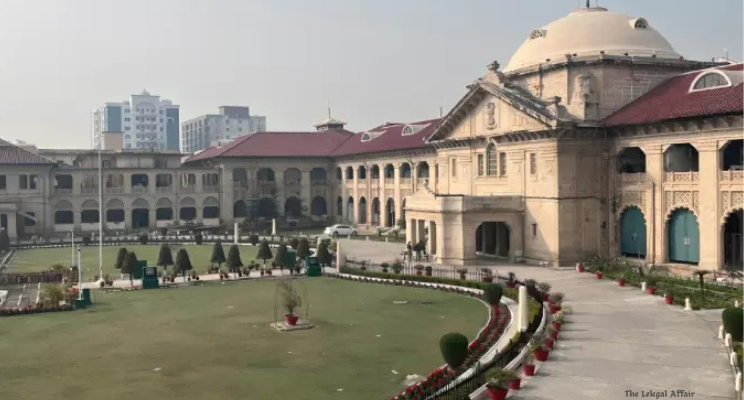
In Mata Baksh Singh v. State of U.P. through Secretary Nagar Vikas Department & Others, the Allahabad High Court delivered a significant judgment reinforcing the limits on the State’s power to invoke the urgency clause under Section 17 of the Land Acquisition Act, 1894. The case arose from a challenge to land acquisition proceedings initiated by the State authorities, wherein the urgency clause was invoked to bypass the mandatory hearing of objections under Section 5-A. The petitioner contended that such invocation was arbitrary, lacking genuine urgency, and in violation of statutory safeguards and constitutional protections. The matter was adjudicated by a Division Bench comprising Justice Sangeeta Chandra and Justice Brij Raj Singh, who examined whether the State had validly exercised its extraordinary powers under Section 17. The Court ultimately held that mere administrative convenience or apprehension of delay in development projects cannot justify the invocation of urgency provisions, and that such powers must be exercised sparingly, with clear and demonstrable reasons. The judgment not only set aside the acquisition and auction proceedings but also reaffirmed the importance of procedural safeguards and the constitutional right to property under Article 300-A.
Arguments by the Petitioner:
The petitioner, Mata Baksh Singh, challenged the acquisition proceedings on multiple grounds, primarily focusing on the arbitrary invocation of the urgency clause under Section 17 of the Land Acquisition Act, 1894. It was argued that the State had bypassed the mandatory procedure under Section 5-A, which provides landowners an opportunity to object to the proposed acquisition, without any real or compelling urgency.
The petitioner contended that the invocation of Section 17 was mechanical and lacked application of mind. The notification issued by the authorities merely cited administrative reasons, such as the need to expedite a residential development project, without demonstrating any extraordinary or emergent circumstances. According to the petitioner, such reasons are routine in nature and cannot justify the drastic step of depriving landowners of their valuable right to be heard.
It was further submitted that the petitioner was in continuous possession of the land and had not been paid any compensation, despite being dispossessed. The petitioner alleged that during the pendency of the writ petition challenging the acquisition and auction proceedings, the authorities proceeded to conduct an auction of the land, thereby creating third-party rights in violation of due process.
The petitioner also pointed out that the mandatory requirement under Section 17(3-A), which mandates payment of 80% of compensation before taking possession, had not been complied with. This, according to the petitioner, rendered the entire acquisition process illegal and unconstitutional.
Additionally, the petitioner argued that the actions of the authorities violated Article 14 (right to equality) and Article 300-A (right to property) of the Constitution. It was contended that the arbitrary and mechanical exercise of power, coupled with the denial of procedural safeguards, amounted to a deprivation of property without authority of law.
The petitioner relied on judicial precedents, including Om Prakash v. State of Uttar Pradesh, to argue that planned development projects do not automatically justify the invocation of urgency provisions and that the right to object under Section 5-A is a valuable statutory right that cannot be dispensed with lightly.
Arguments by the Respondents (State Authorities):
The State authorities defended the acquisition proceedings, contending that the invocation of the urgency clause was justified in the interest of public purpose, namely the development of a residential scheme. It was argued that any delay in acquisition would hinder the timely execution of the project and adversely affect public interest.
The respondents submitted that the satisfaction of the appropriate Government regarding urgency is subjective and should not be lightly interfered with by the Court. They contended that once the Government forms an opinion that urgency exists, the same should be given due weight, unless it is shown to be mala fide or wholly arbitrary.
The State also sought to justify the auction proceedings, arguing that they were carried out in accordance with the development plan and were necessary for the implementation of the project. It was contended that the creation of third-party rights was a consequence of lawful administrative action.
On the issue of compensation, the respondents argued that the process was ongoing and that any delay in payment did not invalidate the acquisition proceedings. They also contended that the petitioner had alternative remedies available under the law and that the writ petition was not maintainable.
Court’s Judgment:
The Allahabad High Court, after a detailed analysis of the facts and legal principles, ruled in favour of the petitioner and held that the invocation of the urgency clause under Section 17 was arbitrary, mechanical, and legally unsustainable.
At the outset, the Court emphasized that the power under Section 17 is an exception to the general rule of acquisition and must be exercised sparingly. It noted that this provision allows the State to bypass the valuable right of objection under Section 5-A, which is a substantive safeguard for landowners. Therefore, the threshold for invoking such power is necessarily high.
The Court held that mere administrative exigency or convenience does not meet the statutory requirement of urgency. It observed that the reasons cited in the notification—namely, the need to avoid delay in a residential project—were vague and routine in nature and did not disclose any extraordinary or emergent circumstances.
The Bench found that there was no material on record to suggest that even the short period required to conduct an inquiry under Section 5-A would have frustrated the public purpose. The absence of such material indicated a clear lack of application of mind by the authorities.
The Court also held that the satisfaction recorded in the notification was mechanical and unsupported by objective evidence. It reiterated that the invocation of urgency must be based on concrete and contemporaneous material, and not on general or speculative grounds.
On the issue of procedural compliance, the Court found that the authorities had violated Section 17(3-A) by failing to pay 80% of the compensation before taking possession. This non-compliance further vitiated the acquisition proceedings.
The Court also examined the auction proceedings and found them to be invalid due to procedural lapses and arbitrary actions, including changes in land use and fixation of prices without proper justification.
Invoking Article 300-A of the Constitution, the Court held that deprivation of property must be strictly in accordance with law. It observed that the expression “authority of law” requires adherence to all statutory procedures and safeguards, and that any deviation from these requirements renders the action unconstitutional.
The Court further held that the actions of the authorities violated Article 14, as they were arbitrary and lacked transparency and fairness.
In conclusion, the Court set aside both the acquisition and auction proceedings and directed that the land be restored to the petitioner, subject to compliance with relevant statutory provisions.