


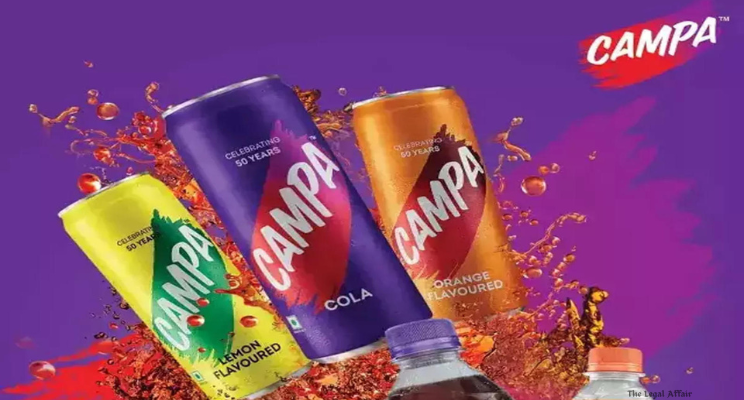
Introduction:
In a recent decision, the Bombay High Court issued a temporary injunction to protect Reliance Retail Ltd.’s (plaintiff) rights over the trademark and artistic works associated with the popular ‘CAMPA’ beverage brand. This interim order was made in response to Reliance’s allegations that the defendants, Md. Sirajuddin and Beauty Bibi, had infringed upon its intellectual property by marketing beverages under the brand name ‘JHAMPA,’ a name Reliance argued was deceptively similar to ‘CAMPA.’
Reliance asserted that ‘CAMPA,’ originally owned by Campa Beverages Private Ltd. since 1972, became its property in August 2022 following a Deed of Assignment. Following the acquisition, Reliance invested heavily to relaunch the CAMPA brand and elevate its market presence. It claimed that the ‘JHAMPA’ brand created confusion among consumers due to the phonetic and visual similarity of its mark to ‘CAMPA’ and alleged that the defendants’ actions amounted to passing off, trademark infringement, and copyright infringement.
A single judge bench led by Justice R.I. Chagla granted an interim injunction, noting the prima facie evidence of goodwill associated with ‘CAMPA’ and the likelihood of irreparable harm to Reliance if the defendants continued using the ‘JHAMPA’ brand. The court’s decision prevented the defendants from using trademarks or designs similar to ‘CAMPA’ until further hearing on November 27, 2024.
Plaintiff’s Arguments (Reliance Retail Ltd.):
- Assignment of Rights to ‘CAMPA’ Trademark
Reliance, through a Deed of Assignment in August 2022, claimed full ownership of the ‘CAMPA’ brand from Campa Beverages Private Ltd. This acquisition included rights to all associated trademarks, copyrighted works, and artistic designs used by CAMPA in branding and packaging. Consequently, the plaintiff contended that its investment and promotional efforts entitled it to exclusive usage rights for ‘CAMPA’ in the non-alcoholic beverage market.
- Heavy Investment in CAMPA Brand Relaunch:
Since acquiring the ‘CAMPA’ trademark, Reliance reportedly spent over Rs. 35 crore on the brand’s advertising and promotional campaigns in FY 2023. The plaintiff argued that this investment generated significant goodwill and reinforced CAMPA’s brand presence in the beverage industry. This goodwill, they claimed, was being jeopardized by the defendant’s infringement.
- Deceptive Similarity of ‘JHAMPA’ to ‘CAMPA’:
Reliance alleged that the defendants’ use of the ‘JHAMPA’ trademark posed a deliberate attempt to capitalize on the reputation and brand recognition of ‘CAMPA.’ The plaintiff argued that ‘JHAMPA’ was strikingly similar to ‘CAMPA’ in its phonetic pronunciation, visual representation, and structural appearance. Such similarities, according to Reliance, were likely to mislead customers and result in confusion about the product’s origin, suggesting that ‘JHAMPA’ was an unauthorized derivative of ‘CAMPA.’
- Copyright Infringement on CAMPA’s Artistic Works:
Reliance further alleged that the defendants replicated essential elements of CAMPA’s branding, including the logo, color scheme, layout, packaging, and promotional slogans. By reproducing these copyrighted elements, the defendants were infringing on CAMPA’s copyrighted artistic works, diluting the brand’s distinctiveness, and undermining Reliance’s proprietary interest.
- Cease and Desist Notice Ignored by Defendants:
Before initiating legal proceedings, Reliance issued a cease and desist notice to the defendants, which they failed to acknowledge. Instead, the defendants reportedly applied for a trademark on ‘JHAMPA’ shortly after receiving the notice. This action, Reliance argued, demonstrated the defendants’ dishonest intent to exploit CAMPA’s established goodwill rather than genuinely establish a unique brand.
Defendants’ Arguments:
- Distinctiveness of ‘JHAMPA’ Brand:
The defendants argued that ‘JHAMPA’ was a distinctive brand in its own right, designed independently of ‘CAMPA’ and lacking any intent to infringe or mislead. They claimed that ‘JHAMPA’ was sufficiently different from ‘CAMPA’ and that consumers would not likely confuse the two products.
- Fair Market Competition:
The defendants contended that they were within their rights to create a competing brand in the beverage market. They claimed that the similarity in phonetic sound alone did not justify an infringement claim, particularly if consumers could distinguish the products based on other characteristics. The defendants maintained that the lawsuit was an attempt by Reliance to stifle fair competition and limit consumer choice.
- Challenge to Reliance’s Copyright Claims:
The defendants disputed the copyright infringement allegations, arguing that CAMPA’s artistic works did not have exclusive ownership over colors, layout, and generic design elements commonly used in the beverage industry. They asserted that their packaging was standard and followed industry norms rather than copying CAMPA’s specific artistic elements.
Court’s Judgement:
Justice R.I. Chagla’s interim judgment favored the plaintiff, Reliance Retail Ltd., concluding that the defendants’ use of the ‘JHAMPA’ brand likely infringed upon CAMPA’s trademark and copyright. In its analysis, the Court examined the legal and factual basis of Reliance’s claims, as summarized below:
- Reliance’s Goodwill and Reputation in CAMPA:
The Court recognized that CAMPA, under Reliance’s ownership, had achieved considerable goodwill and market reputation, especially following significant promotional investments. The relaunch of CAMPA, supported by extensive marketing, affirmed its standing in the non-alcoholic beverage sector. Justice Chagla noted that this established goodwill warranted protection from potential misappropriation.
- Deceptive Similarity of Trademarks:
The Court concluded that ‘JHAMPA’ closely resembled ‘CAMPA’ in visual appearance, phonetics, and structural composition, leading to a likelihood of consumer confusion. The judge ruled that these similarities supported a case of trademark infringement, given that the resemblance could lead customers to mistakenly associate ‘JHAMPA’ with ‘CAMPA,’ thereby diluting Reliance’s brand identity.
- Evidence of Defendant’s Dishonesty:
The Court took note of the defendants’ actions following Reliance’s cease and desist notice. Instead of ceasing their infringing activities, the defendants applied for a ‘JHAMPA’ trademark, which the Court found indicative of dishonest intent. Justice Chagla suggested that this action pointed toward an intention to capitalize on CAMPA’s reputation, supporting the prima facie case of trademark infringement.
- Copyright Infringement in Artistic Works:
Justice Chagla noted that the defendants had likely copied several of CAMPA’s branding elements, including color schemes, logo design, layout, and arrangement. By imitating these aspects, the defendants encroached on CAMPA’s copyrighted artistic works, according to the Court. This replication undermined the distinctiveness and uniqueness of CAMPA’s brand identity.
- Likelihood of Irreparable Harm to Reliance:
Given the strength of Reliance’s brand and its extensive marketing investments, the Court found that continued infringement by the defendants could cause irreparable harm to Reliance’s business and reputation. As such, Justice Chagla held that an interim injunction was warranted to prevent further misuse of the CAMPA trademark and copyrighted materials.
- Temporary Restraining Order Against Defendants:
The Court issued a temporary injunction preventing the defendants from manufacturing, distributing, marketing, or selling any products bearing the ‘JHAMPA’ mark or any deceptively similar trademark. Additionally, the defendants were restrained from using any logos, packaging, color combinations, or slogans that imitated CAMPA’s copyrighted artistic works.
- Next Hearing Date:
The matter has been scheduled for a further hearing on November 27, 2024, allowing time for the defendants to respond more comprehensively to the allegations and for the Court to reach a final judgment.
Conclusion:
The Bombay High Court’s interim decision protects Reliance Retail’s ownership rights over the CAMPA brand and prevents any unauthorized use of deceptively similar trademarks and copyrighted works. This ruling underlines the Court’s emphasis on safeguarding established brands from unfair competition and highlights the legal protection available to trademark and copyright holders against potential market misrepresentation. As the beverage market grows, this case emphasizes the importance of brand integrity and adherence to intellectual property rights.