


Introduction:
In a significant order passed during a special Saturday sitting, the Bombay High Court took suo motu cognisance of a Magistrate’s decision granting bail to a sitting corporator and four others accused of assaulting doctors at a municipal hospital and stayed the operation of the bail order. The matter arose after widespread concern within the medical fraternity over the grant of bail, prompting doctors across Maharashtra to announce a statewide strike in protest.
The case concerns Ramesh Mhatre, a sitting corporator affiliated with the Shiv Sena (Eknath Shinde faction), who, along with four associates, was accused of assaulting three doctors at a civic-run hospital. The prosecution alleged that the accused entered the hospital, physically attacked the doctors and created an atmosphere of fear within a public healthcare institution. Soon after the Magistrate at Kalyan granted bail to all the accused, the decision drew strong criticism from medical associations, which argued that such an order undermined the safety of healthcare professionals working in government hospitals.
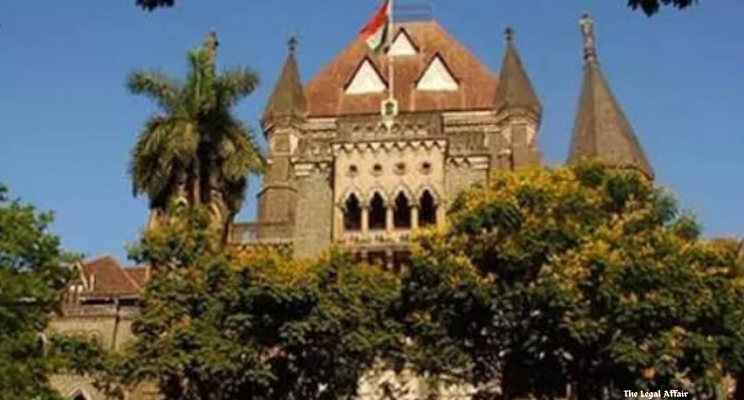
Taking note of the seriousness of the incident and its wider impact on public healthcare, a Division Bench comprising Acting Chief Justice Ravindra Ghuge and Justice Gautam Ankhad initiated suo motu proceedings. The High Court examined the legality of the bail order, particularly whether the Magistrate had adequately considered the gravity of the allegations, the criminal antecedents of the principal accused and the necessity of custodial interrogation during the ongoing investigation.
The Court was also conscious of the larger public interest involved, as violence against doctors has become a recurring concern across the country. The case therefore extended beyond the liberty of the accused and raised important questions regarding judicial discretion in granting bail, protection of medical professionals and preservation of public confidence in the criminal justice system.
Arguments of the Parties:
On behalf of the State, Advocate General Milind Sathe, assisted by Chief Public Prosecutor Shishir Hiray, supported the High Court’s intervention and submitted that the investigation was still at a crucial stage. It was argued that the allegations disclosed a serious and organised assault on public servants discharging official duties inside a government hospital. According to the prosecution, custodial interrogation of the accused remained necessary and the grant of bail at such an early stage adversely affected the investigation.
The prosecution emphasised that the Magistrate had failed to examine the antecedents of the principal accused before granting bail. It was submitted that while considering an application for bail, the Court is expected to evaluate the seriousness of the offence, the conduct of the accused, the possibility of influencing witnesses, the requirement of custodial interrogation and the overall impact of the alleged crime on society. The State contended that these factors had not been adequately addressed in the impugned order.
It was further argued that the bail conditions imposed by the Magistrate were wholly inadequate. No direction required the accused to periodically report before the investigating agency or cooperate with the investigation. According to the prosecution, the absence of such safeguards effectively left the investigating agency without any mechanism to monitor the accused’s movements or ensure his availability during the investigation.
Advocate Niranjan Mundargi, who assisted the Court as amicus curiae, also aided the Bench in examining the legality of the Magistrate’s order and the broader legal principles governing the grant of bail in serious criminal cases involving public servants.
Although detailed submissions on behalf of the accused were not recorded in the proceedings, the earlier order of the Magistrate reflected the view that the accused deserved to be released on bail. The defence position implicitly rested on the principle that bail is the rule and jail is the exception, particularly when the investigation can continue without prolonged custodial detention. However, the legality and adequacy of that reasoning became the central issue before the High Court during the suo motu proceedings.
Court’s Judgment:
The Bombay High Court found prima facie that the Magistrate had failed to exercise judicial discretion in accordance with settled principles governing the grant of bail. Consequently, the Court stayed the operation of the bail order and directed the accused, including the principal accused, to surrender before the Dombivli Police Station by 5:00 p.m. on July 19.
The Division Bench observed that the allegations disclosed a serious incident in which the principal accused allegedly led four others in physically assaulting three doctors working in a corporation hospital. Such conduct, the Court noted, could not be viewed as an ordinary criminal offence because it directly affected healthcare professionals performing essential public duties and had wider consequences for the functioning of public hospitals.
A significant factor that weighed with the Court was the Magistrate’s failure to consider the antecedents of the principal accused. The High Court observed that criminal antecedents constitute an important consideration while deciding bail, particularly where allegations involve organised violence or offences affecting public order. Ignoring such relevant material, according to the Court, reflected an improper exercise of judicial discretion.
The Bench was equally critical of the absence of meaningful bail conditions. It noted that although the investigating agency intended to interrogate the accused, the Magistrate had imposed no condition requiring him to regularly appear before the police or cooperate with the investigation. The Court remarked that the operative portion of the bail order had virtually allowed the accused to remain at liberty without any effective mechanism enabling the police to monitor his presence or secure his cooperation during the investigation.
Considering these deficiencies, the High Court held that the impugned order deserved to remain in abeyance until further orders. It directed the accused to surrender before the investigating agency and clarified that if they failed to do so, the authorities would be free to initiate proceedings in accordance with law, including steps for attachment of their immovable properties, wherever legally permissible.
The Court also extended the same relief against the four co-accused who had been granted bail under the same order, observing that the deficiencies identified in the Magistrate’s reasoning equally applied to them.
At the same time, the Bench acknowledged the concern expressed by the medical community following the assault. Doctors across Maharashtra had announced a strike to protest the grant of bail, apprehending that lenient treatment of persons accused of attacking healthcare workers would weaken confidence in the legal system. While appreciating these concerns, the Court appealed to doctors serving in government and civic hospitals to reconsider their proposed strike in the larger public interest. The Bench recognised the invaluable role performed by medical professionals and observed that uninterrupted healthcare services are essential for society, particularly in public hospitals catering to thousands of patients every day.
The matter was directed to be listed for further hearing on July 21, where the legality of the bail order and related issues would be considered in greater detail.
The order underscores that while personal liberty remains a fundamental right, judicial discretion in granting bail must be exercised carefully after considering the gravity of the offence, the antecedents of the accused, the interests of the investigation and the broader impact of the alleged crime on society. The decision also sends a strong message that violence against doctors and healthcare professionals performing public duties cannot be treated casually and that courts are prepared to intervene where bail orders appear to overlook relevant legal considerations.