


Introduction:
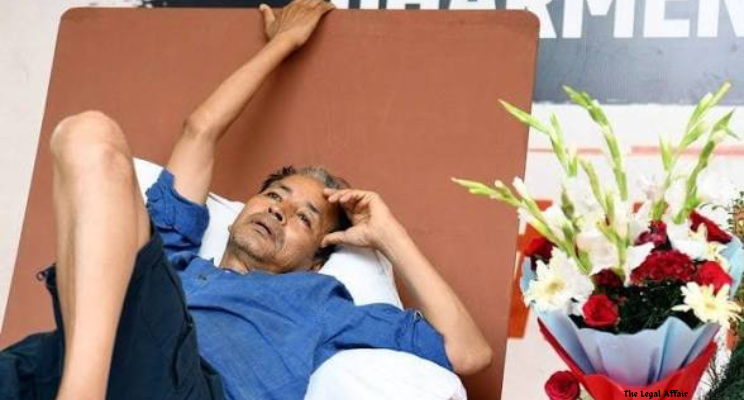
The Delhi High Court, in a special Sunday sitting, declined to grant interim relief permitting activist Sonam Wangchuk to be shifted from Safdarjung Hospital to a private hospital of his choice during the pendency of a writ petition filed by his wife, Dr. Gitanjali Angmo. The matter was heard by Justice Mini Pushkarna, who held that, at the present stage, the Government’s decision to shift Wangchuk from the Jantar Mantar protest site to Safdarjung Hospital could not be termed arbitrary or unconstitutional.
The petition arose after Wangchuk, who had been on an indefinite hunger strike since June 28 in support of students protesting alleged irregularities in the NEET-UG examination and demanding the resignation of the Union Education Minister, was shifted by the authorities to Safdarjung Hospital on July 18. Dr. Angmo challenged his continued stay in the hospital, alleging that he was being illegally confined under the guise of medical treatment. She sought his discharge, permission to transfer him to a private hospital, unrestricted access for family members, lawyers and treating doctors, and a direction that no medical treatment be administered without his informed consent.
The Union Government opposed the petition, maintaining that Wangchuk’s deteriorating health after an 18-day fast required immediate medical intervention. The Court was therefore required to balance the petitioner’s claim of bodily autonomy and personal liberty under Article 21 with the State’s obligation to protect life and ensure necessary medical care.
Arguments of the Parties:
Senior Advocate Kapil Sibal, appearing for Dr. Gitanjali Angmo, argued that Wangchuk was neither under arrest nor under preventive detention and therefore had every constitutional right to choose the hospital where he wished to receive treatment. He submitted that Medanta Hospital had agreed to admit Wangchuk and undertook that he would continue treatment there if permitted by the Court. It was contended that the authorities had acted beyond the scope of the Delhi High Court’s earlier order directing health monitoring by forcibly removing him from the protest site and keeping him in a Government hospital against his wishes.
The petitioner further alleged that access to Wangchuk was being restricted, with lawyers and personal doctors not being allowed to meet him. Questions were also raised regarding the medical reports relating to his potassium levels, claiming that an independent laboratory produced results different from those recorded by Safdarjung Hospital. According to the petitioner, these discrepancies created doubts about the medical emergency relied upon by the authorities. It was also argued that Wangchuk’s continued stay in the hospital violated his rights to bodily autonomy, informed consent and personal liberty guaranteed under Article 21 of the Constitution.
The Union Government, represented by Additional Solicitor General Chetan Sharma, opposed the plea. It submitted that Wangchuk’s prolonged fast had placed his health in a critical condition, making immediate medical supervision essential. The ASG informed the Court that doctors from Safdarjung Hospital as well as AIIMS were monitoring his condition and that only oral rehydration solution without sugar and potassium tablets had been administered with his consent, as he had refused intravenous fluids.
The Government maintained that Wangchuk’s wife and brother had been granted access to him and that separate arrangements had been made for family meetings. It argued that Government hospitals and doctors enjoy public confidence and regularly provide medical assistance in sensitive cases. The authorities also submitted that extraordinary circumstances required the State to act cautiously to protect Wangchuk’s life and health.
During the hearing, AIIMS doctors informed the Court that Wangchuk had entered ketosis due to prolonged fasting and that some of his medical parameters, including sodium, potassium and blood sugar levels, were approaching concerning levels, making continuous monitoring necessary.
Court’s Judgment:
Justice Mini Pushkarna declined to grant any interim relief permitting Wangchuk’s transfer to a private hospital. The Court held that, considering the circumstances, the Government’s decision to shift him from the protest site to Safdarjung Hospital could not be described as arbitrary or illegal.
The Court observed that Wangchuk had not voluntarily admitted himself to any hospital despite remaining on a prolonged hunger strike. In such circumstances, the Government was justified in taking steps to ensure that his health was properly monitored. The Court further noted that doctors had not administered any treatment forcibly. Since Wangchuk had consented to taking oral rehydration solution and potassium tablets while refusing intravenous fluids, there was no material to conclude that his bodily autonomy had been violated.
Justice Pushkarna also accepted the Government’s statement that Wangchuk’s wife and brother were being allowed to meet him and that adequate facilities had been provided for such meetings. In view of these assurances, the Court found no immediate necessity to pass interim directions regarding access or transfer to another hospital.
The Court issued notice on the writ petition and directed the Union Government to file its response within three days, while keeping all questions raised in the petition open for final consideration.
The order reflects the Court’s attempt to balance two competing constitutional values—the individual’s right to personal autonomy and informed medical consent on one hand, and the State’s responsibility to preserve life and provide medical care in exceptional circumstances on the other. At the interim stage, the Court found that there was insufficient material to interfere with the ongoing medical supervision being provided at Safdarjung Hospital and therefore declined the relief sought by the petitioner.