


Introduction:
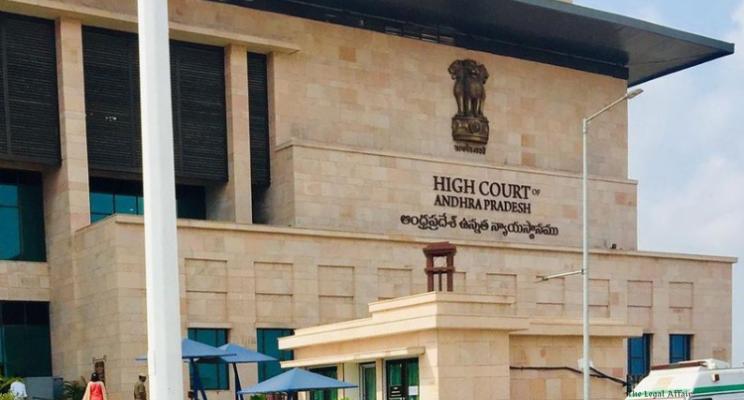
In a significant ruling clarifying the scope of Order 18 Rule 3 of the Code of Civil Procedure, 1908 (CPC), the Andhra Pradesh High Court has upheld a Trial Court’s order which dismissed a petition filed by plaintiffs seeking permission to reserve their right to adduce rebuttal evidence after the defendants concluded their evidence in a partition suit. The judgment, delivered by Justice B.S. Bhanumathi, emphasizes that the provision under Order 18 Rule 3 applies only when the burden of proof on issues lies on both sides. In this case, since the plaintiffs themselves admitted the existence of a registered partition deed dated 28.02.2002 and sought a declaration that it was null and void, the entire burden of proof lay squarely upon them. The Court observed that the plaintiffs could not shift this burden to the defendants or seek to reserve their right to lead rebuttal evidence. The ruling reiterates a key procedural principle — the party who approaches the court for relief must prove its case by evidence and cannot rely on the weakness of the other side. The revision petition filed by the plaintiffs was, therefore, dismissed, upholding the reasoning and findings of the Trial Court.
Arguments on Behalf of the Petitioners (Plaintiffs):
The learned counsel appearing for the petitioners argued that the Trial Court had erred in refusing permission to reserve their right to lead rebuttal evidence under Order 18 Rule 3 CPC. It was submitted that the plaintiffs were entitled, in law, to reserve their evidence on certain issues and adduce rebuttal evidence after the defendants had produced their evidence. The petitioners contended that in the course of the trial, after the first plaintiff had been examined as a witness and the case was posted for further evidence, it became necessary to reserve their right to lead rebuttal evidence since certain issues related to the validity and enforceability of the partition deed would arise only after the defendants produced their evidence. They claimed that the defendants had taken the plea that the plaint schedule properties were already divided under the partition deed of 2002 and that the deed was valid and binding on all parties.
The petitioners further submitted that the object of Order 18 Rule 3 is to ensure fairness in the trial process by allowing the party beginning to produce evidence on issues where the burden lies on the opposite side after the other side has led evidence. According to the plaintiffs, there were several issues in the suit — some relating to the validity of the partition deed and others concerning the nature of possession and rights over the properties — and therefore, they were justified in reserving their evidence on certain issues. The petitioners contended that the Trial Court had misinterpreted the provision and had adopted an overly restrictive view by holding that the entire burden of proof lay upon them. They argued that since the defendants had taken a specific stand that the partition was already completed and the deed was valid, the onus of proving that contention also lay upon the defendants, giving the plaintiffs the right to adduce rebuttal evidence after the closure of the defendants’ evidence.
The petitioners maintained that the right to reserve rebuttal evidence need not always be express and that the court ought to have permitted them to exercise that right in the interest of justice. They claimed that denial of such an opportunity amounted to procedural unfairness and could cause irreparable prejudice to their case. The plaintiffs insisted that their request was bona fide and intended to clarify factual discrepancies that would emerge only after the defendants’ evidence was recorded. Accordingly, they prayed that the High Court should set aside the impugned order of the Trial Court and allow their petition under Order 18 Rule 3 CPC.
Arguments on Behalf of the Respondents (Defendants):
The counsel appearing for the respondents opposed the revision petition and fully supported the order of the Trial Court. They argued that the plaintiffs had no right under law to reserve rebuttal evidence in the given facts of the case since the entire burden of proving their claims rested on them. The defendants submitted that the plaintiffs themselves admitted the existence of a registered partition deed dated 28.02.2002 and had approached the court seeking a declaration that the deed was null and void. Therefore, it was a clear case where the initial burden of proof lay entirely upon the plaintiffs, and not even a part of it could be transferred to the defendants.
The respondents further contended that the scope of Order 18 Rule 3 is limited to cases where there are multiple issues, some of which the burden of proof lies on one party and some on the other. In this case, all issues were to be proved by the plaintiffs alone — whether the partition deed was valid, whether it was obtained by fraud or coercion, and whether the properties in question could still be treated as joint family properties. Hence, the plaintiffs were duty-bound to adduce all their evidence during their turn and could not later seek to introduce additional evidence under the guise of rebuttal.
They submitted that the Trial Court had rightly observed that the right to lead rebuttal evidence need not be expressly reserved but that its exercise must arise from circumstances where the burden of proof is shared. In the present case, there was no such shared burden. The defendants stressed that permitting the plaintiffs to reserve their right would delay the proceedings and unnecessarily prolong the trial, defeating the principle of expeditious disposal of civil suits.
The respondents also relied on the well-settled principle of civil law that a plaintiff cannot rely on the weakness of the defence but must succeed based on the strength of his own case. They argued that the plaintiffs, having initiated the suit and admitted the existence of the partition deed, were now attempting to shift the evidentiary burden in an unjustified manner. Therefore, the Trial Court had correctly dismissed the petition, and the High Court should not interfere with that discretionary order.
Court’s Observations and Judgment:
After carefully hearing both sides, Justice B.S. Bhanumathi analyzed the legal framework of Order 18 Rule 3 CPC, which deals with the procedure to be followed when there are several issues in a suit and the burden of proving some issues lies on the other party. The Court emphasized that the provision is applicable only when the burden of proof is divided between both sides. The Court held that in the present case, all the issues framed by the Trial Court cast the burden entirely upon the plaintiffs, as they were the ones challenging an admitted registered partition deed.
Justice Bhanumathi observed:
“A perusal of the issues shows that the initial burden of establishing all these issues lies on the plaintiffs alone. It is not a case of a normal partition suit wherein, if the plaintiffs claim that the plaint schedule property is joint family property and the defendants take a plea that the property was already partitioned, the burden may lie on the party pleading earlier partition. Whereas, in the present case, the plaintiffs already admitted that there is a registered partition deed, dated 28.02.2002, and seek declaration of the same as null and void. Therefore, they cannot throw the burden of proving any of the issues on the defendants. Order XVIII Rule 3 applies where the burden lies on one party with regard to some issues and the other party with regard to other issues, which is not the case on hand.”
The Court noted that once the plaintiffs admitted the existence of the partition deed and sought to invalidate it, the onus entirely shifted to them to prove the deed’s invalidity by adducing cogent and credible evidence. The defendants’ mere denial did not transfer any part of this burden. The Court further held that reserving the right to lead rebuttal evidence under Order 18 Rule 3 cannot be claimed as a matter of course but must be justified based on the allocation of burden of proof. Since that condition was not met, the Trial Court’s order could not be faulted.
Justice Bhanumathi endorsed the Trial Court’s reasoning that the right to reserve rebuttal evidence need not always be express and that where a party has not adduced evidence on a particular issue, the absence of an express reservation would not be fatal unless it appears from the record that such a right has been lost. However, in the present case, there was no indication that any issue’s burden lay on the defendants, and hence, the plaintiffs’ claim for reservation of rebuttal evidence was untenable.
The Court also reiterated the cardinal rule of civil jurisprudence that the burden of proof lies on the party asserting a fact, especially when that party is the plaintiff seeking judicial relief. The plaintiffs, having come to the Court seeking a declaration that a registered document is invalid, cannot rely upon the defendants’ weakness or inaction but must independently establish their case through evidence.
Justice Bhanumathi thus concluded that the Trial Court committed no error of jurisdiction or law in dismissing the plaintiffs’ petition. Finding no merit in the revision petition, the High Court dismissed it and upheld the Trial Court’s order. The judgment reinforces procedural discipline in civil trials and clarifies that Order 18 Rule 3 CPC is a narrowly applicable provision, not a broad license for parties to withhold evidence until the opposing side concludes its case.
Accordingly, the Civil Revision Petition No. 2734 of 2022 was dismissed.