


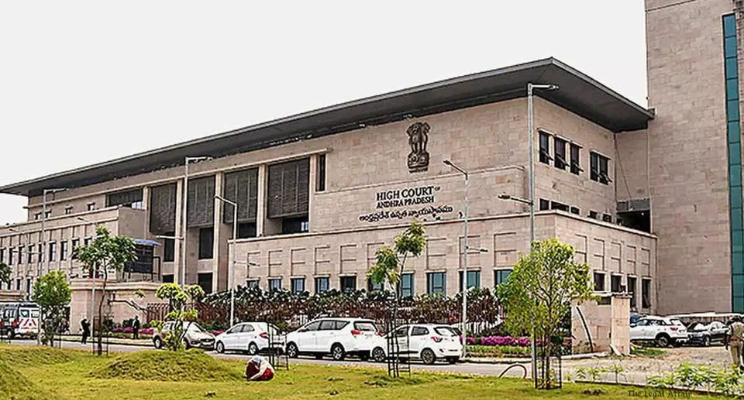
Introduction:
In a recent landmark judgment, the Andhra Pradesh High Court, in Boya Kistamma v. Boya Suri (CIVIL REVISION PETITION NO: 2029 of 2025), addressed the procedural pitfalls and legal implications of granting status-quo orders without clearly recording the possession or condition of the suit property. Delivered by Justice Subba Reddy Satti, the Court highlighted that while Trial Courts often adopt “short-cut methods” in passing status-quo orders, such practices create ambiguity, confusion, and potential injustice. The Court underscored that an order of status-quo, particularly in cases involving property disputes, must unequivocally state who is in possession or specify the precise conditions to be maintained regarding the property. The ruling stemmed from a dispute concerning ancestral land where the plaintiff, Ms. Boya Kistamma, was in possession of a portion of the land and sought a perpetual injunction against the defendants, who allegedly attempted forcible entry and obstruction. Initially, the Trial Court had granted an ad-interim injunction but later modified it into a status-quo order without determining possession. The appellate court restored the temporary injunction, and the defendants challenged this order before the High Court, leading to the present judgment that clarified the correct approach to status-quo orders and stressed adherence to established legal principles to avoid multiplicity of disputes and complications.
Arguments on behalf of the defendants/petitioners:
The defendants/petitioners contended that the appellate court erred in restoring the temporary injunction in favor of the plaintiff after the Trial Court had modified the ad-interim injunction into a status-quo order. They argued that the Trial Court, in exercising its discretion under Order XXXIX Rules of the Civil Procedure Code, intended to maintain the existing state of affairs without favoring either party. According to the defendants, the plaintiff had initially been granted a temporary injunction, but the Trial Court, upon reconsideration, rightly adjusted the relief to status quo to avoid prejudice. They emphasized that the appellate court, by restoring the ad-interim injunction, had disrupted the balance of convenience and altered the interim position established by the Trial Court. The petitioners further argued that there was no sufficient material or evidence demonstrating that they were attempting forcible possession or eviction of the plaintiff. Therefore, the modification of the injunction to status quo by the Trial Court was appropriate, and the appellate court overstepped its jurisdiction by reinstating temporary relief without evaluating the broader context. They maintained that the plaintiff, having initially obtained the injunction without adequate proof, could not claim entitlement to continued possession or priority relief, and if necessary, the Court could direct compensation for any inconvenience caused to the defendants due to temporary relief granted earlier.
Arguments on behalf of the plaintiff/respondent:
The plaintiff/respondent, Ms. Boya Kistamma, argued that she had been in actual possession of a part of the ancestral land, specifically Ac.00-52 cents of survey No.43-1-A-2, while the defendants held Ac.1-33 cents of survey No.43-1-A-3. She submitted that the defendants had attempted to trespass and obstruct her possession, thereby necessitating legal intervention. The plaintiff contended that the Trial Court, by converting the ad-interim injunction into a status-quo order without recording the possession, had created doubt and ambiguity, undermining the protective intent of the injunction. She emphasized that the fundamental purpose of an interlocutory injunction is to prevent irreparable harm to a party during the pendency of litigation and that failing to specify the possession or condition of the property defeats this purpose. The plaintiff relied on revenue records and other documentary evidence to demonstrate prima facie possession of the suit property. She further contended that the appellate court correctly restored temporary injunction, recognizing her possession and the risk of irreparable injury if the defendants’ alleged actions were left unchecked. The respondent stressed that injunctions are discretionary remedies meant to prevent harm during uncertainty, and the trial court’s vague status-quo order did not fulfill this function. The plaintiff sought a clear directive affirming her possession and maintaining protection against forcible interference until the trial concluded, arguing that this would uphold both legal and equitable principles.
Court’s findings and judgment:
The Andhra Pradesh High Court analyzed the matter with reference to the settled principles governing interlocutory relief, particularly injunctions, and the purpose of status-quo orders. The Court observed that an injunction is a preventive relief intended to mitigate possible future injury pending trial, protecting a party against acts that could render final judgment ineffective or meaningless. It emphasized the trinity test for granting interlocutory injunctions, which requires satisfaction of three elements: prima facie case in favor of the plaintiff, balance of convenience, and risk of irreparable injury if relief is denied. Applying these principles, the Court found that the plaintiff had demonstrated prima facie possession of the suit property based on revenue records and documentary evidence.
Regarding the modification of the ad-interim injunction to status quo by the Trial Court, the High Court noted that the Trial Court failed to determine or record the status of possession explicitly. Justice Subba Reddy Satti observed that Trial Courts often take “short-cut” approaches, granting status-quo orders without specifying possession or conditions, which creates ambiguity and can lead to multiplicity of disputes. The Court held that a proper status-quo order must unequivocally indicate whether it pertains to possession or the nature and character of the property, including conditions like demolition or dispossession where applicable. The Court stated, “… trial courts developed a tendency to take a short-cut method of granting status quo without determining the status of the parties. While ordering Status-Quo, the court must state in unequivocal terms what the Status-Quo is… Granting the order of status quo without recording the possession… would result in dangerous consequences.”
The High Court agreed with the appellate court’s restoration of the temporary injunction in favor of the plaintiff, reasoning that the appellate court acted within its jurisdiction to correct the Trial Court’s irregular exercise of discretion. The Court noted that the plaintiff’s possession, based on revenue records and evidence, was prima facie established, and the appellate court correctly ensured protection pending trial. It held that vague status-quo orders that fail to record possession or conditions do not advance justice and often lead to repeated petitions and litigation, frustrating litigants rather than serving their interests.
The Court further addressed the possibility of protecting the defendants against potential losses arising from unwarranted injunctions. It directed that, in accordance with Section 95 of the Civil Procedure Code and Order XXXIX Rules 3A and 3B (State Amendment), the plaintiff may be required to file an undertaking or affidavit with the Trial Court to compensate the defendants in case the final judgment negates the temporary relief. The Court clarified that this mechanism balances the interests of both parties while allowing protective interim relief to prevent irreparable harm.
Ultimately, the Andhra Pradesh High Court dismissed the revision petition filed by the defendants/petitioners, upholding the appellate court’s restoration of the temporary injunction. It emphasized that Trial Courts must avoid ambiguous status-quo orders and must explicitly state possession or conditions of the property, ensuring clarity and preventing multiplicity of disputes. The judgment reinforces the principle that interlocutory relief, including injunctions and status-quo orders, must be exercised judiciously, in accordance with evidence and established legal principles, to genuinely protect rights pending trial. The Court’s directive requiring the plaintiff to file an affidavit under Order XXXIX Rule 3A further ensures equitable protection for defendants while safeguarding the plaintiff’s interim rights. This ruling serves as a key reference point for lower courts in framing status-quo orders with clarity, transparency, and adherence to legal standards.