


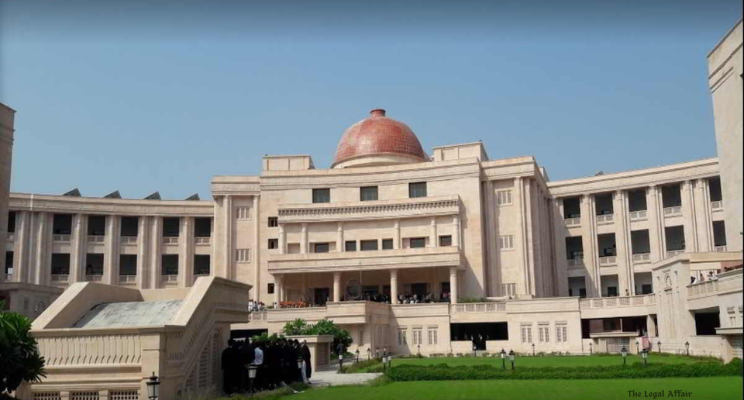
Introduction:
In the case titled Khushbu Devi vs. State of U.P. Thru. Prin. Secy. (Home Deptt) U.P. Lko, cited as 2025 LiveLaw (AB) 142, the Allahabad High Court recently addressed a sensitive and complex situation involving allegations of homicide intertwined with familial responsibilities. The accused, Khushbu Devi, was charged with the murder of her husband, allegedly in collusion with her mother and her purported lover, Sushil Yadav. Despite the grave nature of the accusations, the High Court, taking into account the welfare of her abandoned minor children and relying on Section 480 of the Bharatiya Nagarik Suraksha Sanhita (BNSS), deemed it appropriate to grant her bail. Justice Rajesh Singh Chauhan presided over the matter and delivered the verdict, emphasising humanitarian concerns over the harshness of prolonged pre-trial detention when minors are left unattended.
Arguments of Both Sides:
The prosecution’s case against Khushbu Devi, as unfolded through the contents of the FIR, alleged a deeply disturbing chain of events where Devi, supposedly involved in an illicit relationship with co-accused Sushil Yadav, conspired along with her mother to murder her husband, Prem Kumar. The narrative suggested that the trio not only executed the killing but also attempted to conceal the crime by throwing the deceased’s body into a well. The prosecution relied heavily on the confessional statement made by co-accused Sushil Yadav to establish Devi’s involvement, pointing towards a motive rooted in the desire to usurp the property of the deceased and eliminate obstacles to the illicit relationship. Despite the seriousness of the accusations, the prosecution did not furnish any direct eyewitness testimony or last-seen evidence that conclusively placed Devi at the scene of the crime or linked her beyond a reasonable doubt to the heinous act. Moreover, it was not demonstrated that there had been any antecedent complaints or reports indicating hostility or mistreatment between Devi and her husband, which could have otherwise lent credence to the motive theory proposed by the prosecution. On behalf of Khushbu Devi, her counsel argued that the case against her was a mere fabrication, built solely on the confessional statement of the co-accused without any independent corroborative evidence. It was vehemently contended that the alleged illicit relationship, the motive for murder, and the narrative of conspiracy were nothing more than conjectures without tangible proof. Her counsel pointed out the absence of any eyewitnesses or forensic evidence directly implicating her in the murder or its aftermath. Furthermore, the defence stressed the harmonious marital relationship that existed between Devi and her husband before the incident, highlighting that no previous complaints or disputes had ever surfaced either from the deceased or from any of the family members. Another crucial limb of the defence’s argument was the plight of Devi’s minor children. The counsel submitted that following the tragic death of Prem Kumar and Devi’s incarceration, the children had been left in an abandoned condition without any guardian to care for them. This humanitarian aspect, it was argued, deserved sympathetic consideration by the Court while deciding the bail application. On the strength of these submissions, bail was pressed predominantly on the ground of compassion and welfare of the minors.
Judgement:
After carefully considering the submissions made by both sides, Justice Rajesh Singh Chauhan noted that the allegations, while grave, did not appear to be supported by substantive direct evidence against Khushbu Devi. The court observed that the prosecution’s case rested largely on the confessional statement of the co-accused and lacked independent corroboration through eyewitnesses or forensic reports. Recognising the vulnerability of the abandoned minor children and emphasising that Devi had no prior criminal antecedents, the Court found it just to extend the benefit of Section 480 BNSS, which allows for considerations of bail when exceptional humanitarian circumstances are evident. Additionally, the Court took note of the fact that a charge-sheet had already been filed in the case and that Devi had undertaken not to misuse her liberty and to cooperate fully with the trial proceedings. Based on these assurances and given the overarching interest of her minor children, who were left without any caregiver, the Court concluded that Devi was entitled to bail. Justice Chauhan, in his order, remarked that it would be unjust and harsh to continue Devi’s detention when her release could provide necessary support and guardianship to her vulnerable children. Thus, the Court ordered her release on bail, subject to the usual conditions ensuring her participation in the trial process.