


Introduction:
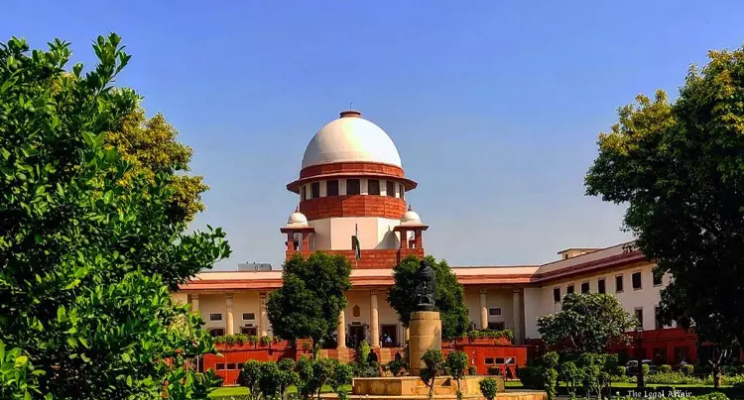
The dispute before the Supreme Court of India concerning the celebrated Tamil film Ponniyin Selvan II brought into sharp focus the uneasy interface between India’s living classical traditions and contemporary commercial music. At the centre of the controversy is the song “Veera Raja Veera”, composed by A. R. Rahman, and its alleged derivation from “Shiva Stuti”, a Dhrupad composition attributed to the late Junior Dagar Brothers within the Dagarvani tradition. The petitioner, Ustad Faiyaz Wasifuddin Dagar, a renowned Dhrupad vocalist and legal heir to the Junior Dagar Brothers, challenged the dilution of interim relief granted by the Delhi High Court, after a Division Bench set aside an earlier injunction directing attribution and a substantial monetary deposit. When the matter reached the Supreme Court, the Bench—comprising Chief Justice Surya Kant and Justice Joymalya Bagchi—took a markedly different approach, steering the discourse away from combative legalism toward cultural acknowledgment and moral recognition. The hearing thus became not merely a copyright contest, but a reflective moment on authorship, performance rights, and the ethical debt owed by modern creators to India’s classical lineages.
Arguments of the Petitioner:
On behalf of Ustad Faiyaz Wasifuddin Dagar, the case was framed as a serious instance of copyright and moral rights infringement rooted in both law and cultural ethos. The petitioner contended that “Shiva Stuti” was not a vague traditional motif floating in the public domain, but a specific, identifiable musical composition jointly created by the late Ustad Faiyazuddin Dagar and late Ustad Zahiruddin Dagar in the 1970s. Though anchored in the ancient Dagarvani tradition, the petitioner argued that the composition bore distinctive melodic contours, swara progressions, rhythmic cycles, and emotive phrasing that reflected the individual creative labour of its composers. According to the pleadings, the work was first publicly fixed and recorded during a performance at the Royal Tropical Institute in Amsterdam on June 22, 1978, and subsequently disseminated through commercial recordings, thereby satisfying statutory requirements of fixation and originality under copyright law.
The petitioner further asserted that following a family settlement after the demise of the original composers, copyright as well as moral rights in the composition devolved upon him. These rights, he maintained, were violated when substantial and protectable elements of “Shiva Stuti” were incorporated into “Veera Raja Veera” without authorization or attribution. The grievance was not limited to economic exploitation; it extended to the erasure of lineage and authorship, which lies at the heart of moral rights under Indian copyright jurisprudence. Dagar emphasized that the song reproduced the core melodic structure, rhythmic framework, and spiritual affect of the original Dhrupad composition, transforming it into a cinematic spectacle without due acknowledgment.
A further layer of concern was added by the allegation that two disciples of the petitioner, who later participated in the recording of “Veera Raja Veera”, had shared the composition with Rahman without consent. This, according to the petitioner, amounted to a breach of trust and did not absolve the composer or producers of liability. When informal attempts at resolution failed, Dagar approached the Delhi High Court in 2023, seeking injunctive relief, recognition of moral rights, damages, and proper attribution. The Single Judge’s interim order of April 25, 2025—directing correction of credits and deposit of ₹2 crores as security—was projected as a justified response to a prima facie infringement. The dilution of this relief by the Division Bench in September 2025, therefore, was assailed before the Supreme Court as undermining the protection owed to classical composers and their heirs, particularly at a time when traditional art forms are increasingly mined for commercial gain.
Arguments of the Respondents:
The respondents, led by A.R. Rahman and the producers of Ponniyin Selvan II, mounted their defence on the premise that “Veera Raja Veera” was an original composition inspired by, rather than copied from, the Dagarvani tradition. Represented by Senior Advocate Dr. Abhishek Manu Singhvi, Rahman’s side emphasized that the musical idiom employed in the song drew from a centuries-old classical reservoir that belongs to a collective cultural heritage. While acknowledging the influence of Dagarvani, the respondents contended that no exclusive proprietary claim could be asserted over stylistic elements intrinsic to a living tradition practiced by multiple gharanas and performers.
It was argued that the petitioner’s claim blurred the distinction between a musical style and a specific copyrighted work. According to the respondents, the melodic and rhythmic features cited by Dagar were characteristic of the genre and had been rendered by several exponents over decades without objection. Singhvi pointed out that performances of similar musical material had been given by the Gundecha Brothers as early as 1991, by Uday Bhawalkar in 2015, by Nirmala De in 2017, and by Kabeeri Kar in 2023, none of which had attracted any legal challenge from the petitioner. This history, the respondents argued, weakened the claim of exclusive authorship and suggested acquiescence.
On the legal plane, the respondents criticized the Single Judge’s interim order for effectively granting final relief at an interlocutory stage, particularly by directing a hefty ₹2 crore deposit and making strong observations on originality and infringement. The Division Bench’s decision to set aside these directions was defended as a necessary corrective to preserve the balance of convenience and prevent prejudgment of issues reserved for trial. Rahman’s counsel stressed that performer’s rights, authorship, and originality were all contested questions requiring full evidence, and that interim injunctions should be sparingly granted in complex copyright disputes involving classical traditions.
Nevertheless, in a gesture that would later become central to the Supreme Court’s approach, Singhvi acknowledged that Rahman had already credited the Dagarvani tradition in his presentations. The respondents signalled openness to considering additional acknowledgment, while maintaining that any such concession would be without prejudice to their legal contentions in the pending suit.
Court’s Judgment and Observations:
When the matter came up before the Supreme Court, the Bench consciously reframed the dispute. Rather than plunging into a granular examination of copyright doctrine, Chief Justice Surya Kant and Justice Joymalya Bagchi focused on the broader cultural and ethical dimensions. The Court noted that Rahman had acknowledged the song’s roots in the Dagarvani tradition and observed that the originality of the tune itself was not seriously in dispute. What remained contentious was authorship and the extent of proprietary claims.
Justice Bagchi, addressing Rahman’s counsel, articulated the Court’s sentiment with notable clarity. He observed that the dispute need not be viewed through the narrow prism of legal niceties when a simple acknowledgment could address the core grievance. Emphasizing that performer’s rights were undisputed, he suggested that since the respondents had already credited the Dagarvani tradition, it would be appropriate to also acknowledge that the composition was first performed by the predecessors of the petitioner. This, in the Court’s view, would accord due respect to lineage without prejudicing the ongoing legal contest.
Chief Justice Kant reinforced this perspective by posing a rhetorical yet poignant question: if the classical gharanas had not contributed to Shastriya Sangeet, could modern musicians have achieved what they have today? The remark underscored the Court’s recognition of the foundational role played by traditional musicians in shaping India’s musical landscape. Justice Bagchi further revealed that he had personally listened to both the impugned song and performances of the Dagar composition, indicating a judicial engagement that went beyond files and submissions.
Singhvi, reading the Bench’s “subtext,” acknowledged that the Court was not seeking to adjudicate the merits at this stage but was nudging the parties toward a conciliatory acknowledgment. He agreed to seek instructions on adding a line crediting the Junior Dagar Brothers as first performers, clarifying that any such step would be without prejudice to the defence in the suit. The Bench welcomed this approach, with Justice Bagchi remarking that the matter was not a fight between competitors but a quest for respect and recognition by traditional worshippers of classical music.
Importantly, the Supreme Court did not pass a final adjudicatory order on infringement or authorship. Instead, it used its moral authority to encourage a culturally sensitive resolution, leaving substantive legal questions to be determined at trial. The hearing thus marked a judicial pause—a moment where acknowledgment was valued over adversarial victory.