


Introduction:
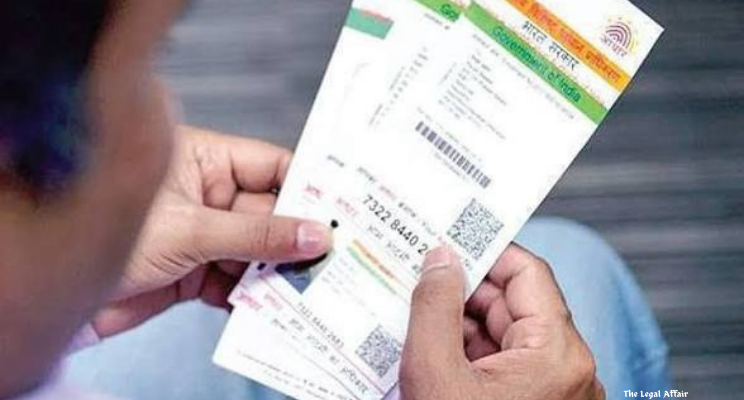
The Delhi High Court has reiterated that an Aadhaar card, by itself, cannot be treated as conclusive proof of a person’s date of birth, emphasising that the document is primarily intended to establish identity. The Court held that where different records contain conflicting dates of birth, the evidentiary value of each document must be examined in light of the circumstances in which it was prepared and the material supporting it. Applying this principle, the Court upheld a Labour Court award granting back wages to a woman employee whose services had been terminated on the employer’s claim that she had attained the age of superannuation.
Justice Manoj Kumar Ohri made these observations while dismissing a writ petition filed by M/s J.J. Electronics challenging a Labour Court award in favour of its former employee, Rosamma Joy. The dispute arose after the management terminated Joy’s employment on May 20, 2017, claiming that she had completed 58 years of age on that date. Its position was based on the date of birth recorded in her Aadhaar card, which showed May 20, 1959.
The workwoman, however, disputed the employer’s calculation of her age. She relied upon an earlier record furnished by the management itself to the Employees’ State Insurance Corporation (ESIC), in which her date of birth had been recorded as May 20, 1960. According to her, this record demonstrated that she would not have attained the age of 58 until May 20, 2018. Consequently, the termination of her services one year earlier was unlawful.
The Labour Court accepted her contention, rejected the management’s reliance on the Aadhaar card and held that the termination was illegal. It directed the employer to pay full back wages for the period from May 20, 2017, to May 20, 2018, when she would have reached the applicable retirement age.
The dispute before the High Court therefore raised an important question concerning the evidentiary status of Aadhaar in employment-related disputes, particularly where an employer seeks to establish an employee’s age by relying on a document that contains a date of birth inconsistent with its own earlier official records.
The Court’s decision is significant because it distinguishes between proof of identity and proof of age. It also reinforces the principle that an employer cannot selectively rely on inconsistent records to justify an adverse employment decision, particularly when an earlier record was prepared by the employer itself in the ordinary course of business.
Arguments of the Parties:
The management, M/s J.J. Electronics, challenged the Labour Court’s award, contending that the finding regarding the illegality of the termination was unsustainable. Its principal argument was that the workwoman’s Aadhaar card recorded her date of birth as May 20, 1959, which meant that she had completed 58 years of age on May 20, 2017. According to the management, she had consequently attained the age of superannuation on the very date her services came to an end.
The employer further argued that the Labour Court had failed to give due consideration to the Aadhaar card, particularly because the document had been relied upon by the workwoman herself. It questioned the decision to prefer the ESIC record over the Aadhaar particulars and maintained that the Labour Court ought not to have disregarded the date of birth appearing in the identity document.
The management also relied on its assertion that the workwoman had voluntarily retired after undergoing cataract surgery. Its position was that the cessation of her employment was not an illegal termination but was connected with her having reached the prescribed retirement age. In substance, the employer sought to establish that the employment relationship had ended in accordance with the applicable age of superannuation and that the award of back wages was therefore unjustified.
On the other hand, Rosamma Joy maintained that she had been employed with the establishment since December 1981 and was earning a monthly salary of ₹10,500. She alleged that her services were terminated on May 20, 2017, after she demanded payment of revised minimum wages. Her case was that the employer had used the question of her age as a ground to discontinue her employment, even though its own earlier records contradicted the date of birth subsequently relied upon.
The workwoman’s principal reliance was on the ESIC registration record prepared in 2010. At the time of her registration with the ESIC, the management had furnished her date of birth as May 20, 1960. This entry was significant because it had been made several years before the dispute concerning her termination arose.
According to her case, the employer could not disregard the date of birth it had itself supplied to a statutory institution and subsequently rely on a different date appearing in the Aadhaar card to establish that she had reached retirement age a year earlier. The earlier ESIC record, she contended, provided a more reliable basis for determining her age in the circumstances.
The workwoman also relied on the UIDAI Office Memorandum dated December 20, 2018, which clarified the limited evidentiary significance of the date of birth recorded in Aadhaar. The memorandum explained that such dates are entered on the basis of documents or self-declarations furnished by Aadhaar holders. It further clarified that Aadhaar is recognised as proof of identity and is not, by itself, proof of date of birth.
Her position was therefore that the Aadhaar entry could not automatically prevail over an earlier employment-related record maintained by a statutory authority, particularly when the employer had failed to produce the underlying documents supporting the date of birth it had originally furnished to the ESIC.
The workwoman’s case also rested on the burden of proof. Since the management had sought to justify the termination by asserting that she had attained the age of superannuation, it was for the employer to establish that she had actually completed the prescribed retirement age on May 20, 2017. Merely pointing to an Aadhaar entry, without producing supporting material or explaining the inconsistency with its earlier record, was insufficient.
Court’s Judgment:
The Delhi High Court dismissed the employer’s petition and upheld the Labour Court’s award, finding no ground to interfere with its assessment of the evidence. Justice Manoj Kumar Ohri examined the conflicting dates of birth, the purpose and evidentiary value of Aadhaar, the circumstances surrounding the preparation of the ESIC record and the burden resting on the management to establish that the workwoman had attained the age of superannuation.
Aadhaar is primarily proof of identity, not conclusive proof of age
A central aspect of the Court’s reasoning concerned the legal significance of Aadhaar in determining a person’s date of birth. The management had relied on the Aadhaar card to establish that Rosamma Joy was born on May 20, 1959. The High Court, however, made it clear that the mere appearance of a date of birth in an Aadhaar card does not make that date conclusive.
The Court observed that Aadhaar is primarily intended to establish the identity of an individual. Its evidentiary value for determining a person’s age must be assessed in accordance with the circumstances in which the date of birth was recorded and the material on which the entry was based.
The Court specifically referred to the UIDAI Office Memorandum dated December 20, 2018, which had been placed on record by the workwoman. The memorandum clarified that dates of birth appearing in Aadhaar records are entered on the basis of documents or self-declarations furnished by Aadhaar holders.
It also explained that the Aadhaar Act, 2016 recognises Aadhaar as proof of identity, but does not make it proof of date of birth. This distinction was important because the management sought to treat the date appearing in the Aadhaar card as sufficient evidence that the workwoman had completed 58 years of age.
The Court observed:
“However, an Aadhaar card is not, by itself, proof of date of birth. The Office Memorandum dated 20.12.2018 issued by UIDAI, which has been placed on record by the workwoman, clarifies the said position.”
The observation does not mean that an Aadhaar card can never be considered in a dispute concerning age. Rather, it establishes that the document cannot automatically be treated as conclusive evidence of date of birth merely because it contains such an entry. Where competing records exist, the court or adjudicating authority must examine their reliability and the circumstances in which they came into existence.
Reliance on the Supreme Court’s decision in Saroj v. IFFCO-Tokio General Insurance Co.
The High Court also relied upon the Supreme Court’s decision in Saroj v. IFFCO-Tokio General Insurance Co. In that case, the Supreme Court recognised that although Aadhaar may be used to establish a person’s identity, it cannot, by itself, be treated as proof of date of birth.
This principle supported the distinction drawn by the High Court between identity verification and determination of age. An identity document may establish that a particular individual is the person concerned, but that does not necessarily establish the accuracy or legal conclusiveness of every personal detail recorded in it.
The significance of the precedent in the present dispute was that the employer could not establish superannuation merely by producing the Aadhaar card without addressing the conflicting documentary evidence. The Court was required to examine the evidentiary foundation of the competing dates rather than automatically accepting the date appearing in the identity document.
Earlier ESIC record carried greater evidentiary weight
A particularly important circumstance was that the management itself had furnished the workwoman’s date of birth as May 20, 1960, to the ESIC when she was registered in 2010.
The High Court considered the timing and circumstances in which this record had been prepared. It noted that the ESIC entry predated the employment dispute by several years. At the time the information was furnished, neither the employer nor the employee had any apparent reason to anticipate a future disagreement over the workwoman’s retirement date.
This circumstance strengthened the evidentiary value of the ESIC record. Unlike a document that might be created or relied upon after a dispute has arisen, the entry had been made in the ordinary course of the employee’s registration with the statutory institution.
The Court therefore found it reasonable for the Labour Court to attach greater importance to the earlier ESIC record than to the Aadhaar entry relied upon by the management.
The Court also took note of the employer’s failure to properly establish the basis on which it had furnished the date of birth to the ESIC. The management had neither produced the original documents on the basis of which the date of birth was recorded nor adequately explained why it was now relying on a different date.
Further, the management had not cross-examined the ESIC official who proved the relevant record. Consequently, the evidentiary value of the official record remained unshaken by any effective challenge from the employer.
These circumstances were relevant to determining which of the two conflicting entries deserved greater weight. The High Court found that the Labour Court had not acted arbitrarily in preferring the earlier ESIC record. Its conclusion was supported by the chronology of the documents and the absence of any convincing explanation from the management.
Burden of proving superannuation rested on the employer
The Court also emphasised that the burden of establishing that the workwoman had attained the age of superannuation rested on the management. It was the employer that sought to justify the cessation of her services on the ground that she had completed 58 years of age.
Accordingly, the employer was required to establish the factual basis of that assertion. It could not discharge this responsibility merely by producing an Aadhaar card containing a date of birth that conflicted with its own earlier record.
The management had to explain the discrepancy and produce material capable of establishing that the date relied upon for terminating the workwoman’s services was correct. Its failure to produce the underlying documents supporting the ESIC entry, or to otherwise establish the reliability of the later date, weakened its case.
The Court’s approach reflects an important principle in employment disputes: where an employer relies on a particular fact to justify an adverse service decision, it must establish that fact through reliable evidence. An employee’s services cannot be brought to an end on the basis of an unsupported assumption, particularly where the employer’s own records point in the opposite direction.
Employer could not rely on inconsistent dates to justify earlier retirement
The High Court found it particularly significant that the conflicting date of birth was not merely a discrepancy between two documents independently produced by the employee. The earlier date had been furnished by the management itself to the ESIC in 2010.
Having recorded her date of birth as May 20, 1960, the employer could not subsequently rely on a different date in the Aadhaar card to bring her employment to an end a year earlier.
The Court observed:
“Having recorded her date of birth as 20.05.1960, the management could not later rely upon a different date in an Aadhaar card to end her services a year earlier. It is also worth mentioning at this point that the ID Act is a beneficial piece of legislation.”
This observation highlights the importance of consistency and fairness in the employer-employee relationship. An employer that has maintained or furnished a particular date of birth in official records cannot simply disregard that entry when a different date becomes convenient for justifying termination.
The Court’s reasoning also reflects the protective purpose of labour legislation. The Industrial Disputes Act, 1947, is a beneficial piece of legislation intended to provide safeguards to workmen against unfair and unlawful employment practices. Its provisions must be applied in a manner that gives effect to the protection afforded to workers, rather than permitting an employer to rely on uncertain or inadequately established grounds to end their employment.
The Court did not accept that the management’s assertion regarding voluntary retirement after cataract surgery was sufficient to displace the Labour Court’s conclusion. The central issue was whether the employer had established that the workwoman had attained the age of superannuation on May 20, 2017. On the evidence before it, the Court found no reason to disturb the Labour Court’s answer to that question.
Limited scope of interference under writ jurisdiction
Another important aspect of the judgment concerned the scope of judicial interference with findings recorded by a Labour Court.
The High Court noted that the Labour Court had considered the relevant documentary evidence and reached a conclusion supported by the material on record. It had examined the Aadhaar card, the earlier ESIC entry and the circumstances in which the competing dates of birth had been recorded.
The management’s disagreement with the Labour Court’s assessment did not, by itself, justify interference under writ jurisdiction. A writ court does not ordinarily substitute its own view merely because another interpretation of the evidence is being suggested. Interference is warranted where the decision suffers from a legal or jurisdictional error, or where the findings are unsupported by the record or otherwise warrant correction.
In the present case, the Labour Court’s preference for the ESIC record was based on identifiable evidentiary considerations. The record had been prepared several years before the dispute, the employer itself had furnished the date of birth, and the management had failed to produce material adequately explaining the subsequent inconsistency.
The High Court therefore found no perversity or other ground warranting interference with the award.
Final Decision
Having found that the Labour Court had correctly assessed the competing records and that the management had failed to establish that Rosamma Joy attained the age of superannuation on May 20, 2017, the Delhi High Court dismissed the employer’s writ petition.
The Court consequently left undisturbed the Labour Court’s finding that the termination was illegal and its direction to pay full back wages for the period between May 20, 2017, and May 20, 2018. The latter date was when the workwoman would have attained 58 years of age according to the date of birth recorded in the ESIC documents.
The judgment reinforces that Aadhaar should not be treated as conclusive evidence of date of birth and that conflicting documentary records must be evaluated on their individual evidentiary merits. It also underscores that employers must act consistently with their own official records and cannot justify an adverse employment decision by relying on a later document without establishing its reliability.
By upholding the Labour Court’s award, the High Court reaffirmed the importance of evidence-based decision-making in employment disputes and the protective purpose of labour legislation. The ruling makes clear that an employee cannot be deprived of the protection of labour law merely because an identity document contains a date of birth that differs from an earlier and more reliable official record.