


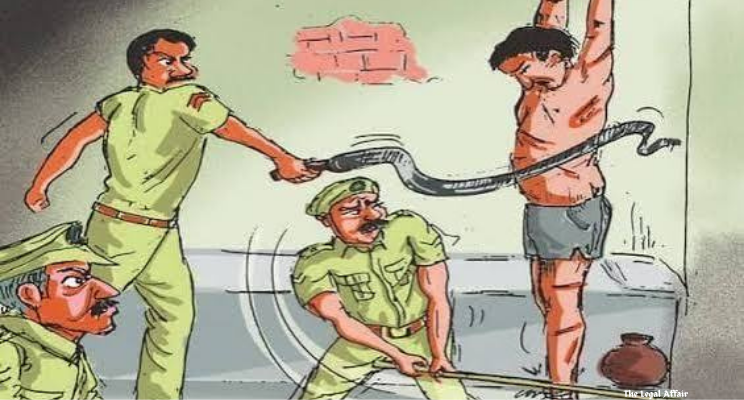
Introduction:
The Madhya Pradesh High Court has granted regular bail to a police officer accused in a custodial death case, observing that the fact that an officer held a supervisory position at the relevant time cannot, by itself, establish individual criminal liability. The Court emphasised the distinction between responsibility arising from a police officer’s official position and criminal liability for specific acts alleged against that officer. While a supervisory role may be a relevant circumstance in assessing the allegations, it cannot substitute for proof of the essential ingredients of the offence.
Justice Alok Awasthi passed the order while hearing an appeal under Section 14A(2) of the Scheduled Castes and the Scheduled Tribes (Prevention of Atrocities) Act, challenging the rejection of the appellant’s application for regular bail by the Special Judge. The case arose from the suspicious death of a prisoner named Deva while in police custody. The allegations included murder, voluntarily causing hurt and wrongful confinement under Sections 103, 115 and 127, respectively, of the Bharatiya Nyaya Sanhita, 2023, as stated in the case material. The appellant had been in custody since October 5, 2025.
The matter originated from a written complaint concerning Deva’s death. Following inquest proceedings, a Judicial Magistrate First Class conducted an inquiry into the circumstances surrounding the death. The inquiry reportedly indicated that the deceased had died under unusual circumstances allegedly involving torture and neglect during police custody. On the basis of the developments, a criminal case was registered against the appellant and several other police personnel.
In view of the seriousness of the allegations, the investigation was transferred to the Central Bureau of Investigation (CBI) in compliance with the Supreme Court’s order in Hansura Bai v. State of Madhya Pradesh. Following its investigation, the CBI filed a chargesheet against co-accused Devraj, Juber Khan and Gajraj Singh Yadav, and a supplementary challan against absconding accused Sanjeet Singh Mavai and Uttam Singh.
The appellant sought bail on the ground that he was assigned official VIP duty outside the police station on the date of the incident and was not present when the deceased was allegedly subjected to physical assault. The CBI opposed the application, maintaining that oral, documentary and digital evidence was available to establish the appellant’s alleged involvement.
After examining the circumstances, the High Court noted that the deceased had been taken into custody on July 13, when the appellant was reportedly away on official duty, and that the appellant returned to the police station on July 14. The Court considered the possibility that several police officers had interrogated and physically assaulted the deceased during the appellant’s absence. It also noted that the allegations against the appellant included participation in, facilitation of, direction of, or failure to prevent the alleged acts.
The Court ultimately granted bail, taking into account the appellant’s period of custody, completion of the investigation, filing of the chargesheet and the nature of the evidence collected. The ruling does not amount to an acquittal or a finding that the allegations are false. Instead, it addresses whether continued detention was necessary while the criminal proceedings remained pending.
The decision is significant because it reiterates that criminal liability must be assessed individually and in accordance with the ingredients of the alleged offence. A police officer’s position within the hierarchy may be relevant to the investigation, but criminal responsibility cannot be imposed merely because of the office held. At the same time, the Court’s order recognises that allegations of custodial violence and death remain serious matters to be determined through the criminal trial.
Arguments of the Parties:
The appellant, represented by Senior Counsel Vivek Singh, assisted by Advocate Gagan Bajad, challenged the Special Judge’s refusal to grant regular bail. The principal submission was that the appellant was not present at the police station during the period when the deceased was allegedly subjected to torture or physical assault. According to the defence, the appellant had been assigned official VIP duty outside the station on the relevant date.
The defence relied on the sequence of events concerning the deceased’s custody and the appellant’s movements. The deceased was taken into custody on July 13, whereas the appellant was reportedly away on official duty and returned to the police station on July 14. The defence contended that this circumstance was material to assessing the appellant’s individual role in the alleged offences.
The argument was not merely that the appellant occupied an official position but that the prosecution had to establish a legally sufficient connection between him and the acts alleged to have caused the deceased’s death. The appellant’s position was that his designation or supervisory status could not, without further evidence, establish that he personally participated in the alleged assault, directed other officers to commit it, facilitated the conduct or intentionally failed to take action when legally required.
The defence thus sought to distinguish between the institutional responsibility associated with a police station and the individual criminal liability of a particular officer. In a case involving multiple police personnel, the question of each accused’s specific conduct assumes importance. A person may hold a supervisory post without necessarily having committed every act alleged against officers serving under that person. Conversely, where evidence establishes active participation, direction, facilitation or another legally relevant form of involvement, official status cannot shield an accused from criminal liability. The defence maintained that the prosecution had not established a sufficient basis to justify continued custody in the appellant’s case.
The appellant also relied on the procedural stage of the investigation. By the time the bail application was considered, the investigation had been completed and the chargesheet had been filed. The defence argued that custodial interrogation was no longer required and that continued detention was therefore unnecessary for the purpose of investigation.
This submission was relevant to the distinction between pre-trial detention and punishment following conviction. Regular bail is considered on the basis of the applicable statutory framework and the circumstances of the individual case. Factors such as the nature of the accusations, the material collected, the possibility of interference with evidence, the risk of absconding and the need for further investigation may be relevant. Completion of the investigation does not automatically entitle an accused to bail, but it may reduce the justification for detention where the investigating agency no longer requires the accused to remain in custody for questioning.
The appellant’s case therefore rested on the combined effect of his claimed absence during the relevant period, the need to assess his role individually, the completion of the investigation and the period already spent in custody. The defence sought to persuade the High Court that these circumstances justified release pending trial without prejudging the merits of the prosecution case.
The CBI opposed the appeal through Advocates Manoj Kumar Dwivedi and Aniruddha Dwivedi. It contended that sufficient oral, documentary and digital evidence had been collected to demonstrate the appellant’s alleged involvement in the incident. The prosecution therefore maintained that the allegations could not be assessed solely by relying on the appellant’s claim that he was absent from the police station when the deceased was first taken into custody.
The CBI’s position was that the case involved allegations of custodial torture and neglect resulting in death, circumstances that required a careful examination of the evidence against each accused. The prosecution asserted that the appellant’s alleged role had to be evaluated in the context of the material collected during the investigation, rather than determined exclusively by his official-duty assignment.
The allegations against the appellant were not confined to a claim that he had personally inflicted physical injuries. As noted by the High Court, the case against him also involved allegations that he had participated in, facilitated, directed or failed to prevent the acts in question. These allegations raised different questions concerning individual conduct, the nature of any alleged involvement and the legal basis on which responsibility was sought to be attributed to him.
The prosecution’s reliance on oral evidence, official records, CCTV footage, medical material and other documentary evidence was intended to demonstrate that the appellant’s role required judicial examination. The existence of such material was relevant to the bail proceedings, although its ultimate evidentiary value and the extent to which it established the charges would have to be determined during trial.
The CBI’s opposition also reflected the seriousness of the alleged offences. A death occurring in police custody raises substantial concerns because a person detained by the State is under the control of public authorities and depends on them for protection against unlawful treatment. Allegations that police personnel subjected a prisoner to torture or neglected their responsibilities therefore require careful investigation and judicial scrutiny.
However, the seriousness of an allegation does not eliminate the need to examine the individual role of each accused. The prosecution must establish the relevant ingredients of the alleged offences against the person charged. At the bail stage, the court must consider the material available and the applicable legal principles without conducting a full trial or making final findings on guilt.
The respondents accordingly sought to sustain the rejection of bail by relying on the alleged involvement of the appellant and the material collected by the CBI. The High Court had to balance these submissions against the appellant’s claimed absence during the initial period of custody, the completion of the investigation and the question of whether continued detention remained necessary.
The available case summary does not set out the detailed submissions of counsel for respondent No. 2. It would therefore be inappropriate to attribute additional arguments to that party beyond the material supplied. The principal contest before the High Court, as reflected in the summary, concerned the appellant’s individual responsibility, the prosecution evidence and the necessity of continued custody after the chargesheet had been filed.
Court’s Judgment:
The Madhya Pradesh High Court allowed the appeal and granted regular bail to the appellant. Justice Alok Awasthi considered the allegations surrounding Deva’s death, the appellant’s claimed absence from the police station during the initial period of custody, the nature of the prosecution material and the stage reached in the investigation.
A central aspect of the judgment was the distinction between custodial responsibility and individual criminal liability. The Court observed:
“This Court also takes note of the distinction between custodial responsibility and individual criminal liability. The fact that an accused was holding a supervisory Police position at the relevant time is a relevant circumstance, but such status by itself cannot substitute for proof of the ingredients of the particular of an alleged against that accused”.
The substance of this observation is that criminal responsibility cannot be established solely by demonstrating that an accused occupied a supervisory position. The prosecution must establish the conduct attributed to that individual and show how it satisfies the ingredients of the particular offence alleged. A person’s designation may form part of the factual context, but it cannot replace proof of the legally necessary elements.
This principle is especially important in cases involving several police officers. The fact that a custodial death occurred may require investigation into the actions and responsibilities of multiple personnel, including those who supervised the station or had authority over the persons involved. Nevertheless, each accused must be assessed according to the alleged acts, omissions and applicable legal provisions. Criminal liability cannot automatically be transferred from one officer to another merely because of their relative positions within the police hierarchy.
The Court’s observation does not mean that supervisory officers can never be held criminally liable for conduct committed by others. Depending on the applicable law and the evidence, a supervisory officer may incur liability if the prosecution establishes the necessary participation, direction, facilitation, common intention, abetment, unlawful omission or another legally recognised basis of responsibility. The point is that the officer’s rank or position, standing alone, is insufficient.
In the present case, the High Court noted that the appellant was alleged to have participated in, facilitated, directed or failed to prevent the acts connected with the deceased’s treatment in custody. These allegations involved different possible forms of responsibility and therefore required assessment in the light of the material collected. The Court’s bail decision did not finally determine whether any of these allegations had been proved.
The Bench also examined the chronology of the deceased’s custody. The deceased had been taken into custody on July 13, while the appellant was reportedly on official duty outside the police station. The appellant returned to the station on July 14. The Court noted that, during the appellant’s absence, the deceased was being subjected to continuous interrogation by several police officers and that the possibility of multiple physical assaults during that period could not be ruled out.
This observation was relevant to the assessment of the appellant’s alleged role. It highlighted the need to distinguish between the conduct that occurred during his absence and any conduct or omission that the prosecution attributed to him. The fact that the deceased was allegedly subjected to assault by other officers during that period did not, by itself, resolve the appellant’s liability. Equally, the appellant’s absence at one stage would not automatically exclude responsibility for conduct that the prosecution might otherwise establish through evidence.
The Court therefore approached the issue through the principle of individualised criminal responsibility. The prosecution’s case had to be assessed against the appellant’s alleged acts and the legal ingredients of the offences, rather than treating his supervisory position as conclusive proof of guilt. This distinction was particularly important because the allegations arose from a custodial death involving several police personnel.
The Court next considered the stage of the proceedings. The appellant had been in custody since October 5, 2025, and the investigating agency had completed its investigation and filed the chargesheet. The Court noted that custodial interrogation was no longer required.
The filing of a chargesheet is an important consideration in bail proceedings because it generally indicates that the investigating agency has completed the principal investigative steps necessary to present its case. Once the investigation is complete, the need to retain an accused in custody solely to facilitate questioning may diminish. However, this is not an automatic rule requiring bail in every case. The court must still consider the seriousness of the allegations, the evidence available, the possibility of interference with witnesses or records, the risk of absconding and other relevant circumstances.
In this matter, the High Court considered the completion of the investigation alongside the nature of the evidence and the period of detention. The prosecution’s case was based on documentary material, CCTV recordings, official records, medical evidence and witness statements. The Court took note of the nature of this material while determining whether continued custodial detention was necessary.
Where the prosecution case is substantially supported by records and evidence already collected, the court may examine whether the accused’s continued physical detention is required for any legitimate investigative purpose. The availability of documentary and digital evidence does not automatically remove every concern about possible interference, but the court must assess whether such concerns justify continued detention in the circumstances of the particular case.
The Court found that the investigation had been completed and the chargesheet filed, and that further custodial interrogation of the appellant was no longer necessary. These circumstances supported the grant of bail. The decision was therefore based not merely on the appellant’s claim of being away from the police station, but also on the procedural stage of the case and the need to determine whether continued detention was justified.
The Court’s reasoning also reflects the distinction between granting bail and determining guilt. Bail allows an accused to remain outside custody while the criminal proceedings continue, subject to the conditions imposed by the court. It does not establish innocence, invalidate the prosecution’s evidence or prevent the trial court from assessing the charges. The evidence concerning the deceased’s death, the alleged acts of the police personnel and the appellant’s specific role remains subject to adjudication in accordance with law.
The fact that the investigation was transferred to the CBI in compliance with the Supreme Court’s order in Hansura Bai v. State of Madhya Pradesh formed part of the procedural background. The CBI investigated the circumstances of the death and filed chargesheets against several accused persons. The High Court’s task in the present appeal, however, was narrower: it had to consider whether the appellant should be released on regular bail after the Special Judge rejected his application.
The appeal had been filed under Section 14A(2) of the Scheduled Castes and the Scheduled Tribes (Prevention of Atrocities) Act. The High Court considered the challenge to the order rejecting bail within that statutory framework. The precise application of the Act’s provisions to the underlying allegations must be distinguished from the separate question of whether the circumstances justified continued detention of the appellant pending trial.
The High Court ultimately found that the completion of the investigation, the filing of the chargesheet, the absence of any remaining requirement for custodial interrogation and the need to assess individual criminal liability supported granting bail. It accordingly allowed the appeal and released the appellant on regular bail, subject to the applicable conditions.
The decision should not be read as minimising the seriousness of custodial violence or the responsibility of police authorities to protect persons in their custody. A person detained by the police remains entitled to lawful treatment, and allegations of torture or death in custody demand a thorough and impartial investigation. Where evidence establishes that an officer participated in, directed, facilitated or was otherwise legally responsible for criminal conduct, the officer may be held accountable in accordance wih law.
The judgment instead underscores that a