


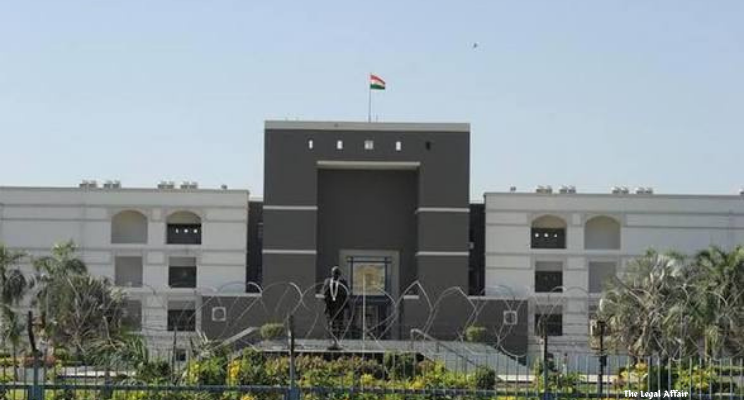
Introduction:
The Gujarat High Court has granted regular bail to a Muslim cleric, commonly known as a Maulana, accused of facilitating the religious conversion of a minor girl and solemnising her marriage without verifying her identity documents or proof of age. While considering the bail application, the Court took into account the nature of the allegations, the age of the victim, the completion of the investigation, the filing of the charge sheet, the absence of criminal antecedents and the period already spent by the accused in judicial custody. The Court observed that the prosecution had failed to demonstrate circumstances warranting the continued detention of the applicant and emphasised the importance of personal liberty under Article 21 of the Constitution of India.
The order was passed by Justice Hasmukh D. Suthar of the Gujarat High Court in a regular bail application arising from allegations involving religious conversion, a minor’s marriage and offences under several criminal statutes. The decision is reported as 2026 LiveLaw (Guj) 281.
The case raises important questions concerning the exercise of judicial discretion in bail proceedings involving serious allegations under laws enacted to protect children and regulate religious conversions. It also brings into focus the distinction between the seriousness of the accusations against an individual and the necessity of keeping that individual in custody throughout the trial. Although the allegations attracted provisions of the Bharatiya Nyaya Sanhita, 2023 (BNS), the Protection of Children from Sexual Offences Act, 2012 (POCSO Act), the Prohibition of Child Marriage Act, 2006, and the Gujarat Freedom of Religion Act, the High Court considered whether the circumstances of the case justified the applicant’s continued detention after the investigation had concluded.
According to the prosecution’s allegations, the applicant, a Muslim cleric, had changed the victim’s name and solemnised her marriage without first verifying her identity documents, age or other relevant material. It was further alleged that he had facilitated or brought about the victim’s conversion to Islam. These allegations formed the basis of criminal proceedings against him, bringing his alleged conduct within the scrutiny of multiple statutory provisions relating to criminal liability, the protection of minors, child marriage and religious conversion.
The applicant was booked under Sections 64(2)(i), 64(2)(m), 137(2), 87, 115(2) and 351(3) of the BNS. He was also charged under Sections 4, 6, 17 and 18 of the POCSO Act, Sections 9 and 10 of the Prohibition of Child Marriage Act, and Section 4A of the Gujarat Freedom of Religion Act. The combination of these provisions indicates the range of allegations that the investigating agency sought to pursue, although the precise applicability and proof of each offence would ultimately depend on the evidence presented during the trial.
The prosecution’s case was particularly significant because the victim was stated to be 17 years and three months old at the relevant point in time. Her age brought the matter within the protective framework of legislation concerning children and raised questions about the legal consequences of solemnising a marriage involving a person below the statutory age. The allegation that the applicant had proceeded without checking the victim’s age was therefore an important aspect of the case against him.
However, the High Court’s task at the bail stage was not to determine whether the applicant was guilty of the offences alleged. Instead, it was required to examine whether his continued detention was necessary in light of the stage of the proceedings, the available circumstances and the principles governing personal liberty. The Court expressly noted that there was no allegation of an aggravated form of sexual assault against the applicant and that the investigation had already been completed.
The filing of the charge sheet was another relevant consideration. Once the investigating agency had completed its investigation and placed its findings before the competent court, the High Court considered whether further incarceration was justified. It also took note of the fact that the applicant had no previous criminal antecedents and had been in custody since June.
Against this background, the Gujarat High Court concluded that the circumstances warranted the exercise of its discretion in favour of the applicant. The Court reiterated the established principle that bail is ordinarily the rule and jail the exception, while also recognising the constitutional importance of personal liberty. Its decision was confined to the question of regular bail and did not amount to a final determination of the criminal charges.
Arguments of the Parties:
The principal issue before the Gujarat High Court was whether the applicant was entitled to regular bail despite the serious allegations of facilitating religious conversion and solemnising the marriage of a minor without verifying her age. The applicant’s request had to be assessed against the prosecution’s accusations and the statutory provisions invoked in the FIR, while also taking into account the procedural stage of the criminal case and the constitutional principles governing pre-trial detention.
The applicant’s case, as reflected in the circumstances considered by the Court, centred on the argument that continued incarceration was no longer necessary after the completion of the investigation. The charge sheet had already been filed, and the investigating agency had completed the principal investigative exercise required to bring the matter before the trial court. In such circumstances, the applicant could contend that his continued detention would not serve a legitimate investigative purpose, particularly in the absence of any specific circumstance demonstrating that his release would prejudice the proceedings.
The completion of the investigation was important because custodial detention during an ongoing investigation may sometimes be justified by the need to question an accused, recover evidence, prevent interference with the investigation or address other legally recognised concerns. Once the investigation has concluded, however, the court must examine whether any such necessity continues to exist. The filing of a charge sheet does not automatically entitle an accused to bail, but it is a relevant consideration when the court evaluates the need for further custody.
The applicant could also rely on the absence of previous criminal antecedents. A person’s criminal history is frequently considered in bail proceedings because it may assist the court in assessing the likelihood of repeated offending, the individual’s conduct and the overall circumstances relevant to release. In the present case, the High Court specifically noted that the applicant had no past antecedents. This circumstance weighed in favour of considering his request for regular bail, although it did not by itself resolve the question of whether bail should be granted.
Another significant consideration was the period the applicant had already spent in custody. He had remained behind bars since June, and the Court took the view that the conclusion of the trial would take time. Criminal trials involving multiple statutory provisions and allegations concerning minors may require the examination of witnesses, consideration of documentary material and adjudication of disputed questions of fact. If an accused remains incarcerated throughout a prolonged trial, the period of detention may become substantial even before the court determines guilt or innocence.
From the applicant’s perspective, therefore, continued detention in the absence of a demonstrated need for custody could amount to an excessive restriction on personal liberty. The constitutional guarantee under Article 21 requires that deprivation of liberty be supported by law and justified in accordance with the applicable legal principles. Although an accused facing serious charges does not possess an unconditional right to release, the decision to deny bail must be based on relevant considerations rather than solely on the existence of allegations in the FIR.
The applicant’s case also involved the distinction between the gravity of an accusation and the necessity of continued detention. The allegations concerning a minor’s marriage and religious conversion were undoubtedly serious and required adjudication in accordance with law. Nevertheless, the applicant could maintain that the seriousness of the accusations alone should not substitute for an assessment of the actual circumstances bearing on the bail decision. The Court was required to consider whether detention remained necessary pending trial, rather than treating pre-trial imprisonment as an automatic consequence of the charges.
The prosecution, on the other hand, had the responsibility of placing before the Court the circumstances supporting the continued detention of the applicant. The accusations were not limited to an ordinary dispute concerning the validity of a marriage. They involved allegations that a minor’s identity and age had not been verified before her name was changed and her marriage solemnised, together with the allegation that her religious faith had been changed.
The State could rely on the statutory framework invoked in the FIR to emphasise the seriousness of the alleged conduct. The POCSO Act is designed to protect children from sexual offences, while the Prohibition of Child Marriage Act addresses marriages involving persons below the prescribed legal age. The Gujarat Freedom of Religion Act provides a separate statutory framework concerning specified forms of religious conversion. The BNS provisions invoked by the investigating agency formed part of the broader criminal allegations against the applicant.
The prosecution’s position could therefore be understood in the context of the need to ensure that allegations involving the protection of minors are investigated and tried effectively. The age of the victim was especially relevant because she was stated to be 17 years and three months old at the relevant time. The allegation that the applicant had not verified her age was central to the prosecution’s case and raised questions that would require consideration during the trial.
The State could also emphasise that the grant of bail does not depend exclusively on whether the investigation has concluded. Even after a charge sheet has been filed, courts may refuse bail where the circumstances establish a substantial risk of the accused absconding, influencing witnesses, tampering with evidence, committing further offences or otherwise obstructing the administration of justice. The existence and strength of such concerns must, however, be assessed in the individual case.
In the present matter, the High Court specifically observed that the prosecution had failed to point out circumstances warranting the continuation or prolongation of the applicant’s detention. This observation was central to the Court’s decision. It indicated that, notwithstanding the nature of the allegations, the material presented to the Court did not establish a sufficient justification for keeping the applicant in custody until the conclusion of the trial.
The Court also considered the absence of an allegation of an aggravated form of sexual assault against the applicant. This observation formed part of the overall assessment of the nature of the accusations for the limited purpose of deciding bail. It should not be understood as a finding that the remaining allegations were unfounded or that offences under the other invoked statutes could not be established. The allegations concerning religious conversion, the solemnisation of the minor’s marriage and the alleged failure to verify her age remained matters for adjudication in the criminal proceedings.
Ultimately, the competing considerations required the Court to balance the seriousness of the allegations and the need to protect the integrity of the trial against the applicant’s right to personal liberty. The State’s objections had to be assessed in light of the actual circumstances demonstrating whether further detention was necessary. Having considered those circumstances, the High Court found that the prosecution had not established a sufficient basis for prolonging the applicant’s incarceration.
Court’s Judgment:
Justice Hasmukh D. Suthar of the Gujarat High Court granted regular bail to the applicant after examining the nature of the allegations, the stage of the criminal proceedings, the period of custody and the constitutional principles applicable to pre-trial detention.
At the outset, the Court took note of the prosecution’s allegation that the applicant, a Maulana, had changed the victim’s name and solemnised her marriage without verifying her identity documents, age or other relevant material. The allegation that he had also facilitated the victim’s religious conversion formed an additional aspect of the case. These accusations had resulted in the invocation of several provisions under the BNS, the POCSO Act, the Prohibition of Child Marriage Act and the Gujarat Freedom of Religion Act.
The Court’s consideration of these allegations did not amount to an assessment of the applicant’s ultimate criminal liability. A bail hearing serves a different purpose from a criminal trial. At the bail stage, the court must consider the relevant circumstances to determine whether the accused should remain in custody while the prosecution proceeds. Questions requiring a detailed assessment of witness testimony, documentary evidence and the credibility of competing versions ordinarily fall to be decided during the trial.
In this context, the Court took note of the fact that there was no allegation of an aggravated form of sexual assault against the applicant. This was a relevant consideration in evaluating the nature of the allegations for the limited purpose of bail. The Court did not thereby declare the accusations relating to the minor’s marriage or religious conversion legally insignificant. Rather, it assessed the nature of the allegations alongside the other circumstances of the case before deciding whether further detention was justified.
The Court also gave considerable weight to the fact that the investigation had been completed and the charge sheet had been filed. This meant that the investigating agency had concluded its investigation and formally placed the case before the competent court. Although the completion of an investigation does not create an automatic entitlement to bail, it can materially affect the assessment of whether custodial detention remains necessary.
Pre-trial detention is not intended to operate as a form of punishment. Its purpose is to ensure the proper administration of criminal justice in circumstances where custody is legally justified. Depending on the facts, detention may be necessary to prevent interference with evidence, secure the accused’s presence or address other legitimate concerns. However, where the investigation has concluded, the court must examine whether the prosecution has demonstrated any continuing reason for incarceration.
In the present case, the High Court found that the prosecution had failed to identify circumstances requiring the applicant’s continued detention. This finding weighed significantly in favour of bail. The Court’s reasoning reflected the principle that an accused should not remain in prison merely because the criminal proceedings have not yet reached their conclusion, particularly when the necessity of further detention has not been adequately established.
The absence of criminal antecedents was another factor considered by the Court. The applicant had no previous criminal history, and the Court took this circumstance into account while evaluating his request for release. Criminal antecedents can be relevant to the assessment of bail because they may provide information about an accused’s past conduct and the potential risks associated with release. In this case, the absence of such antecedents supported the applicant’s plea, although the Court did not treat it as a decisive factor in isolation.
The period of custody was equally important. The applicant had been behind bars since June. The Court recognised that the trial would take time to conclude. Given the range of statutory provisions invoked and the need for the criminal court to examine the evidence, the proceedings could not necessarily be expected to end immediately. The question was therefore whether the applicant should continue to remain incarcerated for an uncertain period while awaiting adjudication.
The Court expressed concern about the consequences of prolonged pre-trial detention. It observed that keeping the accused behind bars when the trial would take time could amount to a pre-trial conviction. The observation underscored the distinction between an accused person’s status before conviction and the punishment that may lawfully follow a finding of guilt after a fair trial.
A person facing criminal charges remains entitled to the protections afforded by the Constitution and the applicable criminal procedure. The presumption of innocence, while operating within the framework of criminal adjudication, reinforces the need to distinguish between detention necessary for the administration of justice and imprisonment that effectively anticipates the outcome of the trial. The Court’s observation was directed at the danger of allowing pre-trial incarceration to continue without adequate justification.
The principle that bail is the rule and jail the exception was central to the Court’s reasoning. This principle reflects the broader understanding that personal liberty should not be restricted unnecessarily before guilt is established. It does not mean that bail must be granted in every case or that the seriousness of criminal allegations can be disregarded. Courts must continue to consider the nature of the accusation, the material available at the relevant stage, the likelihood of the accused appearing for trial and any risks associated with release.
The principle instead requires a judicial assessment of whether continued detention is justified in the particular circumstances. The seriousness of the charges remains relevant, but it must be considered alongside other factors rather than treated as the sole determinant. In the present case, the Court examined the accusations in conjunction with the completed investigation, the filing of the charge sheet, the applicant’s lack of criminal antecedents, his period of custody and the expected duration of the trial.
Article 21 of the Constitution of India also informed the Court’s decision. It provides that no person shall be deprived of life or personal liberty except according to the procedure established by law. Personal liberty is a fundamental constitutional guarantee, and restrictions upon it must operate within the limits imposed by law and judicially recognised principles.
The constitutional protection is particularly relevant in bail proceedings because the court must decide whether an accused should remain in custody before the criminal charges have been finally adjudicated. Although Article 21 does not confer an unrestricted right to bail, it requires courts to examine the justification for continued detention in a manner consistent with fairness and the protection of liberty.
The Gujarat High Court applied these considerations to the facts before it. The applicant had already spent a period in custody, the investigation was complete, and the prosecution had filed its charge sheet. The Court also noted tha the applicant had no previous criminal an