


Introduction:
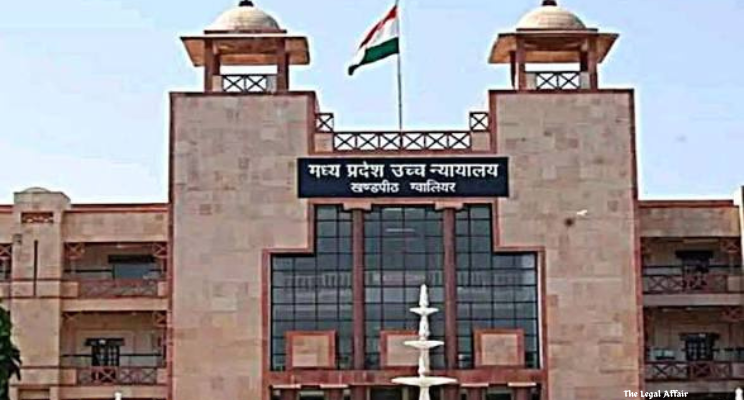
The Madhya Pradesh High Court, in Rajni v. State of Madhya Pradesh (MCRC-26708-2026), reported as 2026 LiveLaw (MP) 239, granted bail to a journalist associated with Tehelka Digital News who had been accused of extortion, abetment, and criminal conspiracy. The decision was delivered by Justice Pavan Kumar Dwivedi, who considered the timing and circumstances surrounding the registration of the First Information Report (FIR) in relation to a sting operation conducted by the accused journalist exposing an alleged illegal female foeticide racket operating in certain nursing homes and hospitals in Madhya Pradesh.
The case presents a complex intersection between criminal law, journalistic activity, and the evidentiary significance of prior disclosure of alleged wrongdoing to statutory authorities. The allegations against the applicant stemmed from a sting operation carried out in which purported illegal medical practices, particularly concerning female foeticide, were allegedly captured on video. The prosecution alleged that the journalist and others conspired to extort money from the complainant, leading to the registration of an FIR.
However, the defence argued that the FIR was not a spontaneous reaction to any criminal act of extortion, but rather a retaliatory action initiated after the exposure of sensitive and potentially incriminating material to high-ranking officials, including the Commissioner of the Health Department, the Chairperson of the National Human Rights Commission (NHRC), the Director General of Police (DGP), and the Chief Medical and Health Officer (CM&HO), Dewas.
The High Court, while considering the bail application, took note of the sequence of events, particularly the fact that the sting operation video had already been circulated to multiple regulatory and law enforcement authorities before the FIR was lodged. This chronological aspect played a crucial role in the Court’s prima facie assessment while deciding whether continued custody of the applicant was warranted at the pre-trial stage.
The matter thus raised important questions regarding the bona fides of the allegations, the timing of criminal proceedings, and the protective scope of bail jurisprudence in cases where accusations may arise in the aftermath of investigative journalism.
Arguments of the Parties:
The counsel appearing for the applicant journalist submitted that the entire foundation of the prosecution case was legally and factually unsustainable. It was argued that the applicant had conducted a bona fide sting operation in the course of journalistic duties to expose an illegal female foeticide racket allegedly being operated in certain medical establishments. The material obtained during the operation, including video recordings, was not withheld or misused for any illegal gain but was promptly forwarded to competent authorities, including senior officials of the Health Department, the NHRC Chairperson, the DGP of Madhya Pradesh, and the Chief Medical and Health Officer of Dewas.
The defence emphasised that the disclosure of the sting operation to such high-ranking authorities negated any inference of extortion or conspiracy. It was argued that once the material had already been placed in the public regulatory domain, the question of demanding or extracting illegal gratification from the complainant did not arise. The applicant contended that the FIR was registered only after the authorities were informed on 06.04.2026 and 07.04.2026, thereby suggesting that the criminal case was an afterthought triggered by the exposure of unlawful activities.
It was further argued on behalf of the applicant that the timing of the FIR strongly indicated mala fides. According to the defence, the sequence of events demonstrated that the complaint was lodged not as a response to any genuine extortion attempt but as a retaliatory measure to suppress or discredit the sting operation. The counsel also pointed out that a co-accused in the same case had already been granted bail, thereby reinforcing the plea for parity and consistency in judicial approach.
On the other hand, the State opposed the bail application and maintained that the allegations against the applicant were serious in nature, involving offences of extortion, abetment, and criminal conspiracy. The prosecution submitted that the investigation was at a crucial stage and that granting bail at this juncture could potentially affect the integrity of the investigation.
The State argued that merely because a sting operation had been conducted and forwarded to authorities did not automatically absolve the applicant from criminal liability if there existed evidence of coercion, intimidation, or attempted extortion. It was contended that the defence version regarding disclosure of the video to higher authorities could not be treated as conclusive proof of innocence at the bail stage, and that the matter required a detailed trial for proper adjudication.
The prosecution further maintained that the allegations had to be evaluated based on the material collected during investigation, and not solely on the sequence of disclosure of the sting operation. According to the State, the FIR was based on a complaint alleging a conspiracy to extract money, and such allegations could not be brushed aside merely because the applicant claimed journalistic intent.
Court’s Judgment:
The Madhya Pradesh High Court, after hearing the rival submissions and perusing the case diary, allowed the bail application filed by the journalist. Justice Pavan Kumar Dwivedi observed that the timing and circumstances surrounding the FIR were significant factors that could not be ignored at the stage of considering bail.
The Court placed considerable emphasis on the undisputed fact that the video recording of the sting operation had been forwarded to several high-ranking authorities, including the Commissioner of the Health Department, the Chairperson of the National Human Rights Commission, the Director General of Police, and the Chief Medical and Health Officer, Dewas, on 06.04.2026. It was further noted that the FIR came to be registered only on 07.04.2026, shortly after these disclosures had been made.
This sequence of events led the Court to prima facie infer that the registration of the FIR might have been influenced by the exposure of alleged illegal activities rather than being an immediate response to any extortion attempt. While the Court refrained from making any conclusive determination on the merits of the allegations, it found that the timing raised serious doubts that were relevant for the limited purpose of bail consideration.
The Court reiterated the settled principle of criminal jurisprudence that at the stage of bail, a detailed examination of evidence is neither required nor permissible, and the Court must only assess whether a prima facie case is made out, whether continued detention is necessary, and whether the accused is likely to abscond or tamper with evidence.
In the present case, the Court noted that the material placed before it, particularly the chronology of events, did not justify continued incarceration of the applicant. The fact that the alleged sting operation material had already been shared with multiple statutory authorities also weighed in favour of the applicant, as it indicated that the core evidence was already within the knowledge of enforcement agencies.
The Court also took note of the submission that a co-accused in the same case had already been granted bail. While parity alone is not always determinative, the Court considered it as a relevant factor in assessing the overall fairness of continued detention of the applicant.
Importantly, the Court clarified that its observations were confined strictly to the consideration of bail and should not be interpreted as an expression on the merits of the prosecution case. It explicitly stated that no opinion was being formed regarding the truth or falsity of the allegations of extortion or conspiracy.
Accordingly, the High Court allowed the bail application and directed the release of the applicant on appropriate terms and conditions as deemed fit by the trial court. The decision underscores the judiciary’s consistent approach that liberty cannot be curtailed merely on the basis of untested allegations, especially where surrounding circumstances raise plausible questions about the timing and intent of criminal proceedings.
The ruling also reflects a broader principle in bail jurisprudence that investigative journalism, when prima facie shown to be aimed at exposing public wrongdoing, must be carefully distinguished from allegations of criminal intent, particularly at the pre-trial stage. However, the Court equally made it clear that the trial process would proceed independently, and all issues regarding the alleged conspiracy and extortion would be adjudicated based on evidence during trial.