


Introduction:
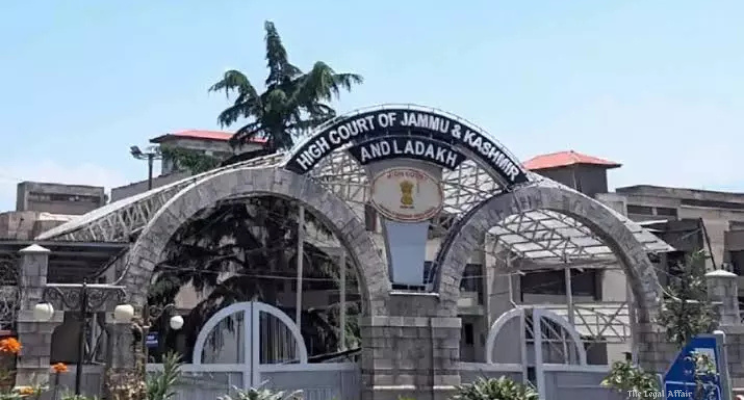
In a significant ruling, the High Court of Jammu and Kashmir and Ladakh at Srinagar, presided over by Justice Sanjay Dhar, addressed the procedural nuances of Order 37 of the Code of Civil Procedure (CPC). The case involved petitioner Mohd. Maqbool Mir, who challenged the execution of an ex parte decree passed against him in a suit initially filed under Order 37 CPC by respondent Ghulam Mohammad Pahloo. The High Court’s decision elucidated the consequences of deviating from the prescribed summary procedure under Order 37, emphasising that such deviation transforms the suit into an ordinary one, thereby limiting the defendant’s recourse under Order 37 provisions.
Arguments:
Petitioner’s Arguments:
Mohd. Maqbool Mir contended that the trial court erred in proceeding ex parte without adhering to the mandatory summary procedure outlined in Order 37 CPC. He argued that the summons was not issued in the prescribed format under Form 4 of Appendix B, and the court did not follow the procedure under Rule 2(3) of Order 37, which allows for a decree without evidence if the defendant fails to appear. Mir sought relief under Rule 4 of Order 37 CPC to set aside the ex parte decree, asserting that the procedural lapses invalidated the decree’s execution.
Respondent’s Arguments:
Ghulam Mohammad Pahloo maintained that the suit, although titled under Order 37 CPC, was effectively tried as an ordinary suit due to the trial court’s procedural approach. He argued that the trial court allowed him to lead evidence and examine witnesses before passing the decree, aligning with the standard procedure for ordinary suits. Therefore, the relief sought by the petitioner under Order 37 was inapplicable, and the appropriate remedies would be an appeal or an application under Order 9 Rule 13 CPC.
Court’s Judgment:
Justice Sanjay Dhar observed that the trial court did not adhere to the summary procedure mandated by Order 37 CPC. Specifically, the summons was not issued in the prescribed format, and the court did not proceed under Rule 2(3) of Order 37, which permits passing a decree without evidence if the defendant fails to appear. Instead, the trial court allowed the plaintiff to present evidence and examine witnesses, effectively treating the suit as an ordinary one.
The High Court held that when a suit filed under Order 37 CPC is not tried following its prescribed summary procedure, it is deemed to proceed as an ordinary suit. Consequently, the defendant cannot seek relief under Order 37 provisions, such as Rule 4. In such scenarios, the defendant’s recourse is limited to filing an appeal against the ex parte judgment and decree or an application under Order 9 Rule 13 CPC before the trial court.
The Court further clarified that the petitioner’s argument regarding improper service of summons in the prescribed format was rendered irrelevant, given that the suit was not conducted by Order 37. Although the trial court may have assigned unsustainable reasons for dismissing the petitioner’s application, the conclusion it reached was legally correct.
Finding the petition devoid of merit, the High Court dismissed it, making it clear that the petitioner is at liberty to pursue the proper remedy against the ex parte decree.