


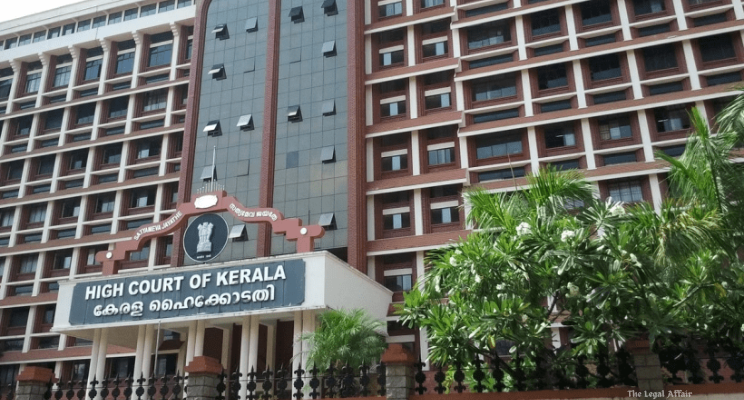
Introduction:
In Gopala Krishnan v. State of Kerala and Others (2026 LiveLaw (Ker) 15), the Kerala High Court delivered an important ruling on the scope of a victim’s right to appeal under the Bharatiya Nagarik Suraksha Sanhita, 2023 (BNSS), holding that a victim cannot file a second appeal against acquittal by seeking special leave from the High Court after already availing the statutory right of appeal before the Sessions Court. The judgment, delivered by Justice Bechu Kurian Thomas, clarified that the proviso to Section 413 BNSS grants the victim the right to prefer “an appeal”, and not multiple appeals, against an order of acquittal. The Court further held that once this appellate remedy is exercised and the acquittal is confirmed by the Sessions Court, the victim cannot again approach the High Court by invoking Section 419(4) BNSS seeking special leave to appeal, as such a course would amount to filing a prohibited second appeal. The ruling assumes significance in the post-CrPC regime, as courts are now interpreting the newly enacted BNSS provisions in light of earlier constitutional and statutory principles governing criminal appeals. The case arose when the Registry of the High Court raised a defect stating that a second criminal appeal by the same appellant was not maintainable, and the victim challenged this objection, arguing that the BNSS permitted such a course. The Court, however, upheld the Registry’s objection, reinforcing that criminal appellate jurisdiction must be exercised strictly within statutory limits and that victims cannot repeatedly challenge acquittals through layered appellate processes within the same hierarchy of courts.
Arguments of Both Sides:
The petitioner, who was the victim in the criminal case, argued that the BNSS has significantly expanded victims’ rights, particularly by expressly recognizing the right of a victim to appeal against acquittal. It was contended that Section 413 BNSS confers a substantive statutory right upon the victim to prefer an appeal, and that such right should not be narrowly construed as being confined only to the first appellate stage. According to the petitioner, the language of Section 413 does not restrict the appeal only to the order passed by the trial court, and therefore, an order of acquittal affirmed by the Sessions Court should also be amenable to challenge before the High Court by invoking Section 419(4) BNSS, which deals with seeking leave to appeal before the High Court.
The petitioner’s counsel submitted that criminal justice jurisprudence has increasingly recognized victims as active stakeholders, not mere spectators, and that denying a second appellate opportunity would undermine this evolving framework of participatory justice. It was argued that once the statute recognizes a victim’s right to appeal, such right should extend to every stage where an acquittal is affirmed, particularly when the consequences involve denial of justice to the victim. The petitioner emphasized that the objective of the BNSS is to enhance fairness and access to remedies, and therefore the provisions should receive a liberal and purposive interpretation rather than a restrictive one.
Reliance was also placed on Supreme Court precedents, including Mallikarjun Kodagali (Dead) through LRs v. State of Karnataka and Others, where the Apex Court had recognized that the right to appeal is a substantive statutory right that accrues to the victim the moment an order of acquittal is passed. On that basis, it was argued that if the Sessions Court also passes an order of acquittal by affirming the trial court’s decision, a fresh right of appeal should arise. It was further submitted that Section 419 BNSS deals with procedural aspects of seeking leave from the High Court, while Section 413 BNSS confers the substantive right, and therefore the High Court should entertain the appeal if leave is sought and granted.
The petitioner also challenged the Registry’s objection as being overly technical and inconsistent with the spirit of victim-centric reforms. It was submitted that denying access to the High Court would leave the victim remediless after the Sessions Court’s dismissal, thereby limiting judicial scrutiny in serious allegations involving cheating, money lending violations, and chit fund irregularities. Hence, the petitioner prayed that the defect noted by the Registry be overruled and the leave petition be entertained on merits.
Opposing the maintainability of the second appeal, the respondents and the amicus curiae submitted that criminal appellate jurisdiction is entirely statutory, and no person can claim a right to appeal unless expressly conferred by law. It was argued that Section 413 BNSS clearly provides for “an appeal” by the victim against an order of acquittal, and once that appeal is filed and decided by the Sessions Court, the statute does not contemplate a further appeal by the same victim within the ordinary criminal appellate structure.
The amicus curiae placed strong reliance on the Supreme Court judgment in Asian Paints Limited v. Ram Babu and Another, wherein the Apex Court had observed that once an appellate remedy is invoked by a party, the same party cannot again prefer another appeal in the nature of a second appeal unless the statute expressly provides for it. It was pointed out that neither the BNSS nor the earlier CrPC framework ever recognized a general right of second appeal in criminal matters at the instance of the complainant or victim, except in constitutionally recognized routes such as appeals to the Supreme Court under Articles 132 and 134, or through Special Leave Petition under Article 136.
It was further argued that Section 419(4) BNSS does not create an independent right of appeal, but only prescribes the procedure for seeking leave to appeal before the High Court in cases where such appeal is otherwise maintainable. Therefore, Section 419 cannot be read as enlarging the substantive scope of Section 413. The amicus clarified that procedural provisions cannot override or expand substantive rights unless the legislature has clearly expressed such intention.
The respondents also emphasized that permitting victims to file successive appeals against acquittals would seriously affect the finality of criminal proceedings, prolong litigation indefinitely, and burden higher courts with repetitive challenges based on the same factual matrix. Such an interpretation, it was argued, would be contrary to the principles of certainty and stability in criminal justice, which are essential not only for the accused but also for the efficient functioning of courts.
Thus, it was submitted that the Registry was correct in raising the objection and that the High Court should not entertain a second appeal disguised as a leave petition.
Court’s Judgment:
After examining the statutory framework and the precedents, the Kerala High Court upheld the Registry’s objection and dismissed the victim’s attempt to pursue a second appeal. Justice Bechu Kurian Thomas began by reiterating that the right to appeal is not an inherent right but a statutory one, and therefore its scope must be strictly confined to what the statute permits.
The Court carefully analyzed Section 413 BNSS, which provides the victim with the right to prefer an appeal against an order of acquittal. The Court emphasized that the proviso uses the expression “an appeal”, and not “appeals”, thereby clearly indicating that the legislature intended to provide only a single appellate opportunity to the victim within the regular criminal court hierarchy. According to the Court, once that appellate remedy is exhausted before the Sessions Court, the statute does not permit the victim to file yet another appeal before the High Court against the same acquittal merely because the acquittal has been affirmed.
Relying heavily on Asian Paints Limited v. Ram Babu and Another, the Court observed that the Supreme Court has already clarified that once an appellate remedy is invoked, the same party cannot again file another appeal in the nature of a second appeal unless specifically provided by law. The High Court held that the BNSS does not contain any provision authorizing such a second appeal by a victim, and therefore entertaining such petitions would amount to judicially creating a remedy not contemplated by Parliament.
The Court further clarified the relationship between Sections 413 and 419 BNSS, stating that while Section 413 confers the substantive right to appeal, Section 419 merely regulates the procedure for seeking leave before the High Court where an appeal is otherwise maintainable. Section 419 cannot be interpreted as creating an additional appellate forum or reviving an exhausted right of appeal. The Court rejected the argument that every order of acquittal, including one passed in appeal, gives rise to a fresh right of appeal for the victim, holding that such an interpretation would render the limitation of “an appeal” in Section 413 meaningless.
At the same time, the Court clarified that this restriction does not affect the constitutional appellate jurisdiction of the Supreme Court. It observed that appeals under Articles 132 and 134 of the Constitution, as well as petitions under Article 136, operate in a different legal domain and are not curtailed by the statutory limitations under the BNSS. Therefore, while the victim cannot pursue a second statutory appeal before the High Court, constitutional remedies before the Supreme Court remain unaffected.
On the issue of limitation, the Court adopted a balanced approach and held that the time spent by the petitioner in pursuing the defective leave petition would be excluded while computing limitation for any other legally permissible proceedings, thereby ensuring that the victim was not prejudiced solely due to a mistaken legal remedy.
In conclusion, the Court affirmed that the second appeal was not maintainable, upheld the defect noted by the Registry, and reinforced the principle that criminal appellate remedies must strictly conform to legislative intent and statutory boundaries.