


Introduction:
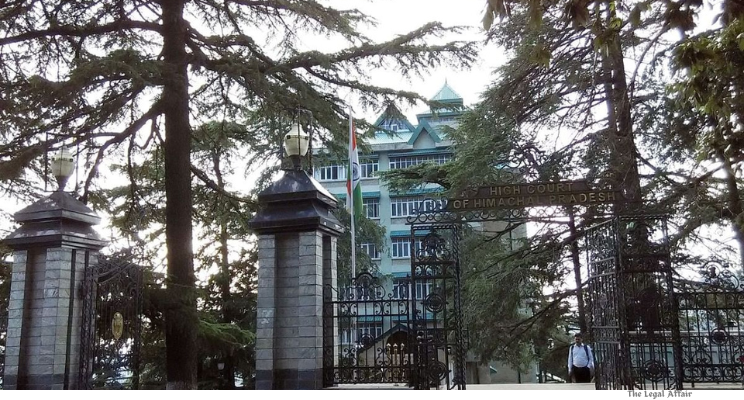
In the case of Vidya & Ors. v. Vinita & Ors. (RSA No. 408 of 2019, decided on 02.09.2025), the Himachal Pradesh High Court dealt with a sensitive issue surrounding the validity of a registered will executed by one Anokhi Ram in favor of his daughter Prema Devi and her husband Gopal. The case was contested between the surviving daughters of the testator and the descendants of Prema Devi, raising questions about fairness, inheritance rights, and the natural course of succession. Justice Satyen Vaidya, while dismissing the appeal, emphasized that the execution of a will in favor of family members who had cared for the testator and managed his household could not be termed unnatural. The Court recognized the testator’s autonomy to choose beneficiaries based on love, trust, and gratitude, especially toward those who provided care during his declining years. This case underscores the principle that testamentary freedom under the Indian Succession Act is subject only to proof of due execution, absence of coercion or fraud, and compliance with statutory requirements, and that courts should not interfere merely because other heirs feel aggrieved or left out.
Arguments:
The appellants in this case were Vidya and her sisters, daughters of the deceased testator Anokhi Ram. They challenged the validity of the registered will executed by Anokhi Ram in 1983, through which all his immovable property was bequeathed to one of his daughters, Prema Devi, and her husband, Gopal. Following Anokhi Ram’s death in August 1984, the property was duly transferred in their names, and later in 2011, Prema Devi executed her own will, intending that her estate be inherited by her daughters and husband after her death. The appellants contended that the will of Anokhi Ram was invalid, procured by fraud and misrepresentation, and therefore unenforceable. They argued that being daughters of the deceased, they were entitled to an equal share in the estate, claiming one-sixth share each. On the other hand, the respondents, who were the legal heirs of Prema Devi, defended the will, arguing that it was executed lawfully and in good faith, reflecting the true intentions of the testator. They asserted that Anokhi Ram had executed the will in recognition of the fact that Prema Devi and Gopal had taken responsibility for his care, looked after his family, and even cleared his debts during a period of financial difficulty.
The appellants’ primary argument revolved around the claim that the will was unnatural, as it unfairly excluded four daughters of the deceased from inheriting any property. They insisted that the will was not a free and voluntary act but rather one influenced by undue pressure exerted by Prema Devi and Gopal. According to them, it was inconceivable that a father would deprive four daughters of their rightful inheritance, and therefore the will must have been the result of misrepresentation and fraud. The appellants further argued that the property in question was ancestral in nature, and as such, Anokhi Ram had no absolute authority to bequeath it entirely in favor of one daughter and son-in-law. They relied on principles under Hindu succession law to claim that the property should have devolved equally among all heirs as a matter of right. They also contended that there were suspicious circumstances surrounding the execution of the will and that the beneficiaries failed to dispel the doubts that arose from the exclusion of other heirs.
The respondents, however, countered these arguments by asserting that the property was self-acquired by Anokhi Ram and not ancestral or coparcenary. Hence, as the exclusive owner, he had complete testamentary freedom to bequeath it to any person of his choice. They further emphasized that Anokhi Ram had voluntarily chosen to execute a registered will in favor of Prema Devi and her husband Gopal because they had cared for him in his last days, managed his household, and cleared his outstanding debts. They stated that unlike the other daughters, Prema Devi and her husband had sacrificed their personal comforts to live with the deceased, ensuring his well-being and dignity during his illness. They also stressed that the will was executed in compliance with Section 63 of the Indian Succession Act, 1925, and was duly attested as required by Section 68 of the Indian Evidence Act, 1872. Thus, there was no element of fraud, coercion, or undue influence. In their submission, the will was natural, rational, and an expression of the gratitude and trust the testator had toward the beneficiaries.
The Trial Court carefully examined the evidence and concluded that the plaintiffs had failed to prove that the property was ancestral or coparcenary. As per the Hindu Succession Act, 1956, there is no presumption of a Hindu Undivided Family or joint family property unless it is established with evidence. Since the appellants could not establish this, the property was deemed to be self-acquired, granting the testator absolute freedom to dispose of it as he wished. The Court further held that the will was duly executed and attested in accordance with statutory provisions. The attesting witnesses confirmed the execution, and there was no credible evidence suggesting that the deceased was mentally unsound or under undue influence at the time of execution. The Trial Court thus dismissed the suit, holding the will valid.
The Appellate Court upheld the findings of the Trial Court, reiterating that the will was genuine and legally valid. It agreed that the appellants had failed to prove any suspicious circumstances or misrepresentation. It observed that exclusion of some heirs by itself does not render a will suspicious or unnatural, particularly when there are justifiable reasons for the testator to prefer certain beneficiaries over others. The appellate court emphasized that testamentary freedom is a recognized legal principle, and unless there is compelling evidence of coercion, undue influence, or lack of due execution, courts must uphold the testator’s choice.
Judgement:
Finally, the Himachal Pradesh High Court, through Justice Satyen Vaidya, dismissed the second appeal, agreeing with the reasoning of both lower courts. The High Court held that execution of a will in favor of family members who provided care and support to the testator during his lifetime could not be considered unnatural. It noted that Anokhi Ram had sufficient reason to repose trust in Prema Devi and her husband Gopal, who had taken care of his needs and the household during his illness and financial struggles. The Court stressed that the testator’s decision to leave his estate to the daughter and son-in-law who had supported him was a rational and natural choice. The High Court further clarified that the burden of proving suspicious circumstances lay on the appellants, and in this case, the defendants successfully discharged the burden by explaining the rationale behind the testator’s choice. With no credible evidence of fraud, misrepresentation, or coercion, the will was held to be valid, and the appeal was dismissed.
This judgment serves as an important reaffirmation of testamentary freedom under Indian succession law. It demonstrates that courts respect the autonomy of individuals to distribute their property as they see fit, even if the decision results in unequal treatment of heirs. At the same time, it highlights the burden of proof on those challenging a will to establish fraudulent or suspicious circumstances. Unless such a burden is discharged, courts will not intervene merely on the basis of perceived unfairness. The ruling also underscores the importance of caregiving within families, as courts recognize that natural love and gratitude often motivate testators to favor those who provide emotional and financial support in times of need.