


Introduction:
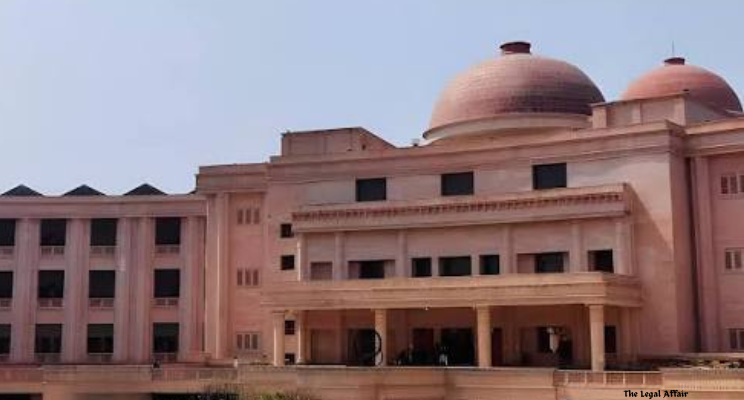
The Allahabad High Court, in Hari Narayan Tiwari v. State Information Commission, U.P. through Chairman and Others, 2026 LiveLaw (AB) 496, reaffirmed a well-established principle governing the exercise of writ jurisdiction under Article 226 of the Constitution of India. A Division Bench comprising Justice Shekhar B. Saraf and Justice Abdhesh Kumar Chaudhary held that although no statutory limitation period has been prescribed for filing a writ petition under Article 226, a litigant cannot approach the Court after an unreasonable and unexplained delay and still expect the extraordinary constitutional jurisdiction to be exercised in his favour. The Court observed that the doctrine of delay and laches continues to operate as an equitable limitation on the exercise of writ jurisdiction, and where an applicant fails to explain a substantial delay, the petition is liable to be dismissed solely on that ground.
The judgment reiterates that Article 226 confers extraordinary and discretionary powers upon the High Courts to protect legal and fundamental rights. However, this constitutional remedy is not intended to encourage stale claims or permit litigants to approach the Court at their convenience without offering any justification for prolonged inaction. Since writ jurisdiction is rooted in equity, fairness, and judicial discretion, the conduct of the litigant assumes considerable significance while deciding whether relief ought to be granted.
The writ petition was filed by Hari Narayan Tiwari, who challenged an order passed by the Uttar Pradesh State Information Commission in the year 2023. Although the precise dispute before the Information Commission was not central to the determination of the present writ petition, the High Court was required to examine whether such a challenge could be entertained nearly three years after the impugned order had been passed.
The petitioner invoked Article 226 of the Constitution seeking judicial review of the State Information Commission’s order. However, before entering into the merits of the controversy, the High Court considered whether the petition itself deserved to be entertained in light of the substantial delay with which it had been instituted.
The case therefore raised an important constitutional question concerning the relationship between the absence of a statutory limitation period under Article 226 and the equitable doctrine of delay and laches. It also provided the Court an opportunity to reiterate the principles consistently laid down by the Supreme Court regarding belated invocation of writ jurisdiction.
Arguments of the Parties:
The petitioner approached the High Court seeking to challenge the order passed by the Uttar Pradesh State Information Commission. By invoking the extraordinary jurisdiction under Article 226 of the Constitution, the petitioner requested the Court to examine the legality of the impugned order and grant appropriate constitutional relief.
Although the detailed grounds challenging the order of the State Information Commission were not elaborately discussed in the judgment, the petitioner sought judicial review of the administrative decision passed against him. Implicit in the petitioner’s case was the contention that since Article 226 does not prescribe any statutory period of limitation, the petition remained maintainable despite the passage of time.
However, a significant aspect of the proceedings was that the petitioner failed to furnish any explanation whatsoever regarding the delay of nearly three years in approaching the High Court. No facts were placed before the Court indicating circumstances beyond the petitioner’s control, nor was any material produced explaining why the constitutional remedy could not have been invoked within a reasonable period after the impugned order.
The respondents opposed the writ petition by raising the preliminary objection that the petition itself was liable to be dismissed on account of gross delay and laches. They contended that the petitioner had approached the High Court after an inordinate lapse of time without offering any satisfactory explanation for such prolonged inaction.
According to the respondents, Article 226 undoubtedly does not prescribe a statutory limitation period. Nevertheless, the exercise of writ jurisdiction remains discretionary and equitable in nature. Consequently, a person who sleeps over his rights for an unreasonable period cannot invoke the extraordinary constitutional jurisdiction as a matter of right.
The respondents submitted that entertaining stale claims would defeat the very purpose of judicial review, create uncertainty in administrative decisions, and undermine the principle that constitutional remedies should be pursued with diligence and promptness. They therefore urged the Court to dismiss the petition solely on the ground of delay and laches without entering into the merits of the dispute.
Court’s Judgment:
The Allahabad High Court accepted the preliminary objection regarding delay and dismissed the writ petition without examining the merits of the challenge. The Division Bench emphasised that although Article 226 of the Constitution does not prescribe any statutory limitation period, the exercise of writ jurisdiction remains governed by equitable principles, one of the most important being the doctrine of delay and laches.
The Court observed that the absence of a prescribed limitation period does not imply that a litigant can approach the High Court at any point of time according to personal convenience. Whenever the extraordinary jurisdiction of the High Court is invoked, the Court must first satisfy itself that the petition has been filed within a reasonable period.
Justice Shekhar B. Saraf and Justice Abdhesh Kumar Chaudhary observed that constitutional remedies are fundamentally different from ordinary statutory proceedings governed by limitation statutes. Instead of applying rigid limitation periods, constitutional courts examine whether the delay is reasonable in the facts and circumstances of each case. This necessarily involves considering both the duration of the delay and the explanation offered by the litigant.
The Bench clarified that while there can be no waiver of fundamental rights merely because of delay, the exercise of writ jurisdiction nevertheless remains discretionary. Consequently, even where a constitutional or legal right is asserted, the High Court is entitled to refuse relief if the applicant has approached the Court after unreasonable delay without adequate justification.
The Court reiterated that the doctrine of delay and laches serves an important public purpose. Judicial review is intended to provide timely correction of administrative or governmental action. Entertaining stale claims after prolonged and unexplained delay may prejudice public administration, unsettle rights that have already crystallised, and create unnecessary uncertainty regarding decisions that have long attained finality.
In support of these principles, the Division Bench relied upon the decisions of the Supreme Court in Tridip Kumar Dingal v. State of West Bengal (2009) and Karnataka Power Corporation Ltd. v. K. Thangappan (2006). These judgments consistently recognise that the power conferred upon High Courts under Article 226 is discretionary rather than automatic.
Referring to these precedents, the High Court observed that the Supreme Court has repeatedly held that unexplained delay and laches constitute sufficient grounds for refusing relief under Article 226 even in the absence of any statutory period of limitation. The equitable nature of writ jurisdiction obliges constitutional courts to examine not merely the legality of the impugned action but also the conduct of the person seeking relief.
Applying these settled legal principles to the facts before it, the Court noted that the impugned order had been passed almost three years before the institution of the writ petition. Such a substantial delay immediately required the petitioner to furnish a convincing explanation demonstrating why the constitutional remedy could not have been invoked earlier.
However, upon examining the pleadings, the Court found that the petitioner had failed to provide any explanation whatsoever. There was no attempt to justify the prolonged delay, nor was any circumstance pleaded showing that the petitioner had been prevented by reasons beyond his control from approaching the Court within a reasonable period.
The Bench observed that where a litigant fails even to attempt an explanation, the doctrine of delay and laches applies with full force. The Court cannot simply ignore prolonged inactivity because doing so would undermine the equitable foundation upon which writ jurisdiction rests.
The High Court specifically observed that there had been an inordinate delay of nearly three years in approaching the Court and that the doctrine of delay and laches squarely governed the facts of the present case. Such delay, the Court held, could not be lightly brushed aside merely because no limitation period is expressly prescribed under Article 226.
The Court also emphasised the broader institutional responsibility of constitutional courts. While High Courts undoubtedly bear the constitutional obligation of protecting legal and fundamental rights, they are equally required to ensure that litigants exercise diligence in seeking constitutional remedies. Courts cannot encourage a practice whereby aggrieved persons challenge administrative decisions only after considerable delay and without assigning any satisfactory reason.
The Bench observed that constitutional courts must carefully scrutinise whether a belated challenge deserves to be entertained, particularly where the petitioner approaches the Court entirely at his own convenience. Extraordinary jurisdiction cannot become an instrument for reviving stale disputes that could have been brought before the Court much earlier.
Justice Saraf and Justice Chaudhary reiterated that Article 226 does not create an unrestricted right to invoke writ jurisdiction at any point of time. Rather, it confers a discretionary constitutional power upon the High Court, the exercise of which depends upon both the merits of the claim and the conduct of the litigant.
Since the petitioner failed to explain the nearly three-year delay in approaching the High Court, the Bench concluded that no case for exercising discretionary jurisdiction had been made out. The Court therefore declined to examine the substantive challenge against the State Information Commission’s order.
Accordingly, the writ petition was dismissed as not maintainable on the ground of delay and laches.
The judgment serves as another important reaffirmation of the settled principle that the absence of a statutory limitation period under Article 226 does not permit litigants to invoke constitutional remedies after indefinite delay. The ruling underscores that writ jurisdiction remains an equitable, discretionary remedy, and unexplained delay by itself can constitute a complete bar to relief. It further reminds litigants that while constitutional courts remain vigilant in protecting legal rights, those seeking such protection must themselves act with reasonable diligence and promptness in approaching the Court.