


Introduction:
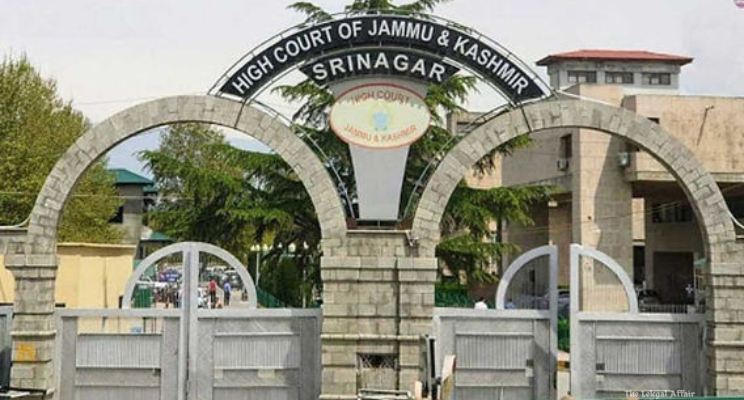
The Jammu and Kashmir High Court recently delivered an important ruling reaffirming a fundamental principle of civil procedure that once an issue has been finally decided by a trial court and has attained finality, the same court has no jurisdiction to reopen, revisit, or indirectly re agitate that issue by making a reference to the High Court, the judgment was delivered by a Division Bench comprising Chief Justice Arun Palli and Justice Rajnesh Oswal while answering a reference made by a trial court in a long pending civil dispute, the reference arose from a civil suit titled Nisar Ahmad Kakapora and another versus Aijaz Ahmad Kadoo and another which was pending before the Court of the Civil Judge Senior Division Bijbehara, the suit related to ejectment recovery of possession arrears of rent and mesne profits and was essentially a landlord tenant dispute, during the pendency of the suit an issue was framed by the trial court regarding the maintainability of the suit before a civil court in view of the Jammu and Kashmir Residential and Commercial Tenancy Act 2012, this issue was finally adjudicated by the trial court in favour of the plaintiffs by an order dated 20 February 2023, no challenge was laid to this order before any higher forum and the matter thereafter proceeded towards final arguments, however at a later stage reliance was placed on an order dated 16 May 2024 passed by a Single Judge of the High Court in Civil Revision No 04 of 2024 Manoj Kumar versus Dara Singh wherein certain observations were made regarding the non inclusion of the Jammu and Kashmir Houses and Shops Rent Control Act in Schedule V of the Jammu and Kashmir Reorganisation Act 2019, these observations raised questions regarding the continued applicability of rent control laws after reorganisation, citing this development the trial court chose to make a reference to the High Court seeking clarification on the maintainability of the suit despite the fact that the issue had already been conclusively decided earlier, this reference brought into focus the limits of a trial court’s jurisdiction once an issue has been finally adjudicated and the consequences of allowing courts to revisit settled matters at an advanced stage of proceedings.
Arguments:
On behalf of the plaintiffs strong objections were raised to the very maintainability of the reference, it was contended that the reference was wholly incompetent and legally unsustainable as the issue regarding maintainability of the suit had already been framed decided and conclusively settled by the trial court itself by order dated 20 February 2023, it was argued that this order had attained finality since no appeal revision or other challenge had been filed by the aggrieved party and therefore the trial court became functus officio on that issue, counsel submitted that once an order attains finality the same court lacks jurisdiction to reopen the issue directly or indirectly and any such attempt would amount to sitting in appeal over its own order which is impermissible in law, it was further argued that the reliance placed on the Single Judge order in Manoj Kumar versus Dara Singh was wholly misconceived because even assuming that the said order raised certain legal questions it could not automatically nullify or unsettle a binding and final order passed in the present suit, the plaintiffs contended that if the defendants were aggrieved by the order dated 20 February 2023 the only remedy available to them was to challenge it before a higher forum at the appropriate time and having failed to do so they could not be permitted to resurrect the issue under the guise of a reference, it was also pointed out that the suit had reached the stage of final arguments and entertaining such a reference would cause unnecessary delay and prejudice thereby defeating the very object of expeditious justice, despite service of notice no appearance was entered on behalf of the respondents and no counter submissions were advanced to justify the reference or to explain how the trial court could revisit a settled issue at such a late stage, the absence of any opposition further strengthened the argument that the reference lacked any legal foundation and was an attempt to reopen concluded proceedings without following due process of law.
Judgment:
Accepting the submissions advanced by the plaintiffs the Jammu and Kashmir High Court held that the reference made by the trial court was incompetent and unsustainable in law, the Bench observed that it is a settled principle that once a court has finally decided an issue and the order has attained finality the same court cannot reopen revisit or re agitate the issue, the Court held that permitting such a course would amount to abuse of the judicial process and would undermine the sanctity of final judicial determinations, the High Court emphasised that judicial discipline requires courts to respect the finality of their own orders unless set aside or modified by a superior forum, it was observed that a litigant who has failed to challenge an adverse order through appropriate legal remedies cannot be allowed to raise the same issue indirectly at a later stage of the proceedings, the Court made it clear that the power of reference cannot be used as a tool to undo or circumvent a binding order that has already been passed, the Bench further noted that the trial court had already decided the issue of maintainability in favour of the plaintiffs and thereafter proceeded with the trial, therefore it was not open to the same court to question its own decision merely because a subsequent judicial pronouncement in another case raised a broader legal issue, the High Court clarified that the proper course for an aggrieved party would have been to challenge the order dated 20 February 2023 before the appropriate forum at the relevant time, having failed to do so the defendants could not seek to reopen the issue through a reference, the Court also clarified that its observations were strictly confined to answering the reference and that it had not examined the correctness or legality of the trial court’s order dated 20 February 2023 on merits, it further noted that the larger issue arising from the observations made in Civil Revision No 04 of 2024 would be considered independently in those proceedings and would not automatically affect concluded orders in other cases, holding that the reference was legally untenable the High Court answered it accordingly and directed that a copy of the order be transmitted to the trial court for information and compliance, thereby reinforcing the principle that finality of judicial decisions is essential for certainty stability and orderly administration of justice.