


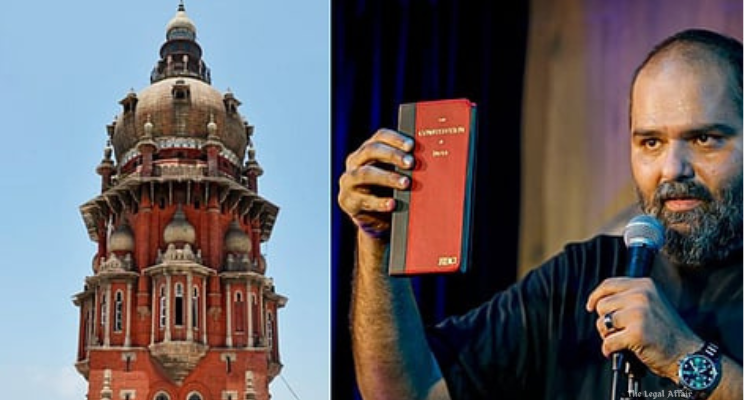
Introduction:
In a significant ruling on April 17, 2025, the Madras High Court disposed of the transit anticipatory bail petition filed by comedian Kunal Kamra, in connection with an FIR lodged against him in Mumbai over his alleged remarks about Maharashtra Deputy Chief Minister Eknath Shinde. The case, Kunal Kamra v. State, stemmed from comments made by Kamra, which were reportedly offensive and defamatory toward Shinde. Kamra, who resides in Villupuram, Tamil Nadu, sought protection from arrest, claiming that he had been receiving threats and that no adequate action had been taken by the authorities. Kamra’s legal team argued that his safety was at risk and that the ongoing FIR in Mumbai should not prevent him from seeking legal recourse. The Madras High Court’s involvement in the matter stemmed from Kamra’s residence outside Maharashtra, leading him to approach the court to ensure his safety and ability to challenge the FIR.
Arguments of Both Sides:
The petition for anticipatory bail was initially filed by Kunal Kamra in light of the threats he had allegedly received, which had caused him concern for his safety. Kamra’s legal counsel, led by Advocate V Suresh, argued that the comedian was being unfairly targeted for expressing his views, which he claimed were within the boundaries of free speech. Kamra’s lawyer emphasised that the comedian had informed the authorities about the threats but had not received adequate protection. Furthermore, Kamra’s legal team argued that the FIR filed against him in Maharashtra was politically motivated and that it infringed upon his right to free speech. They contended that Kamra should be granted the opportunity to challenge the FIR in an appropriate forum without the fear of arrest, especially given the threats he had been receiving.
On the other hand, the Maharashtra government, represented by the Public Prosecutor in the Bombay High Court, opposed Kamra’s anticipatory bail petition, arguing that his remarks were defamatory and maliciously targeted at a public figure. The Public Prosecutor contended that while Kamra had the right to free speech, it did not extend to defamatory comments that could harm an individual’s reputation. Additionally, the state pointed out that Kamra had failed to substantiate his claims of threats adequately and that the FIR was filed by legal procedures due to the gravity of the remarks.
Court’s Judgment:
The Madras High Court, having considered the submissions from both sides, decided to dispose of Kamra’s transit anticipatory bail petition. The Court observed that Kamra had been granted interim protection from arrest by the Bombay High Court, which was still in effect. Kamra’s lawyer, Advocate V Suresh, informed the Madras High Court that the Bombay High Court had, on April 16, 2025, granted Kamra interim protection while reserving orders in the matter of quashing the FIR. In this regard, the Madras High Court noted that since the Bombay High Court’s order already ensured Kamra’s protection from arrest, there was no immediate need for the Madras High Court to intervene further in the matter. The Court disposed of the petition accordingly, recognising that Kamra’s safety was already safeguarded by the ongoing protection granted by the Bombay High Court.
While disposing of the petition, the Court emphasised that the protection from arrest would remain in effect until the Bombay High Court passed its final order in the matter concerning the FIR. Kamra had approached the Madras High Court as he was a resident of Tamil Nadu, and the High Court had previously granted him interim anticipatory bail on March 28, 2025, which had been extended on April 7, 2025. Kamra’s legal team had urged the Court to grant him protection until he could approach the appropriate authorities and courts in Maharashtra to challenge the FIR.
The Court also noted that the issue of threats and Kamra’s claims regarding inadequate protection from the authorities were significant. However, the decision to grant or deny anticipatory bail in this case was contingent on the status of the legal proceedings in the Bombay High Court. Kamra’s continued protection from arrest, as granted by the Bombay High Court, was deemed sufficient at this stage by the Madras High Court, which therefore concluded the petition.