


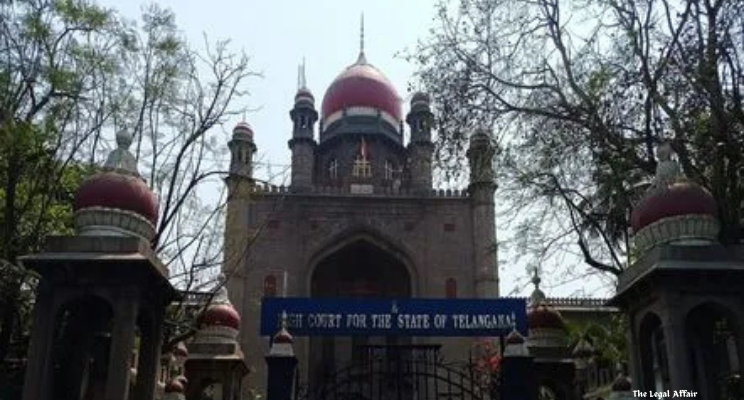
Introduction:
In a significant judgment addressing environmental preservation and urban development, the Telangana High Court has directed state authorities to implement Supreme Court guidelines for the removal of unauthorized constructions within the Full Tank Level (FTL), Buffer Zone, and River Bed Zone of the Musi River. The order was issued in a batch of writ petitions concerning the Musi Riverfront Development Project. The petitioners alleged that state authorities were interfering with their property rights without due process. Responding to these grievances, Justice C.V. Bhaskar Reddy underscored the State’s duty as a trustee of communal natural resources to protect rivers, tanks, and lakes. The Court emphasized the necessity of balancing development projects with ecological preservation and adherence to constitutional and statutory protections.
Arguments by Petitioners:
The petitioners contended that their homes, constructed under approved layouts with requisite permissions from the Greater Hyderabad Municipal Corporation (GHMC), were being arbitrarily demolished by the Hyderabad Disaster Response and Asset Monitoring Agency (HYDRAA). They argued that HYDRAA, established for disaster management, lacked statutory authority to interfere with their properties. The petitioners claimed that any action against constructions in the FTL or River Bed Zone could only be undertaken by GHMC, the competent authority under existing laws. Additionally, the petitioners asserted that the demolitions violated Articles 14, 21, and 300-A of the Constitution, which guarantee equality, the right to life, and the protection of property. They also cited provisions of the Telangana Water, Land, and Trees Act, 2002 (WALTA), arguing that the respondents had acted without conducting proper inquiries or issuing notices, thereby infringing upon their fundamental rights.
Arguments by the Respondents:
State authorities defended their actions, stating that the Musi Riverfront Development Project aimed to restore the river’s ecological balance while generating employment opportunities for local communities. According to the government, surveys conducted under the Telangana Survey and Boundaries Act, of 1923 identified thousands of illegal structures within the riverbed and buffer zones. Respondents argued that the government’s efforts were guided by humanitarian considerations, including the allocation of 15,000 2BHK houses for families residing in these areas. They highlighted the formation of a Consultative Livelihood Support Committee to ensure sustainable relocation and livelihood restoration for affected families. Respondents further maintained that HYDRAA had been constituted under the Telangana Irrigation Act, 1357 Fasli, granting it sufficient authority to oversee the river’s protection and address unauthorized constructions. They emphasized that the project was being implemented with due regard for legal provisions and public interest.
Court’s Judgment:
The Telangana High Court, after examining statutory frameworks and judicial precedents, upheld the State’s authority to constitute HYDRAA and to act against unauthorized constructions in the Musi Riverbed. The Court clarified that communal natural resources like rivers must be managed as public trusts for the benefit of present and future generations. It observed that encroachments within the FTL, Buffer Zone, and River Bed Zone not only threaten the ecological balance but also undermine legislative intent aimed at protecting natural resources. While acknowledging the petitioners’ grievances, the Court emphasized that no legal sanctity could be accorded to unauthorized constructions, even if they were built under previously approved layouts.
The Court issued a series of directives, mandating the immediate eviction of encroachments and removal of temporary or unauthorized structures in a time-bound manner. It ordered authorities to strictly enforce the Building Rules, 2012 and ensure that no sewage contaminates the Musi River. The Court also directed the conduct of a socio-economic survey to identify and relocate affected families, by government policies. It further instructed police authorities to provide security for officials engaged in surveying and marking the river zones. The High Court underscored that any resistance to these efforts would attract criminal action under the Telangana Irrigation Act, 1357 Fasli, and WALTA, 2002.
Disposing of the petitions, the Court reiterated the importance of judicial review in interpreting legislative intent and ensuring environmental protection. It held that state authorities must act decisively to reclaim and preserve communal natural resources while adhering to due process.
Conclusion:
The Telangana High Court’s directive in the Musi Riverfront Development case highlights the critical need for balancing ecological preservation with urban development. The judgment affirms the State’s duty to protect natural resources as trustees for the public while ensuring that actions against unauthorized constructions adhere to due process. By mandating immediate eviction of encroachments, conducting socio-economic surveys, and providing for the relocation of affected families, the Court has sought to achieve a balance between environmental conservation and humanitarian considerations. The judgment underscores the significance of judicial review in safeguarding legislative intent and the integrity of natural resources. The Court’s insistence on strict compliance with environmental and urban planning laws sets a precedent for other jurisdictions grappling with similar issues. This case serves as a reminder that sustainable development must align with the preservation of ecological heritage, ensuring benefits for both present and fuutre generations.