


Introduction:
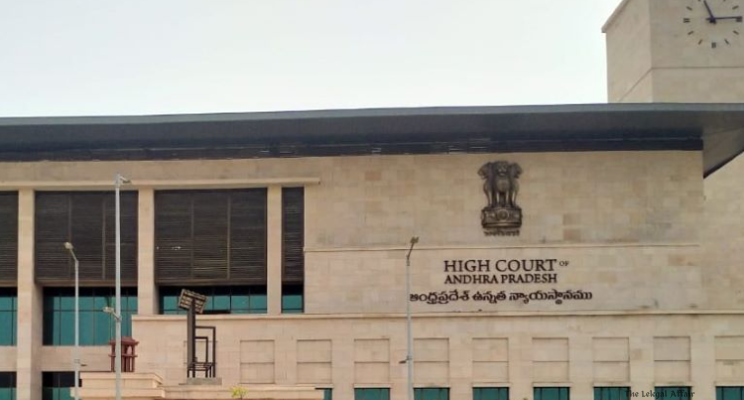
The Andhra Pradesh High Court, in a significant judgment reinforcing a humane and purposive interpretation of tax law, held that exemption under Section 11 of the Income Tax Act, 1961 cannot be denied merely on account of a delay in filing Form 10-B Audit Report when such delay is attributable to extraordinary circumstances arising out of the COVID-19 pandemic. The ruling was delivered by a Division Bench comprising Justice Battu Devanand and Justice A. Hari Haranadha Sarma while deciding a writ petition filed by M/s Amnos Evangelical, a religious and charitable society running a small church. The petitioner-society derived its income entirely from voluntary offerings made by devotees attending weekly Sunday prayers and special prayer meetings. For the Assessment Year 2021–22, the society filed its audit report with a delay of 44 days, which resulted in denial of exemption under Section 11 by the Centralized Processing Centre (CPC), Bengaluru, leading to a tax demand of ₹5,68,900. The rejection was based solely on the technical ground of delay, without considering the exceptional circumstances prevailing during the COVID-19 pandemic and the advanced age of the society’s treasurer, who was responsible for statutory compliance. Aggrieved by the denial of exemption and rejection of its application for condonation of delay by the Commissioner of Income Tax (Exemptions), the petitioner approached the High Court invoking its writ jurisdiction.
Arguments of the Petitioner:
The petitioner contended that it is a bona fide religious and charitable society squarely falling within the scope of Section 11 of the Income Tax Act, which grants exemption to income derived from property held under trust for charitable or religious purposes. It was submitted that the entire income of the society consisted of offerings received from devotees and was utilized exclusively for religious activities, without any element of profit or commercial motive. The petitioner argued that the delay of 44 days in filing Form 10-B Audit Report was neither deliberate nor negligent but was caused due to unavoidable and exceptional circumstances beyond its control. Emphasis was placed on the fact that the relevant assessment year coincided with the severe impact of the COVID-19 pandemic, during which normal functioning of offices, movement of persons, and access to professional services were severely restricted. The petitioner further highlighted that the treasurer of the society, who was solely responsible for compliance with income tax requirements, was 78 years old, and his advanced age coupled with pandemic-related health risks made timely compliance extremely difficult. It was argued that procedural requirements such as filing of audit reports are directory in nature when substantive compliance with the conditions of exemption exists, and that technical lapses should not defeat substantive rights, particularly in the case of charitable and religious institutions. The petitioner also submitted that the authorities failed to adopt a liberal approach consistent with various judicial precedents and circulars issued by the Income Tax Department itself during the pandemic, which recognized COVID-19 as a valid ground for condonation of delay. The rejection of the condonation application, according to the petitioner, was arbitrary, mechanical, and violative of principles of natural justice.
Arguments of the Revenue:
The Revenue, represented by the Department, defended the action of the Centralized Processing Centre and the Commissioner of Income Tax (Exemptions) by submitting that timely filing of Form 10-B Audit Report is a statutory requirement for claiming exemption under Section 11 of the Act. It was argued that the Income Tax Act prescribes clear timelines, and failure to adhere to such timelines disentitles the assessee from availing the benefit of exemption. The Department contended that the CPC had no discretion while processing returns under the automated system, and once the audit report was filed beyond the due date, denial of exemption followed as a natural consequence under the law. However, during the course of hearing, the Revenue fairly conceded that if the documents sought by the Income Tax Department vide its letter dated 19.04.2023 were furnished, the assessee’s request for condonation of delay may not be rejected outright. The Department submitted that the assessee had failed to respond to the said letter within the stipulated time, and therefore the authorities were justified in rejecting the application. It was also argued that while the pandemic posed challenges, the assessee was still required to demonstrate due diligence by responding to departmental communications and furnishing the necessary documents to enable consideration of its request.
Court’s Judgment:
After carefully considering the submissions made by both sides and examining the material on record, the Andhra Pradesh High Court held that the approach adopted by the tax authorities was unduly technical and failed to account for the extraordinary circumstances prevailing during the COVID-19 pandemic. The Bench observed that the petitioner is undeniably a religious and charitable society, and there was no dispute regarding the nature of its activities or the source and application of its income. The Court noted that Section 11 of the Income Tax Act is a beneficial provision intended to encourage and protect charitable and religious activities, and therefore must be interpreted liberally rather than narrowly. The Bench took judicial notice of the unprecedented disruption caused by the COVID-19 pandemic, which affected not only ordinary citizens but also institutions and government bodies alike. It was specifically observed that the treasurer of the petitioner-society was 78 years old and was solely responsible for handling tax compliances, and that expecting strict adherence to procedural timelines in such circumstances would be unreasonable and unjust. The Court found merit in the petitioner’s explanation that due to the pandemic, it could not attend to the letter dated 19.04.2023 issued by the Department and could not furnish the documents within the stipulated time. The Bench held that denial of exemption solely on the ground of a 44-day delay in filing Form 10-B, without examining the reasons for such delay, amounted to arbitrary exercise of power. The Court emphasized that procedural laws are handmaids of justice and not its mistress, and that technical lapses should not override substantive compliance, particularly when no mala fides or revenue loss is alleged. Consequently, the Court set aside the impugned orders denying exemption and rejecting condonation of delay, allowed the petitioner to submit the remaining documents within three weeks, and directed the authorities to consider the claim afresh in accordance with law. In view of these findings, the writ petition was allowed.