


Introduction:
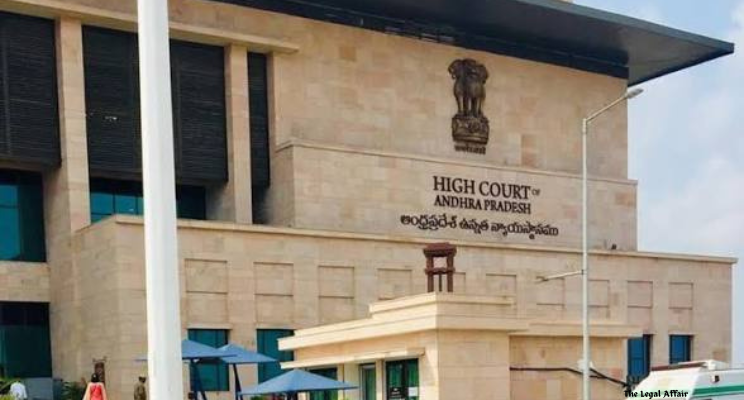
The High Court of Andhra Pradesh, in Y. Ramachandrappa v. State of Andhra Pradesh and Connected Appeal, Criminal Appeal Nos. 123 and 124 of 2008, reported in 2026 LiveLaw (AP) 110, has delivered a significant judgment on the evidentiary sanctity of trap proceedings under the Prevention of Corruption Act, 1988. The Court, presided over by Justice B.V.L.N. Chakravarthi, set aside the conviction of two accused persons after finding that the entire investigation was tainted by what it termed a “table investigation”, where critical records, including the First Information Report (FIR), were allegedly created after the trap operation rather than being recorded contemporaneously as required under Section 154 of the Code of Criminal Procedure.
The case arose from allegations that the first appellant, a stockiest working in the Civil Supplies Department, had demanded a bribe of ₹5,000 from a transport contractor for processing transport bills. The second appellant, a private individual, was alleged to have received the bribe amount on behalf of the first accused during an Anti-Corruption Bureau (ACB) trap operation. Based on this allegation, both accused were convicted by the trial court under Section 7 and Section 13(1)(d) of the Prevention of Corruption Act, 1988, while the second accused was additionally convicted under Section 12 for abetment.
The appellants challenged their conviction before the High Court, arguing that the entire prosecution case was built on fabricated and post facto documentation that did not comply with statutory requirements. The appeal thus required the Court to scrutinize whether the FIR and related trap records were genuinely prepared in accordance with law and whether the conviction could stand in the absence of a legally valid investigative foundation.
The case assumes importance in the context of corruption prosecutions, where trap proceedings conducted by vigilance agencies must strictly adhere to procedural safeguards to ensure fairness and prevent misuse of investigative powers. The High Court’s analysis not only revisits the evidentiary value of FIRs under Section 154 CrPC but also highlights the constitutional implications of irregular investigations affecting rights guaranteed under Articles 19 and 21 of the Constitution of India.
Arguments of the Parties:
The appellants contended that the entire prosecution case was fundamentally flawed due to serious procedural irregularities in the conduct of the investigation. It was argued that the FIR, which is the foundational document setting the criminal law into motion under Section 154 CrPC, was not recorded prior to the trap operation as required by law. Instead, it was prepared after the alleged trap proceedings had already concluded, thereby violating mandatory procedural safeguards.
The defence submitted that the investigating officer had engaged in what could be termed a “table investigation”, meaning that instead of conducting a contemporaneous and transparent investigation at the spot, the entire documentation was prepared later in the office and projected as if it had been recorded in real time. According to the appellants, this practice fundamentally undermined the credibility of the prosecution case.
It was further argued that there were material contradictions between the testimony of the complainant and the investigating officers regarding the timing and manner of lodging the complaint. These inconsistencies, it was contended, created serious doubt as to whether the FIR had been registered before or after the trap proceedings.
On merits, the appellants also disputed the allegation of bribery. The first accused maintained that he was falsely implicated and that there was no demand or acceptance of illegal gratification. The second accused, a private individual, contended that the money recovered during the trap was not bribe money but legitimate payment related to transportation and vehicle hire charges. It was submitted that the prosecution had failed to establish any nexus between the alleged demand and acceptance of bribe.
The State, represented by the Special Public Prosecutor for the Anti-Corruption Bureau, strongly opposed the appeals. It was submitted that the prosecution had successfully established the foundational ingredients of the offence under the Prevention of Corruption Act, including demand and acceptance of illegal gratification. The trap operation, according to the State, was conducted in accordance with procedure, and the recovery of tainted currency from the second accused at the instance of the first accused clearly established guilt.
The prosecution further argued that minor discrepancies in the timing of procedural steps could not invalidate an otherwise successful trap operation. It was contended that the trial court had rightly appreciated the evidence on record and had correctly convicted both accused based on reliable prosecution testimony.
Court’s Judgment:
Justice B.V.L.N. Chakravarthi, after a detailed examination of the record, allowed both criminal appeals and set aside the convictions, holding that the prosecution had failed to establish its case beyond reasonable doubt due to serious procedural lapses and evidentiary inconsistencies.
At the outset, the Court undertook a close scrutiny of the sequence of events relating to the lodging of the complaint and registration of the FIR. It found that there were significant contradictions between the complainant’s version and the testimony of the investigating officers regarding the time and manner in which the complaint was made. These contradictions went to the root of the prosecution case, casting serious doubt on the authenticity of the FIR itself.
The Court placed particular emphasis on the requirements of Section 154 CrPC, observing that an FIR must be the first authentic information received by the police that sets the criminal law in motion. However, in the present case, the documentary record suggested that key exhibits, including Ex.P-7 and Ex.P-15, were signed by the complainant only after the trap proceedings had been completed. These documents, instead of preceding the investigation, appeared to have been generated subsequently.
The Court noted that Ex.P-15, along with Ex.P-7, was received by the Special Court only after the alleged trap had already taken place. This chronology indicated that the FIR was not registered in the manner mandated under Section 154 CrPC, thereby rendering it procedurally defective.
In a strongly worded observation, the Court held that the investigating officer had effectively conducted a “table investigation”, meaning that the investigation records were prepared in the office after the trap proceedings and then presented as if they were contemporaneous documents. The Court deprecated this practice, stating that such conduct amounts to an abuse of investigative powers and undermines the integrity of the criminal justice system.
The Court further held that the so-called FIR, even if projected as such by the prosecution, was in reality a statement recorded after commencement of investigation and therefore fell within the ambit of Section 162 CrPC. Consequently, it could not be treated as a valid FIR for the purposes of prosecution.
The Court went on to observe that investigation conducted in violation of statutory requirements not only affects procedural fairness but also has constitutional implications. It held that such defective investigation abridges the rights of the accused under Articles 19 and 21 of the Constitution, particularly the right to fair investigation and fair trial. The Court emphasized that any conviction founded on such an investigation cannot be sustained in law.
Justice Chakravarthi also found that the trial court had failed to properly appreciate the contradictions and material inconsistencies in the prosecution evidence. The Court observed that the trial court had ignored crucial evidence and had based its findings on surmises rather than legally admissible proof.
On the factual aspect of the alleged bribe, the Court accepted the defence version that the amount recovered during the trap was not illegal gratification but payment related to transportation charges. The Court noted that evidence on record, including testimony of defence witnesses such as lorry owners and a Civil Supplies employee, supported the contention that the complainant regularly hired vehicles for transport of essential commodities and that payments were routinely made towards such services.
The Court held that the prosecution had failed to disprove this explanation or establish a clear nexus between the alleged demand of bribe and the recovered amount. In the absence of reliable proof of demand and acceptance of illegal gratification, the conviction under the Prevention of Corruption Act could not be sustained.
Ultimately, the High Court concluded that the entire prosecution case suffered from fundamental legal and evidentiary defects. The investigation was found to be vitiated due to procedural irregularities, fabrication of records and failure to adhere to statutory requirements. The Court held that the trial court’s findings were based on conjectures and not on legally admissible evidence, resulting in a serious miscarriage of justice.
Accordingly, the High Court allowed the appeals, set aside the convictions of both appellants under Sections 7, 13(1)(d) and 12 of the Prevention of Corruption Act, and ordered refund of fine amounts, if already paid. The judgment reinforces the principle that corruption convictions must rest on strict procedural compliance and credible evidence, and that courts must remain vigilant against investigative shortcuts that compromise the fairness of criminal trials.