


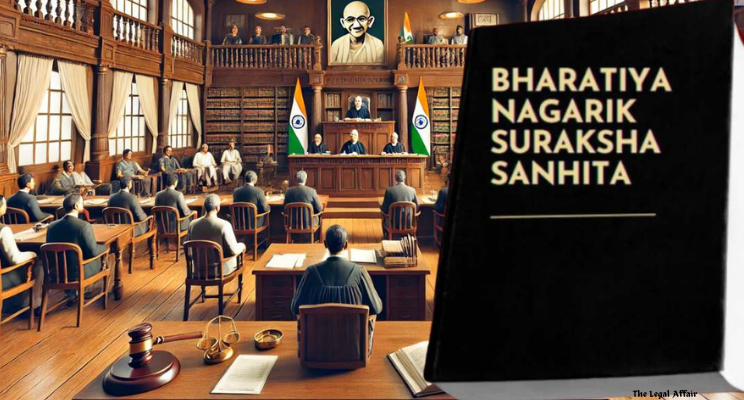
Introduction:
In a pivotal ruling delivered on August 23, 2024, the Supreme Court of India determined that Section 479 of the Bharatiya Nagarik Suraksha Sanhita (BNSS), which replaces the Code of Criminal Procedure (CrPC), will apply retrospectively to undertrials across the nation. This decision marks a crucial shift in the judicial process, particularly affecting those awaiting trial in the overcrowded prisons of India. The retrospective application of Section 479 BNSS means that undertrials whose cases were registered before July 1, 2024, can now seek bail if they have served a specific portion of their maximum possible sentence.
This ruling stems from a Public Interest Litigation (PIL) aimed at addressing the pressing issue of overcrowding in Indian prisons, a problem that has long plagued the country’s criminal justice system. The Supreme Court’s decision not only addresses individual rights but also seeks to mitigate systemic issues within the nation’s correctional facilities.
The Legal Provisions:
Section 479 BNSS vs. Section 436A CrPC Section 479 BNSS introduces a significant change in how the detention period of undertrials is calculated for their eligibility for bail. According to this new provision, undertrials are eligible for release on bail if they have undergone detention for up to one-half of the maximum period of imprisonment prescribed for their alleged offense. This mirrors the previous standard under Section 436A of the CrPC.
However, Section 479 BNSS goes a step further by introducing a proviso specifically for first-time offenders—those who have never been convicted of any crime in the past. For these individuals, the threshold for bail eligibility is reduced to one-third of the maximum sentence they face. This represents a more lenient approach compared to the one-half period required under the CrPC, potentially expediting the release of many undertrials who fall under this category.
Arguments from Both Sides
Arguments in Favor of Retrospective Application:
The primary argument for applying Section 479 BNSS retrospectively centered on the urgent need to alleviate the overcrowded conditions in Indian prisons. Overcrowding has been a critical issue, exacerbating the already dire conditions in many of the nation’s correctional facilities. Senior Advocate Gaurav Aggarwal, representing the petitioners, argued that implementing this provision could significantly reduce the number of inmates and improve living conditions within prisons.
Aggarwal emphasized that many undertrials languish in jails for extended periods without conviction, often due to delays in the judicial process. The retrospective application of Section 479 BNSS, he argued, would ensure that these individuals are not unduly punished by prolonged detention. Moreover, the reduction in overcrowding would allow prison authorities to better manage resources and provide more humane conditions for those who remain incarcerated.
Aggarwal further argued that the retrospective application would ensure uniformity and fairness in the legal process, preventing a situation where undertrials arrested before July 1, 2024, are treated differently from those arrested after this date. This approach, he contended, aligns with the principles of justice and equity.
Arguments Against Retrospective Application:
While the Union of India ultimately supported the retrospective application, there were initial reservations. Some critics argued that applying Section 479 BNSS retrospectively could undermine the authority of previous judicial decisions made under the CrPC. They expressed concern that this could lead to a flood of bail applications, overwhelming the courts and potentially compromising public safety by releasing individuals who might pose a threat to society.
The opposition also questioned whether the retrospective application would create inconsistencies in the judicial process, with different standards being applied to cases based on their registration date. They argued that this could lead to legal confusion and potentially unfair outcomes, as undertrials with similar charges could be treated differently depending on when their cases were filed.
Practical concerns were also raised about implementing the retrospective provision. Critics pointed out that the country’s judicial and prison systems might not be equipped to handle the sudden influx of bail applications and the subsequent need to monitor released individuals. They cautioned that without adequate resources and planning, the intended benefits of the provision could be undermined.
Supreme Court’s Judgment:
After hearing the arguments, the Supreme Court delivered a landmark judgment, holding that Section 479 of BNSS would indeed apply retrospectively to all undertrials in cases registered before July 1, 2024. The Court’s decision was guided by the principle of justice and the need to address the critical issue of prison overcrowding.
The Bench, comprising Justices Hima Kohli and Sandeep Mehta, recognized the Union of India’s support for the retrospective application. The Court was particularly persuaded by the argument that the retrospective application of Section 479 BNSS would help alleviate overcrowding in prisons, a problem that has reached crisis levels in many parts of the country.
The Court directed the superintendents of jails across India to immediately process the applications of undertrials who have completed the requisite detention period, as stipulated under Section 479 BNSS, through the concerned courts. Specifically, undertrials who have served one-half of the maximum period of imprisonment for their alleged offense are to be considered for bail, while first-time offenders who have served one-third of the maximum period should also be considered.
The order emphasized that these steps should be taken “as expeditiously as possible and preferably within three months.” This directive underscores the Court’s recognition of the urgency of the situation and its commitment to ensuring that the new legal provisions are implemented without unnecessary delay.
Furthermore, the Court mandated that the superintendents of jails submit reports to the heads of their departments within the same three-month timeline. These reports are to be used to compile comprehensive affidavits, which must be filed by each State and Union Territory, detailing the implementation of the Court’s order.
In its judgment, the Court also addressed the concerns raised about the potential flood of bail applications and the strain on judicial resources. The Bench acknowledged these challenges but asserted that the fundamental rights of individuals, particularly those who have been detained for extended periods without trial, cannot be compromised. The judgment underscored the importance of balancing public safety with the need to uphold the principles of justice and human rights.
The Court also noted that the retrospective application of Section 479 BNSS aligns with the broader goal of ensuring that the legal system is responsive to changing societal needs and conditions. By applying the provision retrospectively, the Court aimed to rectify the prolonged detention of undertrials, many of whom might have been eligible for release under the new law had their cases been registered after July 1, 2024.