


Introduction:
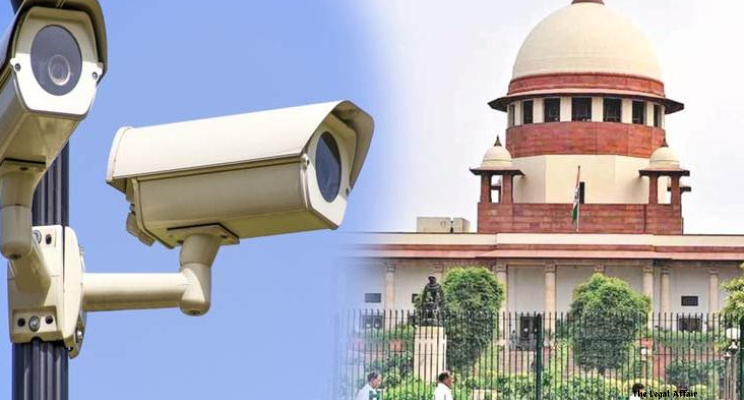
In a significant intervention aimed at strengthening custodial safeguards and accountability within law enforcement, the Supreme Court of India, in a suo motu proceeding titled In Re: Lack of Functional CCTVs in Police Stations, SMW(C) No. 7 of 2025, along with monitoring compliance in Paramvir Singh Saini v. Baljit Singh, SLP (Crl) No. 3543 of 2020 and connected matters, reiterated that mere installation of CCTV cameras in police stations is meaningless unless the cameras are fully functional, continuously monitored, properly maintained, and supported by robust data storage and oversight mechanisms. The matter was heard by a Bench comprising Justice Vikram Nath and Justice Sandeep Mehta, with Senior Advocate Siddharth Dave assisting the Court as Amicus Curiae. The proceedings were triggered by alarming reports of custodial deaths, including a newspaper report stating that around eleven persons had died in police custody in Rajasthan over a short span of months, prompting the Court on September 4, 2025, to register a suo motu public interest case. This was not the first time the Court had addressed this issue, as back in December 2020, in Paramvir Singh Saini, the Supreme Court had issued categorical directions mandating installation of CCTV cameras in every police station and investigative unit across all States and Union Territories. However, persistent non-compliance, dysfunctional equipment, absence of centralized monitoring, and lack of accountability led the Court to conclude that previous directions had not achieved their intended purpose. During the present hearing, the State of Rajasthan informed the Court that an additional budget of Rs. 75 crores had been sanctioned and that each police station would now be equipped with 16 CCTV cameras instead of 12 by March 31, yet the Court made it clear that numerical expansion alone does not guarantee constitutional compliance if systemic weaknesses continue to exist. The Bench emphasized that surveillance mechanisms are not merely administrative tools but constitutional safeguards linked to Article 21, protecting individuals from custodial violence, illegal detention, and coercive interrogation practices, and therefore require strict judicial monitoring.
Arguments:
The proceedings reflected concerns from multiple stakeholders, with the Court, the Amicus Curiae, and the State authorities engaging in a detailed discussion on structural, technological, and administrative failures in implementing CCTV surveillance in police stations. On behalf of the State of Rajasthan, it was submitted that the government had taken serious note of earlier judicial observations and had sanctioned substantial additional funding to strengthen CCTV infrastructure, with a commitment that every police station would soon be equipped with sixteen cameras covering sensitive zones including entry points, lock-ups, corridors, and other vulnerable areas. The State projected this as evidence of sincere compliance and responsiveness to judicial directions. However, the Court was not satisfied with assurances based only on installation targets and budget allocations, and instead focused on whether the cameras actually function continuously, whether their feeds are monitored, whether outages are detected in real time, and whether tampering is prevented through independent verification mechanisms. Justice Vikram Nath observed that installation is only the first step and that non-functional or deliberately disabled cameras defeat the entire purpose of judicial safeguards, particularly when allegations of custodial violence continue to surface. The Bench pointed out that connectivity failures, maintenance contracts, power backup, data retention policies, and responsibility for supervision are all integral components of a meaningful surveillance framework.
Senior Advocate Siddharth Dave, appearing as Amicus Curiae, strongly supported the Court’s concerns and emphasized that affidavits filed by several authorities were either missing or merely formal in nature, failing to provide actionable information about compliance. He specifically pointed out that the Union Government and the States of Gujarat and Chhattisgarh had not filed affidavits in the suo motu case, while affidavits filed by Jharkhand, Odisha, and the National Investigation Agency were superficial and appeared to be filed only for the sake of formality without addressing substantive compliance. He stressed that the Court’s monitoring cannot be reduced to paperwork exercises and that accountability must be measurable through verifiable data. At this point, Justice Nath clarified that while some authorities may have filed affidavits in the earlier Paramvir Singh Saini proceedings, it is the present suo motu case that is under active judicial monitoring, and fresh, detailed compliance reports are mandatory.
The Amicus further highlighted that without a centralized dashboard, real-time monitoring of thousands of cameras across police stations is practically impossible, and therefore, systemic reforms must focus on technological integration rather than fragmented, station-wise compliance. He proposed that the Union Government could develop standardized software infrastructure that could be adopted by States, ensuring uniformity, scalability, and independent oversight. Responding to this, Justice Sandeep Mehta observed that States like Kerala have already developed indigenous software systems not only for police surveillance but even for High Court functioning, without reliance on outsourcing agencies, thereby proving that technological capability exists at the State level as well. While acknowledging this, the Amicus maintained that the Union possesses greater financial and technological resources and could facilitate nationwide standardization more effectively.
A significant part of the discussion revolved around identifying model States whose practices could be replicated elsewhere. The Amicus referred to Madhya Pradesh, Kerala, and Rajasthan as States that have shown comparatively better responsiveness and administrative initiative in strengthening surveillance mechanisms. The Court welcomed this approach and suggested that instead of merely issuing coercive directions, collaborative institutional learning should be encouraged. Consequently, the Bench proposed that the Amicus should hold a virtual conference with Home Secretaries and Directors General of Police of all States and Union Territories, with participation from Additional Solicitor General Thakre and Additional Advocate Generals of States, so that best practices could be shared and gaps could be directly addressed through coordinated dialogue. Justice Nath remarked that other States might even develop better ideas if given the opportunity to exchange strategies rather than operate in isolation.
Another critical issue raised before the Court was the failure of certain States, particularly Jharkhand and Haryana, to comply with directions issued in the Paramvir Singh Saini case even after several years. The Amicus informed the Court that despite repeated judicial orders, these States had not ensured effective installation and monitoring of CCTV cameras. Expressing strong displeasure, Justice Vikram Nath warned that unless proper affidavits and tangible compliance steps are produced, the Court would not hesitate to pass strictures against defaulting authorities, signaling possible coercive consequences including contempt proceedings. This warning underscored the Court’s growing impatience with prolonged administrative inertia in matters involving fundamental rights.
The arguments before the Court thus reflected a broader constitutional concern that while executive authorities frequently highlight budgetary sanctions and infrastructure expansion, they often fail to address operational realities, accountability mechanisms, and technological reliability, which are essential for protecting citizens from abuse of police power. The Court repeatedly emphasized that custodial safeguards cannot depend on mere assurances but must be demonstrably effective in real-world conditions, especially in light of repeated allegations of torture, illegal detention, and custodial deaths.
Judgment:
After considering the submissions of the State, the Amicus Curiae, and reviewing the broader pattern of compliance across States and Union Territories, the Supreme Court reiterated that functional surveillance, not symbolic compliance, is the constitutional mandate. Justice Vikram Nath categorically stated that merely installing CCTV cameras does not fulfill the Court’s directions unless those cameras are continuously operational, properly maintained, and supported by monitoring systems capable of detecting failures and tampering in real time. The Bench highlighted that oversight mechanisms must ensure that camera outages are immediately flagged and rectified, and that footage is securely stored for sufficient duration to enable verification in case of complaints or inquiries.
The Court further emphasized that surveillance infrastructure must be integrated into centralized command structures similar to traffic surveillance systems, where feeds are monitored by independent or supervisory agencies rather than solely by station-level personnel who may themselves be subjects of scrutiny. Justice Mehta reinforced this view by noting that decentralized monitoring defeats the very objective of accountability, since officials under investigation may have the capacity to interfere with evidence. The Bench also recalled its earlier observations from September 15, where it had expressed concern that cameras can be deliberately switched off and therefore independent monitoring systems without human intervention should be explored wherever technologically feasible.
Taking note of the Amicus Curiae’s suggestion and the comparative performance of certain States, the Court encouraged institutional collaboration through structured dialogue, directing that a virtual conference be organized with senior police and home department officials from across the country to exchange best practices, technological solutions, and administrative models. The Court indicated that this consultative process should not dilute judicial oversight but should complement it by ensuring that solutions are not merely imposed but are informed by ground-level realities and technological feasibility.
The Bench also made it clear that affidavits filed by States and Central agencies must be detailed, data-driven, and transparent, clearly specifying the number of police stations covered, the number of cameras installed, uptime percentages, data storage duration, monitoring authorities, and audit mechanisms. It warned that failure to provide substantive compliance reports would invite judicial displeasure and potential adverse orders. Justice Nath explicitly stated that compliance affidavits are not empty formalities but solemn statements to the Court, and misleading or incomplete disclosures undermine the credibility of governance itself.
While the Court acknowledged Rajasthan’s submission regarding increased budgetary allocation and expansion of camera numbers, it clarified that future hearings would examine not only whether targets are achieved but whether systems remain operational on a day-to-day basis. The Court’s approach thus shifted the compliance discourse from infrastructure counts to performance standards.
Importantly, the Court reiterated that its directions in both the suo motu case and the Paramvir Singh Saini matter are rooted in the protection of Article 21 rights, and therefore carry constitutional urgency that cannot be postponed by administrative delays or inter-departmental complexities. The Bench made it clear that custodial violence and illegal detention are not merely law-and-order issues but fundamental rights violations that demand proactive judicial supervision.
Before concluding the hearing, the Court issued a stern caution to defaulting States, particularly Jharkhand and Haryana, to file proper compliance affidavits and demonstrate tangible progress, failing which the Court may consider passing strict orders, potentially including personal accountability of responsible officials. The matter was directed to be listed for further monitoring after the proposed virtual conference and submission of fresh affidavits, indicating that the Court intends to continue close scrutiny until effective nationwide compliance is achieved.