


Introduction:
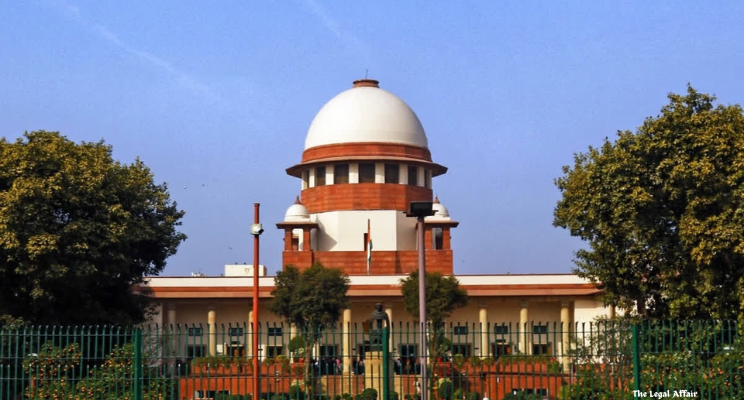
The Supreme Court, in the case of The State of Jharkhand & Ors. vs. Rukma Kesh Mishra, reaffirmed that the appointing authority is not required to initiate disciplinary proceedings against a state employee. A bench comprising Justice Dipankar Datta and Justice Manmohan overturned the High Court’s decision, which had quashed the dismissal of Rukma Kesh Mishra, a state employee accused of financial irregularities, solely due to the lack of prior separate approval from the Chief Minister for the charge sheet. The Court clarified that while the appointing authority’s approval is necessary for dismissal under Article 311(1) of the Constitution, it is not mandatory for initiating disciplinary action. The ruling highlights that disciplinary proceedings can be initiated by any superior authority under state service rules, provided that the final dismissal order is sanctioned by the appropriate appointing authority.
Arguments of Both Sides:
The State of Jharkhand contended that the disciplinary proceedings against Rukma Kesh Mishra were lawfully initiated by the Deputy Commissioner of Koderma in 2014. The charge sheet, containing nine charges related to financial irregularities, forgery, and dishonesty, was part of a proposal that was duly approved by the Chief Minister along with recommendations for suspension and appointment of inquiry officers. In 2015, the Respondent was found guilty of six charges, leading to a decision by the State Cabinet, which, after obtaining the required consent from the State Public Service Commission (appointing authority), approved his dismissal in 2017. This decision was later ratified by the Governor. The State argued that the High Court erred in applying precedents from Union of India v. B.V. Gopinath (2014) and State of Tamil Nadu v. Promod Kumar, IAS (2018), which dealt with central service rules rather than Jharkhand’s state-specific regulations. The government asserted that the existing rules did not mandate separate approval of the charge sheet by the Chief Minister, making the High Court’s reasoning flawed.
The Respondent, Rukma Kesh Mishra, argued that the charge sheet issued against him was invalid since it was not separately approved by the Chief Minister at the time of issuance. Relying on B.V. Gopinath and Promod Kumar, IAS, he contended that the charge sheet must be issued with explicit approval from the appointing authority, failing which the disciplinary proceedings stand vitiated. He claimed that the lack of such approval constituted a violation of procedural safeguards under Article 311(1) of the Constitution. He further argued that his dismissal was illegal since the foundational disciplinary action was procedurally defective. The Respondent asserted that the constitutional protection under Article 311(1) necessitated strict adherence to procedural requirements before ordering dismissal, including the method by which the charge sheet was drawn up and approved.
Court’s Judgment:
The Supreme Court, while overturning the High Court’s decision, held that the court had erroneously applied B.V. Gopinath and Promod Kumar, IAS, as these cases dealt with central rules, which differ from the Jharkhand Civil Service Rules. The Court clarified that the Jharkhand rules do not require the Chief Minister’s separate approval for a charge sheet and that disciplinary proceedings can be initiated by any superior authority. It emphasized that the Chief Minister’s prior approval of the draft charge sheet alongside the proposal to initiate disciplinary proceedings and suspend the respondent sufficed as compliance with procedural requirements. The bench noted that there was no valid reason to disregard this approval simply because it was not given separately at the time of charge sheet issuance. The Court concluded that the High Court’s interference in the disciplinary proceedings was a miscarriage of justice, particularly since the dismissal had been duly upheld by the State Cabinet and the Governor.
Referring to P.V. Srinivasa Sastry v. Comptroller and Auditor General (1993), the Court reiterated that disciplinary proceedings need not necessarily be initiated by the appointing authority. The judgment reaffirmed that Article 311(1) ensures that dismissal orders are issued only by the appointing authority but does not mandate that disciplinary actions, including charge sheets, must originate from the same authority. The Court categorically stated that in the absence of a statutory mandate requiring the appointing authority to issue a charge sheet, disciplinary actions initiated by a superior authority remain valid. The Supreme Court ruled that unless the specific discipline and appeal rules applicable to an officer or employee require charge-sheet issuance by the appointing authority, a charge sheet issued by any superior authority remains legally tenable.
In conclusion, the Supreme Court allowed the appeal, reinstating the dismissal of Rukma Kesh Mishra. However, the Court permitted him to file an appeal or revision on other grounds within one month.