


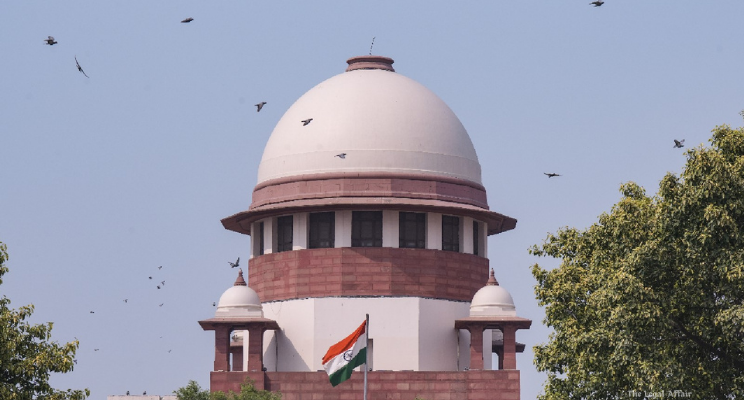
Introduction:
The Supreme Court of India on August 18, 2025, delivered a significant judgment that once again reinforced the principles governing criminal prosecution and the need for concrete evidence before putting individuals through the rigors of trial. The case involved the tragic death of seven-time Member of Parliament Mohanbhai Sanjibhai Delkar, who was found dead in a hotel room in Mumbai on February 22, 2021. The matter reached the apex court after the Bombay High Court had earlier quashed an FIR filed against several high-ranking officials, including the Administrator of Dadra and Nagar Haveli, Praful Khoda Patel, the then Collector Sandeep Kumar Singh, and Police Superintendent Sharad Darade. The FIR, filed by Abhinav Mohan Delkar, the son of the deceased MP, alleged abetment of suicide, criminal intimidation, conspiracy, and violation of provisions under the Scheduled Castes and Scheduled Tribes (Prevention of Atrocities) Act, 1989. However, the Bombay High Court concluded that the FIR lacked substantive material to justify prosecution, and on appeal, the Supreme Court upheld this ruling, thereby dismissing the petitions filed by the deceased MP’s son. The case, titled Abhinav Mohan Delkar v. The State of Maharashtra, has drawn widespread attention, raising questions about the fine balance between ensuring accountability for alleged abuse of power and protecting individuals from frivolous or unsustainable prosecutions.
Arguments of the Petitioner (Son of the Deceased MP):
Abhinav Mohan Delkar, representing his late father, argued that the sequence of events leading up to Mohanbhai Delkar’s death clearly pointed towards persistent harassment, humiliation, and targeted ill-treatment orchestrated under the authority of Administrator Praful Khoda Patel and other senior officials. He alleged that the motive behind such conduct was twofold: first, to gain control over the educational institutions, particularly a college run by Delkar; and second, to thwart his political career by preventing him from contesting future elections. The FIR lodged by Abhinav detailed instances where his father was allegedly humiliated at public functions, threatened with criminal accusations, and subjected to defamatory treatment. Since Mohanbhai Delkar belonged to a Scheduled Tribe, it was alleged that the ill-treatment also took the form of caste-based humiliation, thereby attracting provisions of the SC/ST (Prevention of Atrocities) Act. The petitioner maintained that these actions collectively amounted to abetment of suicide under Section 306 of the IPC, as they created an unbearable environment for his father, driving him to take the extreme step. Further, allegations of conspiracy under Section 120-B IPC and criminal intimidation under Section 506 were also pressed, with the claim that the authorities acted in collusion, misusing their official positions for personal and political gains.
Arguments of the Respondents (Accused Officials):
The respondents, on the other hand, strongly denied the allegations, terming them vague, unspecific, and incapable of sustaining criminal prosecution. They argued that the FIR was largely based on the subjective impressions of the deceased rather than demonstrable facts. The officials contended that no evidence suggested any conspiracy to usurp Delkar’s institutions or prevent him from participating in elections. In fact, Delkar had contested as an independent candidate and successfully secured a parliamentary seat, which undermined the allegation that his political future was being deliberately sabotaged. The respondents relied on settled legal principles, asserting that abetment of suicide requires a “positive act” intended to instigate or facilitate the commission of suicide. Mere allegations of harassment, without proof of direct incitement or instigation, cannot satisfy the legal threshold of abetment. Furthermore, they argued that applying the provisions of the SC/ST Act in the absence of clear evidence of caste-based targeting would not only dilute the intent of the statute but also result in an abuse of process.
Court’s Judgment:
The Supreme Court, while delivering its verdict, upheld the Bombay High Court’s order that had quashed the FIR against the accused officials. The apex court observed that criminal prosecution must be rooted in credible, concrete, and specific evidence. The bench, led by Chief Justice BR Gavai along with Justices K Vinod Chandran and NV Anjaria, stressed that a person’s subjective impressions, however genuine or heartfelt, cannot be the sole foundation for initiating criminal proceedings unless corroborated by substantial material. Referring to precedents such as Madan Mohan Singh v. State of Gujarat, the Court reiterated that abetment under Section 306 IPC requires proof of a direct or active act that incites, provokes, or encourages the commission of suicide. The allegations in the FIR, though serious, lacked such demonstrable acts.
On the issue of conspiracy, the Court emphasized that Section 120-B IPC mandates evidence of a meeting of minds and coordinated action. The FIR contained broad allegations of collusion but no specific incident showing that the accused had acted together in pursuance of a common plan. Similarly, the claims of caste-based humiliation were found to be insufficiently substantiated, as there was no evidence that the accused had intentionally targeted Delkar due to his Scheduled Tribe status. The Court highlighted that allowing criminal proceedings to continue based on such unsustainable material would amount to an abuse of process and would unjustly subject the accused to the rigors of trial.
The bench also invoked the guiding principles laid down in State of Haryana v. Bhajan Lal, which provide for the quashing of criminal proceedings where allegations are absurd, inherently improbable, or amount to mala fide misuse of law. Applying these principles, the Court concluded that the FIR in this case did not disclose sufficient grounds to proceed against the accused. Accordingly, the Supreme Court confirmed the High Court’s decision and dismissed the special leave petition filed by Abhinav Mohan Delkar.
This judgment not only brings closure to a high-profile legal battle but also reaffirms the judiciary’s insistence on ensuring that criminal law is not used as an instrument of harassment or revenge. While the loss of Mohanbhai Delkar remains a tragic event, the Court underscored that legal responsibility for such tragedies cannot be imposed in the absence of clear and compelling evidence of wrongdoing.