


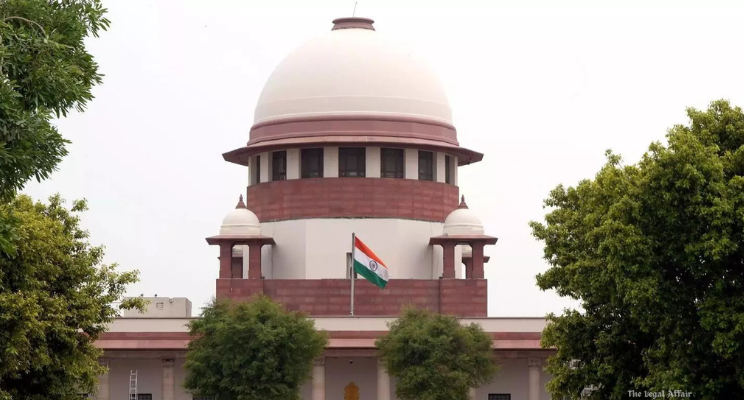
Introduction:
The present case, State of Uttar Pradesh & Ors. v. Mayoor Ahuja, came before the Supreme Court of India, raising important questions regarding procedural fairness in administrative actions, particularly in the context of liquor licensing. The dispute arose when the Uttar Pradesh excise authorities cancelled the wholesale country liquor licence held by Mayoor Ahuja for the excise year 2020–21, citing multiple violations of licence conditions. The cancellation order not only resulted in the termination of the licence but also led to forfeiture of the security deposit.
Aggrieved by this action, Ahuja challenged the decision through statutory remedies, culminating in a writ petition before the Allahabad High Court. The High Court set aside the cancellation on the ground that it violated principles of natural justice, as the order relied on grounds beyond those mentioned in the show cause notice. The State of Uttar Pradesh, dissatisfied with this ruling, approached the Supreme Court.
A bench comprising Justice Pamidighantam Sri Narasimha and Justice Alok Aradhe examined whether the High Court’s interference was justified and whether the State could still initiate fresh proceedings. The Supreme Court struck a balanced approach—upholding the High Court’s decision to quash the cancellation while permitting the State to restart proceedings in compliance with due process and natural justice.
Arguments by the State (Appellants):
The State of Uttar Pradesh contended that the High Court erred in setting aside the cancellation order, arguing that the violations committed by the licence holder were serious and warranted strict regulatory action. The State emphasized that liquor trade is a highly regulated activity, and strict compliance with licensing conditions is essential to ensure public safety, prevent revenue leakage, and maintain law and order.
The State pointed out that during inspection of the licensed premises on March 04, 2021, several violations were detected. These included the absence of a signboard at the premises, a shortage of 1980 liquor packets, lack of CCTV cameras, and absence of fire safety equipment. According to the State, these deficiencies clearly indicated non-compliance with the licence conditions and posed risks to both regulatory oversight and public interest.
Further, the State relied heavily on additional material that emerged during investigation, including the interception of a truck allegedly linked to illegal transportation of liquor. Statements of the driver and related FIRs were cited to suggest involvement in unlawful activities. The authorities also alleged the use of forged barcodes, resulting in financial loss to the State exchequer. These allegations, in the State’s view, went beyond mere technical breaches and pointed towards systemic violations affecting the integrity of the excise system.
The State argued that the cancellation order was justified in light of these cumulative violations. It maintained that the High Court adopted an overly technical approach by focusing only on the contents of the show cause notice while ignoring the gravity of the violations uncovered during investigation. According to the State, administrative authorities must have sufficient flexibility to act on emerging facts to prevent misuse of licences.
Additionally, the State contended that the High Court’s order effectively barred any further action against the licence holder, thereby undermining the regulatory framework. It argued that such an interpretation would allow licence holders to escape accountability on procedural grounds, even in cases involving serious violations.
The State urged the Supreme Court to restore the cancellation order or, at the very least, clarify that it retained the power to initiate fresh proceedings based on all relevant materials. It stressed that accountability in liquor licensing is crucial and that procedural lapses, if any, should not completely nullify the State’s ability to regulate the trade effectively.
Arguments by the Respondent (Mayoor Ahuja):
On the other hand, the respondent, Mayoor Ahuja, strongly defended the High Court’s judgment, arguing that the cancellation of his licence was fundamentally flawed due to violation of principles of natural justice. He contended that the show cause notice issued on March 05, 2021, referred only to certain minor violations under Rule 16 of the Uttar Pradesh Excise Rules, 2020.
According to Ahuja, these alleged breaches—such as absence of signboard, shortage of stock, and lack of CCTV or fire safety equipment—were minor and compoundable in nature. He argued that such violations did not warrant the extreme penalty of licence cancellation, especially when the Rules themselves provided for lesser penalties.
Ahuja’s primary contention was that the cancellation order went far beyond the allegations mentioned in the show cause notice. The order relied on entirely new grounds, including issues relating to transport passes, record maintenance, GPS-enabled tracking, and alleged illegal transportation. These allegations were never put to him for explanation, nor was any supporting material provided to substantiate them.
He argued that this amounted to a clear violation of the principles of natural justice, particularly the rule of audi alteram partem—the right to be heard. By introducing new grounds in the final order without prior notice, the authorities deprived him of a fair opportunity to defend himself.
Ahuja also highlighted that the reliance on FIRs and statements of third parties without providing copies or an opportunity to rebut them further compounded the procedural irregularities. He submitted that administrative authorities cannot act arbitrarily or rely on undisclosed materials while taking punitive action.
Furthermore, Ahuja argued that the High Court rightly held that the violations mentioned in the show cause notice were minor and did not justify cancellation. He maintained that the excise authorities acted in a disproportionate manner by imposing the harshest penalty without considering the nature of the alleged breaches.
He also opposed the State’s plea for fresh proceedings, arguing that allowing such action would subject him to prolonged harassment and uncertainty. However, he emphasized that any action, if permitted, must strictly comply with procedural safeguards and provide him with a full opportunity to respond.
Court’s Judgment:
The Supreme Court carefully examined the facts, the reasoning of the High Court, and the submissions made by both parties. It began by reaffirming the fundamental importance of procedural fairness in administrative actions, particularly when such actions have serious civil consequences like cancellation of a licence.
The Court agreed with the High Court that the cancellation order could not be sustained in law. It observed that the show cause notice issued to Ahuja referred only to certain specific violations, which were relatively minor and compoundable under the applicable Rules. However, the final cancellation order relied on additional allegations that were neither mentioned in the notice nor supported by material disclosed to the respondent.
The Court held that such an approach violated the principles of natural justice. It emphasized that a show cause notice forms the foundation of any administrative action, and the final order must be confined to the allegations contained therein. Introducing new grounds at the stage of the final order deprives the affected party of a fair opportunity to respond, rendering the action legally unsustainable.
At the same time, the Supreme Court took note of the State’s concern regarding effective regulation of liquor trade. It observed that accountability in liquor licensing is essential, given the sensitive nature of the trade and its impact on public interest and revenue.
Balancing these considerations, the Court modified the High Court’s order. While upholding the quashing of the cancellation order, it clarified that the State is not barred from taking fresh action against the licence holder. However, such action must strictly comply with the procedure prescribed under the Uttar Pradesh Excise (Settlement of Licenses for Wholesale of Country Liquor) Rules, 2002.
The Court directed that if the State intends to proceed against Ahuja, it must issue a fresh show cause notice clearly specifying all allegations and supporting materials. The respondent must be given a full and fair opportunity to submit his explanation and produce relevant documents. Only thereafter can the authorities take a reasoned decision in accordance with law.
The judgment thus reflects a balanced approach—protecting the rights of individuals against arbitrary administrative action while preserving the State’s authority to regulate and enforce compliance.