


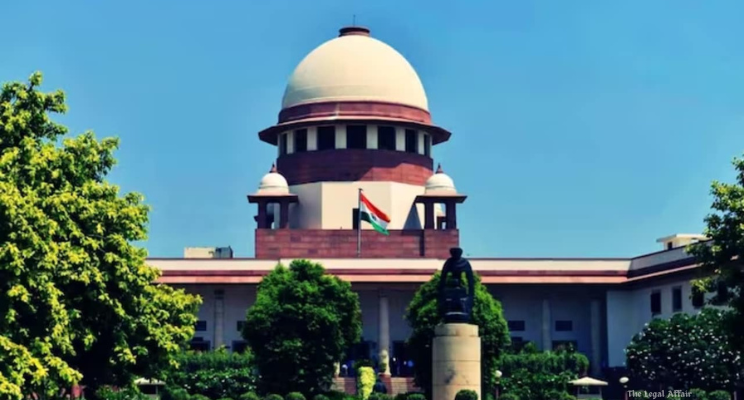
Introduction:
The Supreme Court of India, in a landmark judgment on July 14, 2025, delivered in Kum. Shubha @ Shubhashankar versus State of Karnataka & Anr. (Criminal Appeal No. 1029 of 2011), upheld the conviction and life imprisonment of a young woman, Shubha, and her co-accused for the brutal murder of her fiancé. The Court, while affirming the decision of the Karnataka High Court, recognized the mitigating circumstances surrounding the crime, particularly that Shubha was compelled into an unwanted marriage by her family, leading her to adopt an unlawful and tragic course of action. The Court took a sympathetic yet legally balanced approach by allowing the convicts to file a petition for pardon under Article 161 of the Constitution before the Governor of Karnataka. This judgment not only reiterates the sanctity of life and criminal liability but also underscores the rehabilitative philosophy embedded in constitutional powers of clemency, reflecting the State’s ethical and humane responsibility in administering justice.
Arguments of the Appellants (Defense):
The counsel for the appellants, including Senior Advocates Mr. Ranjit Kumar, Mr. S. Nagamuthu, Mr. Siddhartha Dave, and Mr. R. Nedumaran, argued that the conviction under Sections 302 (murder) read with 120-B (criminal conspiracy) IPC lacked a firm evidentiary foundation. They submitted that the prosecution failed to produce reliable eyewitnesses as both witnesses exhibited unnatural conduct during the alleged incident, rendering their testimonies doubtful. It was further contended that the entire case rested on circumstantial evidence, which, according to the defense, was neither complete nor conclusive as required by the five golden principles laid down in Sharad Birdhichand Sarda v. State of Maharashtra. The defense also questioned the admissibility of Call Detail Records (CDRs) under Section 65-B of the Indian Evidence Act, alleging procedural lapses. They argued that mere telephonic communication cannot conclusively establish conspiracy. Furthermore, the defense highlighted lapses in investigation, such as the delayed forensic analysis of the weapon (steel rod), asserting that such procedural defects create reasonable doubt about the prosecution’s case. They pleaded for acquittal, emphasizing that Shubha, a college-going woman, acted out of frustration and lack of autonomy in choosing her life partner, which should be considered as a mitigating circumstance. Lastly, the defense pressed for leniency, citing that 22 years had elapsed since the crime, and the appellants had undergone long incarceration, making them suitable for reformation rather than perpetual punishment.
Arguments of the Respondent (Prosecution):
Represented by Additional Advocate General Mr. Muhammed Ali Khan and Senior Counsel Mr. Tomy Sebastian, the prosecution argued that the case was one of cold-blooded conspiracy driven by premeditation. The State contended that the motive was clearly established through the testimony of Shubha’s close friend, Pramod Dixit, who confirmed that Shubha expressed her unwillingness to marry the deceased. The prosecution strongly relied on the CDR analysis, duly certified under Section 65-B(4) of the Evidence Act, which revealed extensive and suspicious communication between Shubha and her co-accused around the time of the incident. They asserted that the sequence of calls during the engagement, immediately before, and after the murder, indicated meticulous planning. Further, the recovery of the scooter and the steel rod based on the disclosure statements of Arun and Venkatesh corroborated the prosecution narrative. The State dismissed the defense’s contention regarding delay in forensic analysis, arguing that investigative lapses do not nullify otherwise credible evidence. They also pointed to the absence of any plausible explanation by the accused for deleting incriminating messages and failing to justify their movements on the fateful night. The prosecution maintained that the chain of circumstances conclusively pointed towards the guilt of the accused, leaving no room for any alternative hypothesis. It urged the Court to uphold the concurrent findings of the Trial Court and the High Court, emphasizing the gravity of the offence and the societal need to deter such heinous acts.
Court’s Judgment and Reasoning:
The Supreme Court bench comprising Justice M.M. Sundresh and Justice Aravind Kumar rendered a nuanced judgment balancing strict legal scrutiny with humanitarian considerations. Affirming the conviction and life sentence, the Court began by reiterating the well-established principles for evaluating circumstantial evidence as propounded in Sharad Birdhichand Sarda v. State of Maharashtra. It meticulously examined whether the circumstances in the present case formed a complete chain pointing exclusively to the guilt of the accused. While the Court agreed with the defense that the eyewitness testimony was unreliable due to the unnatural conduct of the witnesses during the incident, it found the circumstantial evidence compelling enough to sustain the conviction. The Court noted several critical factors: firstly, the motive was firmly established as Shubha was being coerced into marrying the deceased, which she had confided to her close friend. Secondly, the CDRs demonstrated an unusual frequency of communication between the accused before, during, and after the incident, corroborating the theory of conspiracy. Thirdly, the recovery of the scooter and the murder weapon was legally valid, even though both Arun and Venkatesh were present during the recovery, as separate voluntary statements were recorded, aligning with the principle laid down in Kishore Bhadke v. State of Maharashtra. Fourthly, the Court dismissed the significance of delay in sending the steel rod for forensic examination, citing State of Madhya Pradesh v. Chhaakki Lal, which held that such lapses cannot overshadow credible evidence. Furthermore, the Court rejected Arun’s plea of alibi, observing that hospital records and testimony did not substantiate his claim. It also held that the deletion of text messages coupled with the unexplained volume of calls constituted incriminating circumstances under Section 201 IPC.
However, while confirming the conviction under Sections 302 read with 120-B IPC for all accused and under Section 201 IPC for Shubha, the Court exhibited remarkable sensitivity to the passage of time and the circumstances under which the crime occurred. It acknowledged that Shubha, though an adult, was denied agency in deciding her marital life and succumbed to immense familial pressure, leading her to make a catastrophic choice. The bench emphasized that while such factors cannot exonerate her, they warrant compassionate consideration in the post-conviction phase.
Article 161 and the Constitutional Ethos of Clemency:
The judgment’s most significant aspect lies in its interpretation of Article 161 of the Constitution, which empowers the Governor to grant pardons, reprieves, respites, or remissions of punishment. The Court expounded that this constitutional power is distinct from statutory provisions like Sections 432 and 433 of the CrPC (now Sections 473 and 474 of BNSS, 2023). Unlike statutory mechanisms, which apply to classes of convicts and are subject to legislative changes, Article 161 emanates from the Constitution itself, embodying a sovereign prerogative aimed at equity and humanity. The Court relied on precedents such as Maru Ram v. Union of India and Shatrughan Chauhan v. Union of India to underline that this power is a constitutional duty, not a matter of grace, and must be exercised on the advice of the Council of Ministers. Significantly, the Court clarified that the existence of statutory rules or circulars cannot fetter the exercise of constitutional clemency powers. It observed that justice cannot be confined within procedural rigidity when constitutional tools exist to address individual cases with compassion.
Operative Directions:
In conclusion, while dismissing the appeal and confirming the life sentence, the Supreme Court granted the appellants an extraordinary opportunity to file petitions before the Governor of Karnataka under Article 161 within eight weeks. It directed that until such petitions are decided, the appellants’ sentences shall remain suspended. This approach reflects a judicious blend of deterrence and reformation, reinforcing the principle that the law, while stern, is not devoid of mercy.