


Introduction:
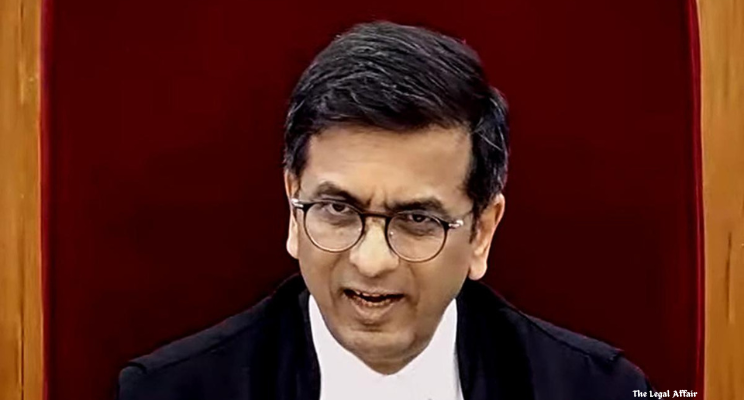
In a significant legal pronouncement, the Supreme Court of India recently examined the constitutional validity of the Uttar Pradesh Board of Madarsa Education Act, 2004, in a case that raised crucial questions about the limits of judicial review concerning legislative statutes. The case, Anjum Kadari and Another v. Union of India and Managers Association Madaris Arabiya UP v. Union of India, revolved around the contention that the Act violated the basic structure doctrine, specifically the principle of secularism. In this context, the Allahabad High Court had previously struck down the statute, asserting that it conflicted with secularism, a core feature of the Indian Constitution. However, the Supreme Court bench led by Chief Justice DY Chandrachud, along with Justices JB Pardiwala and Manoj Misra, clarified the grounds on which ordinary statutes may be invalidated and reasserted that basic structure violations apply exclusively to constitutional amendments, not to legislative regular laws.
The judgment has redefined the contours of the basic structure doctrine, clarifying that while constitutional amendments can be challenged based on this doctrine, ordinary statutes must be evaluated based on their adherence to specific constitutional provisions or legislative competence. Through this case, the Supreme Court has once again reinforced the limitations on judicial intervention in legislative matters, ensuring that legislative intent and constitutional authority are respected within the parameters set by the Constitution.
Arguments by the Petitioners:
The petitioners argued that the Uttar Pradesh Board of Madarsa Education Act, 2004, violates the basic structure of the Constitution by undermining the principle of secularism. They maintained that establishing a separate regulatory body for Madarsa education indicates favouritism towards a specific religious group, contrary to the secular fabric embedded within the Indian Constitution. This act, they argued, was not neutral toward religious institutions, therefore breaching the commitment to secularism as part of the basic structure doctrine.
They further argued that the State’s endorsement and recognition of Madarsa education through a dedicated board may amount to a form of state patronage towards a specific religion, which could distort the secular balance envisaged by the framers of the Constitution. The petitioners believed that the Act could not stand constitutional scrutiny, as it inherently contradicted the secular nature of the State, embedded as an unchangeable feature within the basic structure of the Constitution.
Additionally, the petitioners drew attention to precedents where statutes were examined for their impact on secularism and other fundamental aspects of the basic structure. The petitioners argued that the Court has, in prior instances, applied the basic structure doctrine to test the validity of certain statutes, advocating that the Madarsa Act deserved similar scrutiny due to its implications on secularism.
Arguments by the Respondents:
In defence, the respondents, representing the State and Union of India, countered that the basic structure doctrine applies exclusively to constitutional amendments, not to ordinary statutes. Citing established legal precedents, they argued that a statute can only be invalidated on grounds of violating specific provisions within the Constitution or exceeding legislative competence. They asserted that invoking the basic structure doctrine to challenge regular statutes would disrupt legislative autonomy and invite unwarranted judicial interference in legislative processes.
The respondents further argued that the Madarsa Act does not favour any religious group in a way that would infringe upon the constitutional principle of secularism. Rather, it provides a regulatory framework to promote education within the context of religious minority institutions, in line with the broader objectives of Article 14 and Article 30, which guarantee equality and the rights of minorities to establish and administer educational institutions. By regulating these educational institutions, the State fulfils its duty to ensure educational standards without breaching the constitutional mandate of secularism.
Highlighting key precedents such as State of A.P. v. McDowell & Co. and Kuldip Nayar v. Union of India, the respondents emphasized that the basic structure doctrine, while essential to the protection of core constitutional values, is not a tool for judicial review of all legislation. Instead, ordinary statutes are to be judged by their conformity to express constitutional provisions and their compliance with legislative competence.
Court’s Judgement and Rationale:
The Supreme Court, in a comprehensive judgment authored by Chief Justice DY Chandrachud, clarified the limitations of the basic structure doctrine in the context of judicial review. The Court emphasized that the basic structure doctrine, established in Kesavananda Bharati v. State of Kerala, serves as a protective mechanism specifically for constitutional amendments. In contrast, ordinary statutes are not subject to this doctrine but may be challenged on two well-defined grounds: violation of specific provisions within Part III (Fundamental Rights) or other constitutional provisions, or lack of legislative competence.
The Court underscored the importance of a clear distinction between constitutional amendments and legislative statutes, stating that concepts like democracy, secularism, and federalism are broad, undefined principles within the Constitution. Allowing ordinary statutes to be invalidated for violating these abstract principles, the Court reasoned, would introduce uncertainty and unpredictability into constitutional adjudication. About previous judgments, including State of Karnataka v. Union of India and Kuldip Nayar v. Union of India, the Court reaffirmed that the validity of ordinary legislation cannot be assessed through the lens of the basic structure doctrine.
The Court also addressed the judgment in Madras Bar Association v. Union of India, where a Constitution Bench applied the basic structure doctrine to scrutinize the validity of a statute. Noting the nuanced application of the doctrine in this case, the Supreme Court distinguished it as a specific exception rather than a general rule. Furthermore, in the NJAC judgment, divergent opinions emerged on the application of the basic structure doctrine to statutes, with Justice Lokur specifically dissenting from Justice Khehar’s opinion. Through its recent judgment, the Supreme Court established a consistent judicial approach, reaffirming that statutes are subject to challenges based on specific constitutional provisions or legislative competence, not on broad concepts within the basic structure.
The Court concluded that the Allahabad High Court had erred in applying the basic structure doctrine to strike down the Madarsa Act. It held that the doctrine could not be invoked to challenge ordinary legislation solely for perceived violations of secularism, as no specific provision in the Constitution had been breached. Chief Justice Chandrachud further clarified that the establishment of the Madarsa Board did not infringe upon Article 14, as the Act promotes educational equity and is aligned with the State’s responsibilities under the Constitution.
In essence, the judgment delineates a clear boundary for judicial review, emphasizing respect for legislative intent and upholding the principle that only express constitutional violations or lack of legislative authority justifythe invalidation of a statute.