


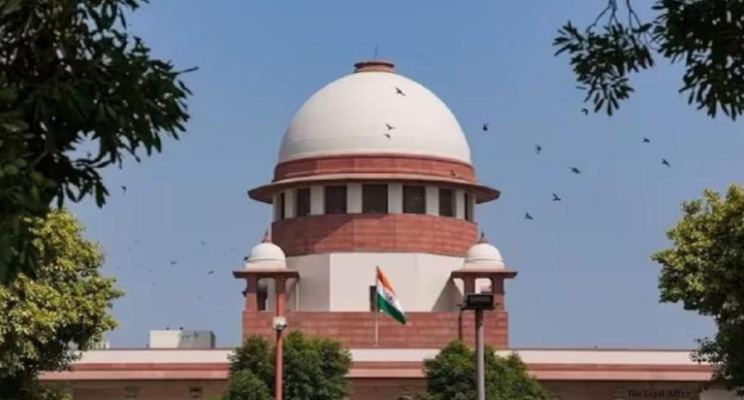
Introduction:
In the landmark case titled The State of Kerala v. The Principal, KMCT Medical College and Others, arising out of Special Leave Petitions (C) Nos. 9885-9888/2020 and related matters, the Supreme Court of India recently adjudicated on the scope of utilisation of fees collected from Non-Resident Indian (NRI) quota students by self-financing medical colleges in the state of Kerala. The controversy stemmed from directions issued by the Fee Regulatory Committee established under the Kerala Medical Education Act, 2017, which mandated the allocation of a portion of fees collected from NRI students to a corpus fund specifically aimed at subsidising the education of students from Below Poverty Line (BPL) categories. While the Committee intended to further social equity, it triggered resistance from both the self-financing medical colleges and NRI students. The former argued for financial autonomy, claiming that NRI fees are essential for infrastructural development and quality enhancement, while the latter contended for a refund, asserting that their payments should only subsidise the education of two underprivileged students as stipulated in earlier precedents. The Supreme Court, through a bench comprising Justices Surya Kant and N. Kotiswar Singh, pronounced a significant ruling that reaffirmed institutional autonomy in fee structuring and spending, provided it aligns with quality education and infrastructural growth, thus disallowing a narrow interpretation of fee utilisation limited to subsidisation alone.
Arguments of both sides:
The petitioners in this case, comprising self-financing medical colleges and NRI students, advanced two distinct lines of argument. The self-financing institutions contested the Fee Regulatory Committee’s directive that mandated depositing a portion of the NRI quota fee into a state corpus fund aimed exclusively at providing scholarships and financial assistance to students belonging to the BPL category. They contended that such a directive was an overreach into their financial autonomy and a violation of the precedents laid down by the Supreme Court, which have consistently recognised the rights of private educational institutions to maintain a surplus and use fee structures to enhance infrastructure and educational facilities. The institutions emphasised that the fees collected from NRI students were integral to maintaining and improving the quality of education, paying competitive salaries to faculty, and meeting various operational costs essential for sustaining a medical college. They further argued that the corpus fund, if administered by the state, could effectively turn into an indirect fee regulation mechanism, curbing the freedom of private institutions under the guise of social welfare.
On the other side, the NRI students themselves sought refunds for the portion of the fees diverted to the corpus fund. They based their claims on the precedent set in the case of PA Inamdar v. State of Maharashtra, where it was observed that NRI students could be charged higher fees only to the extent that such fees subsidised the education of two economically weaker students. The students argued that the state and the Fee Regulatory Committee exceeded their jurisdiction by allocating their fees to subsidise an indeterminate number of BPL students, thereby breaching the ratio in PA Inamdar. They claimed that any deviation from the said precedent was unconstitutional and unjustified, as they were being made to shoulder a disproportionate financial burden.
Court’s Judgement:
The Supreme Court, while addressing these contentions, conducted a thorough analysis of constitutional principles, past precedents, and the scope of statutory authority conferred on the Fee Regulatory Committee under the Kerala Medical Education Act, 2017. The Court began by emphasising the necessity of balancing two essential yet potentially conflicting objectives: ensuring access to affordable medical education for economically weaker sections and safeguarding the operational autonomy and financial sustainability of private medical institutions. In doing so, the Court reaffirmed the principles established in Islamic Academy of Education v. State of Karnataka and Modern Dental College and Research Centre v. State of Madhya Pradesh. Both Constitution Bench decisions had unequivocally held that while regulation of fees to prevent profiteering and capitation is permissible, rigid state control or fixation of uniform fees across institutions is impermissible. The Court underscored that each institution has the right to determine its fee structure, provided it accounts for the cost of infrastructure, faculty salaries, maintenance, and expansion, and that any surplus generated should be reinvested for the institution’s betterment.
Against this backdrop, the Court held that the direction of the Fee Regulatory Committee to transfer a fixed portion of NRI quota fees to a state-administered corpus fund infringed upon the financial and administrative autonomy of private medical institutions. It observed that while the objective of ensuring access to underprivileged students is commendable, it cannot be pursued through a mechanism that disrupts the internal financial equilibrium of self-financing colleges. In terms of NRI students’ claims for refund, the Court decisively rejected their narrow interpretation of the PA Inamdar ruling. It clarified that PA Inamdar does not mandate that fees collected from NRI students be used solely to subsidise the education of only two students. Rather, the judgment allows for the imposition of higher fees on NRI students, provided such fees are reasonable and contribute to broader institutional goals, including cross-subsidisation, infrastructure, technological upgradation, and quality enhancement. Consequently, the contention that their fees could be earmarked only for the subsidisation of two students was held to be a misreading of the law.
The Court further emphasised that the fee structure must be formulated keeping in mind various parameters such as institutional infrastructure, salary obligations, developmental plans, academic resources, and compliance with medical education standards. These parameters necessitate financial planning that cannot be disrupted by statutory diktats that redirect substantial fee components into externally administered funds. The judgment thus affirms that the institutions are entitled to retain the fees collected from NRI students and deploy them judiciously across diverse heads of expenditure, including but not limited to student scholarships. The directive to deposit a fixed portion into a state corpus was therefore held to be unsustainable in law.
Ultimately, the Court allowed the appeals filed by the State of Kerala and the medical colleges, thereby setting aside the orders that compelled the remittance of NRI quota fees to a centralised corpus. It upheld the autonomy of self-financing institutions in deciding the utilisation of such fees and dismissed the refund claims of NRI students, ruling that the expectations of refund lacked legal merit and misapprehended the ratio decidendi in prior landmark decisions. The verdict marks a reaffirmation of the principle that regulation should not become control and that educational institutions, particularly in the private sector, must retain adequate freedom to manage their financial affairs within the bounds of reasonableness and accountability.