


Introduction:
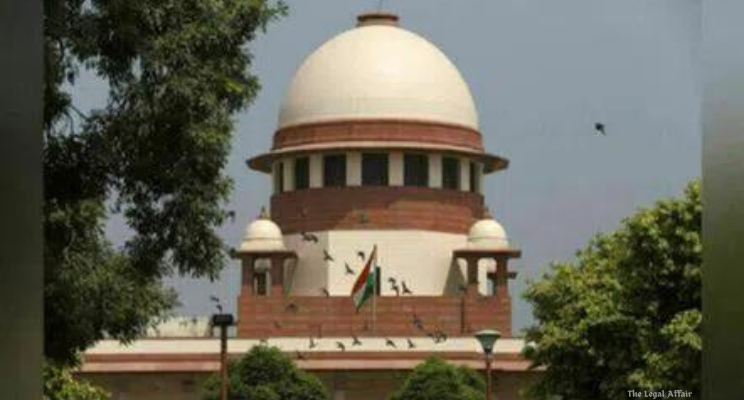
In a landmark judgment delivered on October 3, 2024, the Supreme Court of India declared the Khalsa University (Repeal) Act, 2017 as unconstitutional. The Act, passed by the Punjab Legislative Assembly, sought to repeal the Khalsa University Act, 2016, which had granted university status to the historic Khalsa College. The Supreme Court struck down the Repeal Act on the grounds that it violated Article 14 of the Constitution, which guarantees the right to equality. The Repeal Act was deemed discriminatory as it singled out Khalsa University from 16 other private universities in Punjab without a reasonable basis.
The legal battle, initiated by Khalsa University and another appellant, challenged the State Government’s decision to reverse the establishment of the University. This ruling brings the Khalsa University Act, 2016 back into force, reaffirming the university’s right to function under the UGC regulations and continue its educational activities.
Appellants: Khalsa University:
The primary argument presented by Khalsa University, represented by Senior Counsel Mr. P.S. Patwalia, was that the 2017 Repeal Act unfairly targeted the university. According to the appellants, this selective treatment was neither based on reasonable classification nor supported by intelligible differentia. They argued that the Repeal Act was discriminatory, as it affected only Khalsa University while leaving 16 other private universities in Punjab untouched.
Khalsa University contended that the State Government had failed to justify why only their institution had been singled out for this legislative action. They further submitted that the Repeal Act was not enacted in response to any urgent or compelling circumstances, as is typically required when the legislature focuses on a single entity. The appellants insisted that Khalsa University was complying with the UGC (Establishment of and Maintenance of Standards in Private Universities) Regulations, 2003, and that their institution posed no threat to the heritage or glory of the Khalsa College.
The appellants also argued that the State’s reason for repealing the Act—that the University might overshadow or damage the prestige of the historic Khalsa College—was unsubstantiated. The two institutions were separate entities, and Khalsa University had committed to maintaining the autonomy and heritage of Khalsa College.
Respondents: The State of Punjab:
On the other hand, the State of Punjab, represented by Additional Advocate General Mr. Shadan Farasat, argued that the 2016 Act granting university status to Khalsa College was detrimental to the legacy and heritage of the institution. The State’s position was that the establishment of Khalsa University posed a risk to the “pristine glory” of Khalsa College, which had been a hallmark of Sikh education since its founding in 1892.
The State asserted that Khalsa University, as a newly established institution under UGC regulations, could potentially alter the educational structure and mission of the historic Khalsa College. They feared that by allowing Khalsa University to function alongside the College, it might dilute the latter’s historical importance and shift the focus from its established educational traditions.
The State further argued that the Repeal Act was a reasonable legislative measure aimed at preserving the unique character of Khalsa College. They maintained that this was a sufficient basis for singling out Khalsa University from the rest of the private universities in the State.
Court’s Judgment:
After carefully considering the arguments from both sides, the Supreme Court bench comprising Justices BR Gavai and KV Viswanathan struck down the Repeal Act, terming it unconstitutional. The Court observed that while the legislature has the power to enact laws that affect a single entity or person, such laws must be based on reasonable classification and have a rational nexus to the objective sought to be achieved.
- Reasonable Classification and Discrimination:
Referring to a catena of judgments, particularly *Chiranjit Lal Chowdhuri v. Union of India (1950)*Justice Gavai, who authored the judgment, reiterated that legislation affecting a single entity can be permissible if it is backed by special circumstances and grounded in reasonable classification. However, in this case, the Court found that the Punjab government had failed to demonstrate any such compelling circumstances that would justify targeting Khalsa University while leaving other private universities unaffected.
The Court held that no material evidence had been provided to support the State’s claim that Khalsa University threatened the legacy of Khalsa College. The Repeal Act, therefore, amounted to discriminatory treatment without any rational basis, violating Article 14 of the Constitution.
- Manifest Arbitrariness:
In addition to finding the Repeal Act discriminatory, the Court also ruled that it suffered from “manifest arbitrariness.” The concept of manifest arbitrariness, as laid down in earlier Supreme Court rulings, refers to legislation that is excessive, disproportionate, or based on irrelevant considerations. The Court emphasized that the Repeal Act fell under this category because it imposed an unwarranted blanket restriction on Khalsa University’s functioning without any substantive justification.
The Court dismissed the State’s argument that the architectural similarity between Khalsa University’s buildings and Khalsa College posed a threat to the latter’s heritage. In fact, Khalsa University had consistently assured the court that it would not affiliate with Khalsa College or interfere with its historic significance. The map of the campus, placed on record by the appellants, further revealed that only the heritage building of Khalsa College dated back to 1892, while the rest of the campus had been modernized over time.
The Supreme Court was of the opinion that the Repeal Act was not enacted based on any valid or emergent circumstances, as no legislative debates or relevant material had been submitted by the State to support its claims. The absence of such material made it clear that the Act was arbitrary and not rooted in any real or immediate necessity.
- Revival of the 2016 Act:
Consequently, the Supreme Court ruled that the 2017 Repeal Act was void, and it effectively reinstated the Khalsa University Act, 2016. This reinstatement means that Khalsa University can now resume its operations as a private university under the UGC regulations, which govern the establishment and maintenance of standards in such institutions.
The Court’s judgment underscores the importance of fairness and reasonable classification in legislative actions, especially when they affect a single entity or institution. The decision also highlights that laws based on unsubstantiated fears or arbitrary reasons will not withstand judicial scrutiny, particularly when fundamental rights such as the right to equality under Article 14 are at stake.