


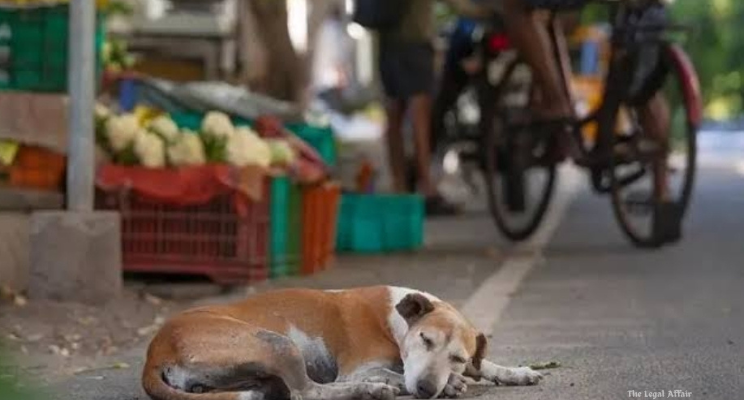
Introduction:
In the matter of IN RE ‘CITY HOUNDED BY STRAYS, KIDS PAY PRICE’ | SMW(C) No. 5/2025, the Supreme Court of India, on August 11, took a stern stance against opposition from animal rights activists and organisations towards the relocation of stray dogs to dedicated shelters. The Court was dealing with a suo motu proceeding in light of the alarming rise in incidents where infants, young children, and the elderly have fallen victim to rabies and fatal dog bites. While issuing directions that all stray dogs in the National Capital Region be moved to designated shelters or compounds and not be released back into localities even after sterilisation, the bench comprising Justice JB Pardiwala and Justice R Mahadevan was informed that certain animal rights activists were seeking judicial intervention to halt or delay these measures. One such activist had already approached the Delhi High Court to stay the NCT Delhi government’s decision to earmark land on the outskirts for relocated strays, and another intervenor representing a Welfare Association had filed an application to participate in the case. The Solicitor General, Tushar Mehta, appearing for NCT Delhi, highlighted that some of these activists personally feed large numbers of stray dogs. In response, the Court expressed serious concern about the balance between compassion for animals and the safety of human life, making it clear that public safety must take priority when lives—especially those of vulnerable children—are at stake.
Arguments of the Petitioners / Court’s Initiative:
Since the matter originated suo motu, the Court itself took the role of highlighting the growing menace of stray dogs and the public health risk posed by rabies outbreaks. The bench noted reports of fatal attacks and infections leading to tragic deaths, particularly among children and the elderly. The Court’s underlying argument was that the unchecked presence of stray dogs in densely populated areas posed a clear and present danger, and that sterilisation alone had not mitigated the risk. The bench stressed that when a situation reaches a point where public safety is threatened, authorities must act decisively to protect human life. The judicial concern was not about vilifying animals but about implementing practical measures—relocation to shelters being one such step—that could reduce the immediate risk of attacks. The Court underscored that sentimental approaches to animal welfare, while admirable, cannot override the pressing duty of the State to safeguard its citizens. This line of reasoning was rooted in constitutional principles of the right to life under Article 21, extending that right not just to humans in the abstract but to the actual, everyday lived safety of communities. In taking up the matter, the Court indicated that its role was to ensure that authorities did not shy away from decisive action merely because of opposition from well-intentioned but impractical activism.
Arguments of the Opposing Animal Rights Activists and Organisations:
Although the Supreme Court declined to formally entertain intervention applications from animal rights activists, the positions inferred from their actions and prior public advocacy reveal their likely arguments. Activists opposing mass relocation of strays often contend that such measures disrupt the ecological balance, are inhumane if shelters are overcrowded or underfunded, and can lead to mistreatment or neglect of animals. They argue that sterilisation and vaccination campaigns, coupled with community feeding and monitoring, are more humane and effective in the long run. Further, these organisations tend to emphasise the constitutional duty under Article 51A(g) to show compassion to all living creatures, asserting that relocation may violate animal welfare principles unless implemented with stringent safeguards. The activist who approached the Delhi High Court sought to challenge the NCT Delhi’s decision to move stray dogs to the outskirts, possibly arguing that relocation distances animals from their familiar territories, can increase stress and mortality rates, and may not effectively curb bites if new stray populations emerge in vacated areas. Feeding practices, while controversial in the eyes of some public health officials, are defended by activists as part of responsible community animal management. However, in this case, the activists’ opposition was framed by the Court as sentiment-driven resistance that underestimated or overlooked the immediate danger to human life.
Court’s Judgment:
After hearing the submissions, particularly from Solicitor General Tushar Mehta for the NCT Delhi, and noting the resistance from certain activists, the bench of Justice JB Pardiwala and Justice R Mahadevan delivered a strong message: public safety in the face of a rabies threat cannot be compromised by sentimental objections. Justice Pardiwala, in a pointed remark, asked whether those opposing relocation could bring back the lives of the children who had died from rabies, underscoring the irreplaceable value of lost lives. “This is the time to act,” he said, adding that when the situation demands it, practical solutions must take precedence over ideological purity. The bench also made it clear that any attempt by activists to obstruct the implementation of the relocation orders would invite contempt proceedings. By refusing to entertain any intervention applications from animal rights activists or organisations, the Court effectively removed procedural hurdles that could have slowed down execution of its orders. The directions issued mandated the immediate relocation of all stray dogs in the NCR to designated shelters or compounds, with a strict prohibition on releasing them back into localities, even if sterilised. The Court thus balanced its recognition of animal welfare with the overriding constitutional duty to protect human life, sending a strong signal that, in cases of direct public safety threats, the State’s obligation to act decisively must prevail. This judgment not only set a clear course of action for the authorities but also reaffirmed the judiciary’s willingness to confront difficult policy debates when human lives are at risk, while respecting the principle that such measures must be lawful, targeted, and effectively implemented.