


Introduction:
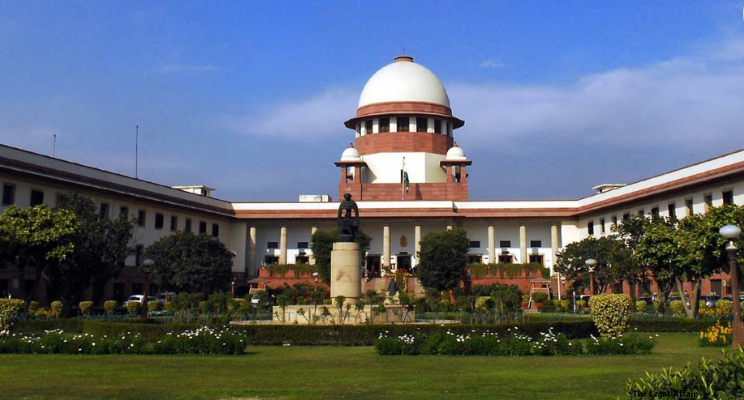
In a significant ruling reinforcing the limited scope of judicial intervention at the stage of quashing criminal proceedings, the Supreme Court of India set aside an order of the Madhya Pradesh High Court, Indore Bench, which had quashed an FIR filed under Section 498A of the Indian Penal Code and provisions of the Dowry Prohibition Act, 1961. The FIR was lodged by Muskan against her husband Ishaan Khan (Sataniya) and his family members, alleging dowry harassment and cruelty. The bench comprising Justice Sanjay Karol and Justice Prashant Kumar Mishra, while allowing the appeal filed by the complainant-wife, held that the High Court erred in law by conducting a “mini-trial” and assessing the genuineness of allegations at the stage of quashing under Section 482 of the Criminal Procedure Code. The apex court emphasized that courts must refrain from examining the credibility or reliability of allegations while considering petitions for quashing criminal proceedings. Referring to the landmark judgment in Neeharika Infrastructure Pvt. Ltd. v. State of Maharashtra (2021) 19 SCC 401, the Court reiterated that the power to quash should be exercised sparingly and only in cases where the complaint does not disclose any cognizable offence. Observing that prima facie allegations of harassment and dowry demand were made out against the accused, the Supreme Court restored the FIR and directed the continuation of the investigation.
Arguments of the Appellant (Wife/Complainant):
Appearing through advocates Mr. Pavani Verma and Mr. Mayank Kshirsagar, the appellant Muskan contended that the High Court had grossly erred in quashing the FIR, which contained detailed allegations of cruelty and dowry harassment by her husband and in-laws. She argued that the FIR was filed after persistent harassment and unlawful demands of Rs. 50 lakhs made by her husband and his family for the husband’s medical education. According to the prosecution, after a few months of marriage, the husband and his relatives began subjecting her to both mental and physical cruelty, repeatedly pressuring her father to arrange a large sum of money. When the demand was not fulfilled, she was allegedly ousted from her matrimonial home along with her young son. The appellant further submitted that the High Court’s reasoning — that certain incidents were not mentioned in her earlier complaints to the Women’s Cell — was erroneous and based on a flawed appreciation of facts. She emphasized that minor inconsistencies or omissions cannot form the basis for quashing an FIR when the overall allegations disclose a cognizable offence. It was contended that the High Court’s approach amounted to conducting a “mini-trial” at the preliminary stage, which is expressly prohibited under settled law.
The appellant relied on the Supreme Court’s decisions in Neeharika Infrastructure Pvt. Ltd. v. State of Maharashtra, State of Haryana v. Bhajan Lal, and Daxaben v. State of Gujarat (2022), to argue that the jurisdiction under Section 482 CrPC is to be used sparingly and only in the rarest of rare cases. The complainant submitted that at the stage of quashing, the Court is only required to ascertain whether the allegations, if taken at face value, make out a cognizable offence; not to evaluate the truth or falsity of those allegations. She argued that the High Court’s action in weighing the veracity of her complaint and treating her subsequent FIR as an “afterthought” was legally impermissible. The complainant emphasized that the two incidents of 22 July 2021 and 27 November 2022, though not detailed in her initial complaints, were part of a continuing course of harassment, and omission to mention them earlier could not justify nullifying the entire FIR. She contended that the High Court’s interference had effectively deprived her of the opportunity to have her grievances investigated through due process of law. Accordingly, she sought restoration of the FIR and continuation of criminal proceedings against the accused.
Arguments of the Respondents (Husband and His Family):
On behalf of the respondents, Senior Advocates Mr. Aditya Vaibhav Singh and Mr. Pashupathi Nath Razdan, assisted by Ms. Maitreyee Jagat Joshi and others, contended that the FIR was mala fide, frivolous, and filed only as a counterblast to a legal notice issued by the husband demanding the appellant’s return to the matrimonial home. They argued that the allegations were an afterthought and that the FIR was concocted with the sole intention of harassing the husband and his family. The respondents highlighted inconsistencies in the complainant’s statements before the Women’s Cell and the FIR, pointing out that the specific incidents allegedly occurring on 22 July 2021 and 27 November 2022 were not mentioned in her earlier complaints. These omissions, according to the respondents, reflected fabrication and a deliberate attempt to implicate the family falsely. The defence submitted that the complainant had left the matrimonial home of her own accord and was unwilling to reconcile, and that the FIR was lodged only after she received a legal notice from her husband.
The respondents further contended that the High Court had correctly exercised its powers under Section 482 CrPC, as the material on record failed to disclose any offence under Section 498A IPC or the Dowry Prohibition Act. They argued that criminal proceedings arising out of matrimonial disputes should not be allowed to continue mechanically when they are manifestly attended by mala fides. Referring to precedents, they asserted that the extraordinary jurisdiction of the High Court exists to prevent abuse of the process of law and secure the ends of justice. They defended the High Court’s conclusion that the FIR was filed with ulterior motives and that the complainant had failed to substantiate her allegations of dowry demand or cruelty. The respondents thus prayed for the dismissal of the appeal and the upholding of the High Court’s decision.
Court’s Judgment and Observations:
The Supreme Court, after carefully analyzing the submissions and the records, found the High Court’s reasoning legally flawed and contrary to settled principles of criminal jurisprudence. The bench, speaking through Justice Prashant Kumar Mishra, categorically observed that the High Court had overstepped its jurisdiction under Section 482 CrPC by assessing the credibility of the complainant’s allegations and treating minor discrepancies as grounds for quashing. The Court reiterated the settled position of law that at the stage of quashing an FIR, the Court must not undertake an enquiry into the truth or reliability of the allegations — such assessment can only be done after investigation or trial. Citing Neeharika Infrastructure Pvt. Ltd. v. State of Maharashtra (2021), State of Haryana v. Bhajan Lal, Daxaben v. State of Gujarat (2022), and State of Odisha v. Pratima Mohanty, the bench emphasized that the power under Section 482 is not meant to short-circuit legitimate prosecution.
The judgment observed that the High Court had committed a serious error by conducting what effectively amounted to a “mini-trial,” weighing the evidentiary value of the complainant’s statements and determining their reliability. The Supreme Court underscored that such an approach undermines the investigation process and encroaches upon the jurisdiction of the trial court. The Court held that the primary question at the quashing stage is whether the allegations in the FIR, if taken at face value, disclose the commission of an offence. In the present case, the Court found that a prima facie case of dowry harassment and cruelty under Section 498A IPC and the Dowry Prohibition Act was clearly made out. The allegations regarding persistent demands of Rs. 50 lakhs and the subsequent ousting of the complainant from her matrimonial home were sufficient to justify investigation.
The Court further criticized the High Court’s finding that the FIR was a counterblast to the husband’s legal notice, holding that such reasoning was speculative and irrelevant at the preliminary stage. The Supreme Court observed that matrimonial disputes often involve multiple complaints reflecting continuing acts of harassment, and the omission of certain dates or details in earlier complaints cannot be treated as conclusive proof of falsity. The bench stated that inconsistencies or additions in the complainant’s narrative may at best be matters of defence to be examined at trial, not grounds for quashing at the inception.
Justice Mishra, writing for the bench, observed: “We are of the view that the High Court has erred in law by embarking upon an enquiry with regard to credibility or otherwise of the allegations in the complaints and the FIR. Normally, for quashing an FIR, it must be shown that there exists no prima facie case against the accused persons. In the present case, from the conjoint reading of the complaints and the FIR, it can be seen that prima facie allegations of harassment and demand of dowry are made out, despite that the High Court quashed the FIR against the private respondents primarily on the ground that the earlier two complaints that were filed by the appellant did not mention the specific instances that happened on 22.07.2021 and 27.11.2022. This approach, in our considered opinion, amounts to conducting a mini-trial.”
The Court reaffirmed that the purpose of Section 482 CrPC is to prevent abuse of process or secure justice, not to substitute the role of the trial court. It clarified that unless the allegations in the FIR, even if accepted in their entirety, do not disclose any offence or are absurd in nature, the FIR should not be quashed. The Court thus restored the FIR and allowed investigation to proceed in accordance with law.
In conclusion, the Supreme Court’s judgment serves as a stern reminder to High Courts to exercise caution and restraint while invoking inherent powers under Section 482 CrPC. It emphasizes that at the pre-trial stage, courts are not to examine the sufficiency or reliability of evidence but only the existence of prima facie material indicating an offence. The ruling also reinforces the judiciary’s commitment to protecting victims of dowry harassment by ensuring that such complaints are not prematurely stifled under the guise of technical inconsistencies.