


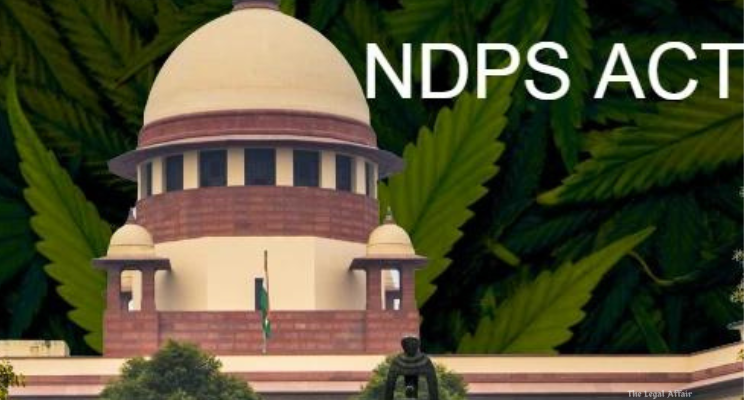
Introduction:
In a landmark ruling, the Supreme Court, comprising Justices B.R. Gavai and Sandeep Mehta, has underscored the critical importance of adhering to the procedural mandates of the NDPS Act in cases of narcotics and psychotropic substances. The judgment, delivered on March 1, sharply reversed the High Court’s findings, emphasizing that the accused cannot be held guilty if the requirements of Section 52A of the NDPS Act are not fulfilled during the FSL Test. This decision stemmed from a case involving accusations under Section 20(b)(ii)(c) of the NDPS Act related to the possession of ‘ganja’ in commercial quantity.
Arguments of Both Sides:
The prosecution’s case, initially upheld by the trial court and later by the High Court, faced a formidable challenge before the Supreme Court. The defense, led by senior advocate C. Nageswara Rao, highlighted glaring inconsistencies in statements, improper packaging of seized samples, and a lack of crucial evidence, resulting in a failure to meet the stringent standards set by the NDPS Act. The prosecution, represented by Mr. Kumar Vaibhaw, contended that the evidence presented was sufficient to prove the charges under the NDPS Act, refuting allegations of procedural lapses.
Court’s Judgment:
The Supreme Court, in a meticulous analysis of the evidence, dismantled the prosecution’s case, highlighting substantial loopholes and contradictions. The court emphasized that the failure to undertake proceedings under Section 52A of the NDPS Act, improper weighing of the contraband, non-disclosure of seals and signatures, and the non-examination of crucial witnesses fatally undermined the prosecution’s case. The judgment authored by Justice Sandeep Mehta categorically stated that the FSL report could not be considered as evidence if the required link evidence, including documents related to sample deposit and transmission to the FSL, was missing.